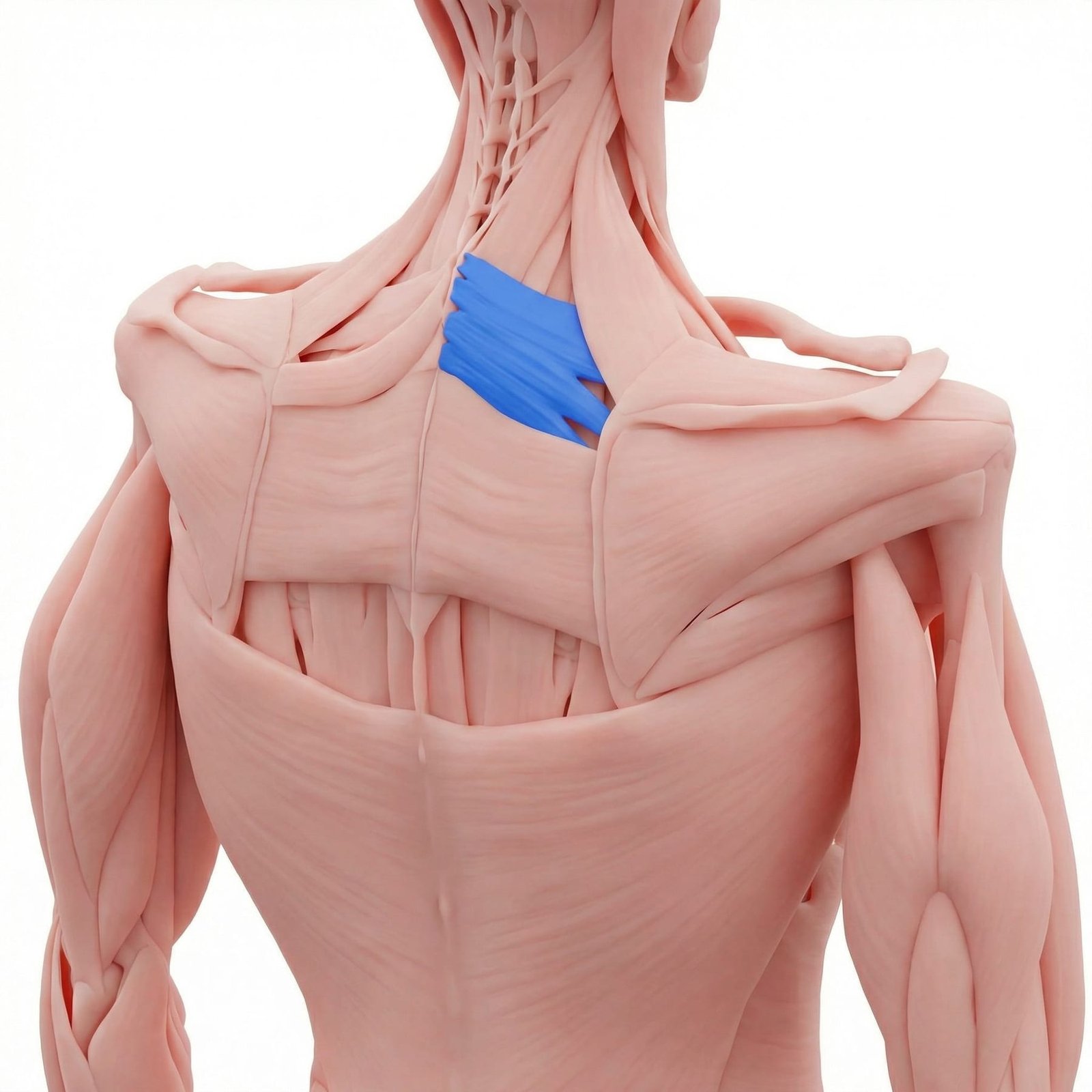
TrP 1
Serratus Posterior Superior
Location. Upper back, near shoulder blades
Pain referral. Back of shoulder, upper arm
- Back of shoulder
- Posterior upper arm
- Elbow
- Fourth and fifth fingers
Deep aching beneath the scapula that is difficult to localize or reach manually
Location. Upper back, near shoulder blades
Pain referral. Back of shoulder, upper arm
Deep upper back pain. Deep aching beneath the scapula that is difficult to localize or reach manually
Shoulder pain. Posterior shoulder ache referred from deep upper thoracic trigger point activation
Arm pain. Referred pain down posterior arm toward elbow and ulnar hand distribution
Poor posture. Sustained thoracic kyphosis stretches serratus posterior superior beyond its resting length
Shallow breathing. Restricted rib elevation demand overworks serratus posterior superior as inspiratory muscle
Stress. Emotional tension causes sustained upper thoracic guarding affecting deep back muscles
Overhead work. Prolonged arm elevation requires continuous upper rib stabilization by this muscle
Stand with your back to a wall and place a tennis ball between the wall and the inner border of your shoulder blade. Lean into the ball with moderate pressure and slowly roll up and down along the scapula edge. When you find a particularly tender spot, hold steady pressure for 20-30 seconds until you feel the tension release.
Sit on a chair with your feet flat on the floor. Cross your arms over your chest and slowly rotate your upper body to one side as far as comfortable, keeping your hips facing forward. Hold the end position for 15-20 seconds, breathing deeply. Return to center and repeat to the opposite side. Perform 5 repetitions per side.
Stand with your back flat against a wall, feet about 12 inches from the base. Press your arms against the wall with elbows bent at 90 degrees. Slowly slide your arms upward along the wall as high as you can while keeping your back, elbows, and wrists in contact with the wall. Hold at the top for 3 seconds, then slowly lower. Perform 3 sets of 10 repetitions.
Sit or stand with good posture. Place your hands on the sides of your lower rib cage. Inhale slowly and deeply through your nose for 4 counts, focusing on expanding your ribs laterally into your hands. Hold for 2 counts, then exhale slowly through your mouth for 6 counts. Perform 10 breath cycles per session.
Set hourly reminders to check your posture during desk work. Perform chin tucks by gently drawing your chin straight back as if making a double chin, hold for 5 seconds, and release. Adjust your monitor to eye level and position your keyboard so your shoulders are relaxed. Avoid sustained forward head posture during reading or phone use.
Consult a physical therapist or practitioner trained in dry needling for treatment of deep serratus posterior superior trigger points. Because this muscle lies beneath the rhomboids and trapezius, it can be very difficult to treat with manual pressure alone. Dry needling can access these deeper layers directly for more effective release.