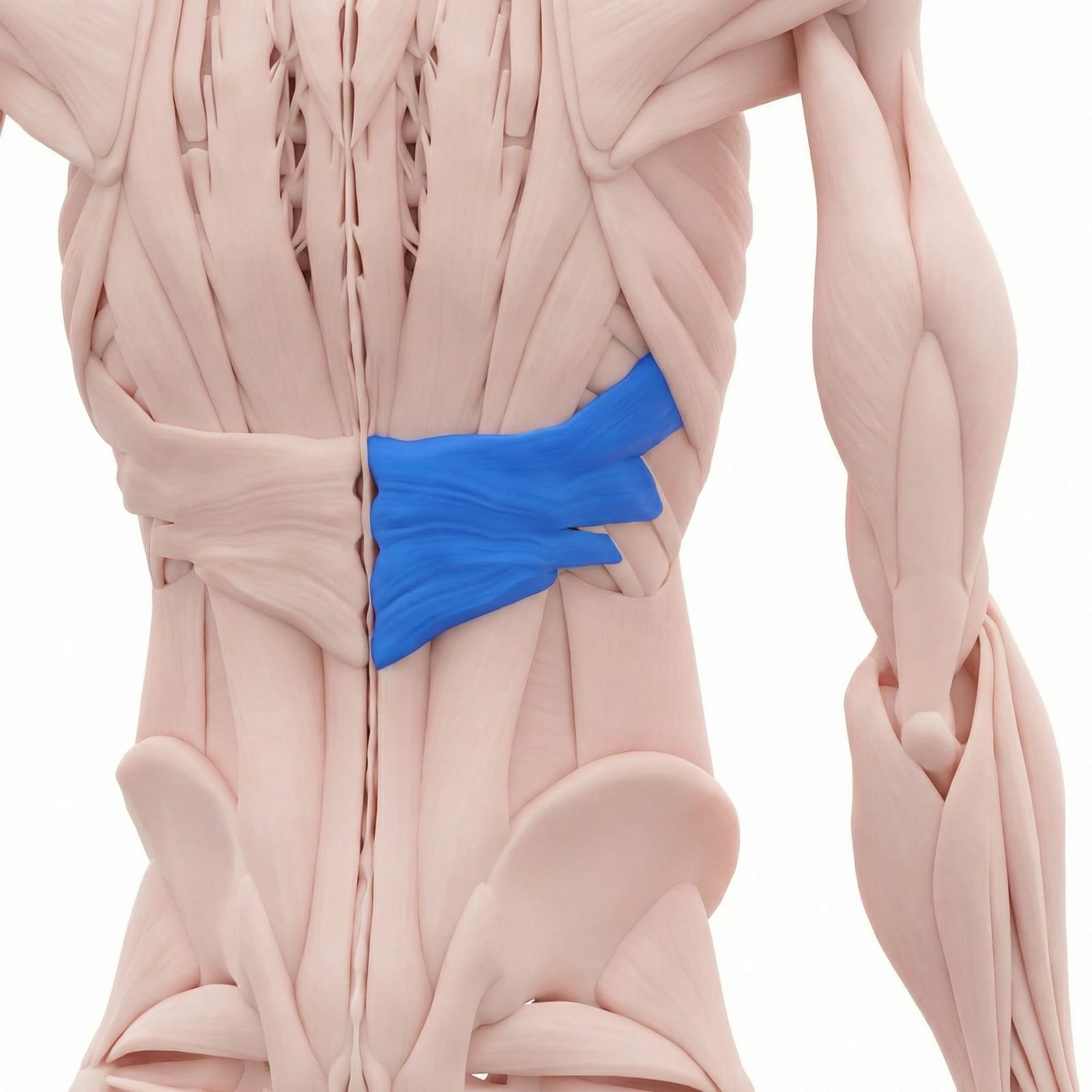
TrP 1
Serratus Posterior Inferior
Location. Lower back, ribs
Pain referral. Lower back, lower ribs
- Lower back
- Lower ribs
- Upper buttock
Aching at the thoracolumbar junction aggravated by deep breathing and trunk rotation
Location. Lower back, ribs
Pain referral. Lower back, lower ribs
Lower back pain. Aching at the thoracolumbar junction aggravated by deep breathing and trunk rotation
Rib discomfort. Pain along the lower rib cage from trigger points in the serratus posterior inferior
Breathing-related pain. Pain during forced expiration as serratus posterior inferior assists in depressing lower ribs
Poor posture. Sustained thoracolumbar flexion alters rib cage mechanics increasing serratus posterior inferior load
Shallow breathing. Chronic restricted breathing patterns overwork accessory respiratory muscles including this one
Sitting. Prolonged seated posture compresses lower ribs increasing serratus posterior inferior strain
Weak back muscles. Insufficient paraspinal strength forces accessory muscles to compensate for trunk stability
Stand with your back against a wall and place a tennis ball between the wall and your lower rib/flank area on the painful side. Lean into the ball with comfortable pressure and slowly roll it around the area by shifting your body. When you find a tender spot, hold sustained pressure for 30-60 seconds until the tenderness begins to ease.
Lie on your pain-free side with a pillow under your waist for support. Extend the top arm overhead, reaching toward the wall behind you, to open up the lower rib cage on the affected side. Hold for 20-30 seconds, breathing deeply into the stretch. Repeat 5-8 times.
Lie on your back with knees bent and one hand on your chest, the other on your belly. Breathe in slowly through your nose, directing the breath into your belly so that hand rises while the chest hand stays relatively still. Exhale slowly through pursed lips for a count of 6-8. Focus on relaxing the lower ribs and flank muscles with each exhale. Perform 10-15 breath cycles.
Anchor a resistance band at waist height. Stand with your side toward the anchor, holding the band with both hands at your center. Slowly rotate your trunk away from the anchor, keeping hips stable. Control the return to center. Perform 12-15 repetitions on each side for 2-3 sets. Progress resistance gradually.
Incorporate side planks, Pallof presses, and suitcase carries into your regular exercise routine. These exercises build lateral core stability that reduces demand on the serratus posterior inferior. Start with modified versions (knees down for side planks) and progress as strength improves.
If flank pain persists beyond 3-4 weeks or is accompanied by changes in urination, fever, or blood in urine, seek professional evaluation promptly. A physician can rule out kidney stones, infections, or rib fractures. Once cleared, a physical therapist can provide targeted myofascial treatment for the serratus posterior inferior.