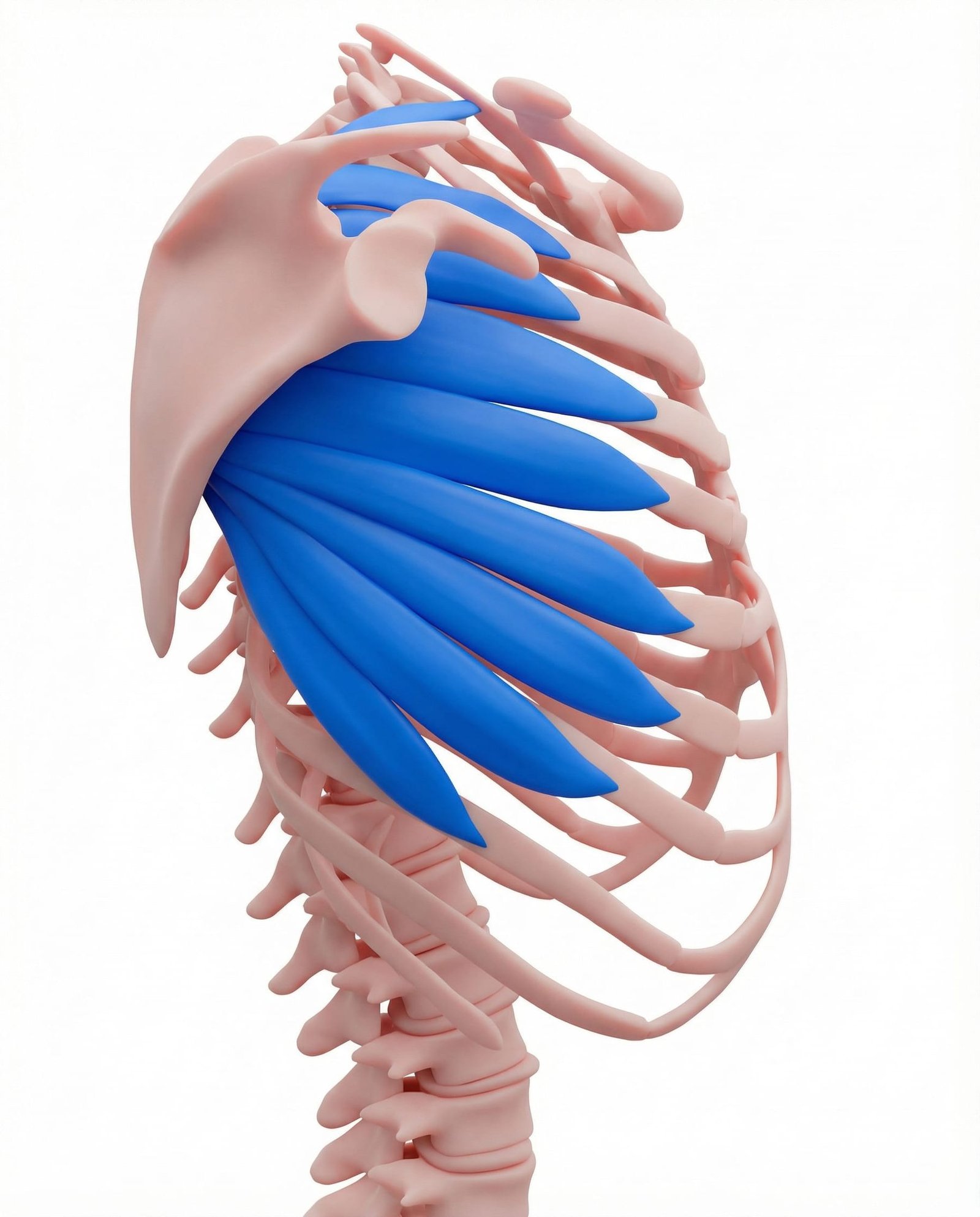
TrP 1
Serratus Anterior
Location. Side of ribs, under arm
Pain referral. Side of chest, under arm, inner arm
- Side of chest
- Under arm
- Inner arm
- Fourth and fifth fingers
- Breast area
Sharp lateral thoracic pain along mid-axillary line aggravated by arm elevation
Location. Side of ribs, under arm
Pain referral. Side of chest, under arm, inner arm
Side chest pain. Sharp lateral thoracic pain along mid-axillary line aggravated by arm elevation
Under arm pain. Deep axillary aching from trigger points in lateral serratus digitations
Pain when taking deep breath. Inspiratory pain as rib expansion stretches taut serratus anterior bands
Breast pain. Referred sensitivity in lateral breast tissue from serratus trigger point radiation
Swimming. Repetitive protraction and upward rotation during stroke overloads serratus fibers
Weightlifting. Heavy overhead pressing demands maximal serratus activation for scapular upward rotation
Push-ups. Sustained scapular protraction under load fatigues serratus anterior rapidly
Carrying heavy bags. Unilateral loading forces serratus to stabilize scapula against downward rotation
Stress breathing. Paradoxical upper chest breathing pattern overworks serratus as rib elevator
Coughing. Forceful expiratory contractions repeatedly stress serratus rib attachments causing strain
Lie on your unaffected side with a firm pillow under your ribs. Extend your top arm overhead to open up the lateral rib cage. Breathe deeply into the stretched side, focusing on expanding the ribs. This gently lengthens the serratus anterior.
Place your hands on the sides of your rib cage. Inhale deeply through your nose, directing the breath into your hands and expanding the ribs laterally. Exhale slowly and gently compress the ribs inward with your hands. This mobilizes the rib joints and releases serratus tension.
Stand facing a wall with your hands at shoulder height. Push into the wall and then push further, rounding your upper back slightly to protract the shoulder blades. Hold for 3 seconds, then relax. This strengthens serratus anterior through its full range.
Start in a push-up position (or on knees for easier version). Without bending your elbows, let your chest sink between your shoulder blades, then push up by spreading the shoulder blades apart. This isolates serratus anterior movement.
Reduce the volume of push-ups, swimming, or overhead pressing if they aggravate symptoms. Practice diaphragmatic breathing to reduce reliance on accessory respiratory muscles including serratus anterior. When coughing, support your ribs with a pillow to reduce strain.
If side chest pain persists beyond 2-3 weeks of self-care, or if you have difficulty breathing, consult a physiatrist. They can differentiate serratus trigger points from rib fracture, pleurisy, or other thoracic conditions and provide targeted treatment.