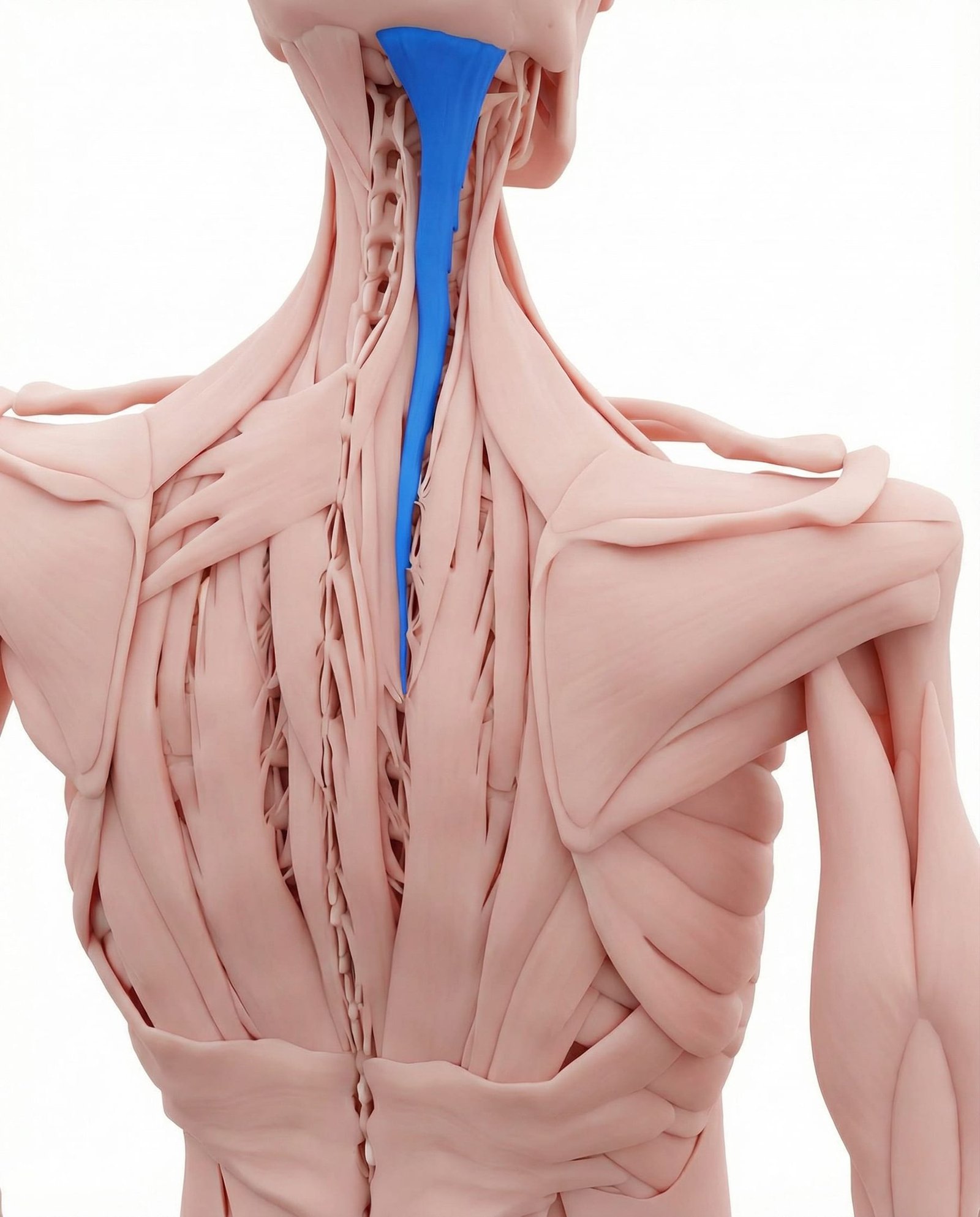
TrP 1
TrP1
Location. Deep back of neck
Pain referral. Back of head, neck
- Back of head
- Neck
- Headache
Intense occipital aching from deep cervical trigger point referral into the cranium
Location. Deep back of neck
Pain referral. Back of head, neck
Location. Lower fibers at C4-C6 level
Pain referral. Mid-posterior neck and suboccipital region
Location. Upper fibers near occipital attachment
Pain referral. Occiput and vertex of skull
Deep headache. Intense occipital aching from deep cervical trigger point referral into the cranium
Neck pain. Deep posterior cervical aching at the cervicothoracic junction from taut muscle bands
Occipital tenderness. Sensitivity at the skull base where semispinalis capitis inserts on the occipital bone
Deep posterior neck ache. Lower semispinalis capitis trigger points at C4-C6 create a deep midline posterior cervical ache
Suboccipital headache. Referral extends superiorly from mid-cervical trigger points to the suboccipital region
Neck stiffness with limited extension. Taut bands in the semispinalis restrict cervical extension range creating stiffness sensation
Feeling of neck weakness. Trigger point inhibition reduces semispinalis force output creating perceived cervical instability
Band-like headache wrapping from back to front. Extensive referral pattern from posterior cervical trigger points wraps circumferentially around the skull
Occipital headache radiating to vertex. Upper semispinalis trigger points at the occipital attachment refer superiorly to the skull vertex
Top of head pressure. Vertex referral creates a pressure sensation at the crown as if weight is pressing downward
Scalp tenderness at crown. Central sensitization from occipital trigger points amplifies scalp sensitivity at the vertex
Pain with cervical rotation. Cervical rotation stretches the semispinalis oblique fibers provoking occipital trigger point pain
Headache worsening with neck movement. Any cervical movement loads the semispinalis capitis intensifying occipital and vertex referral
Forward head posture. Anterior head carriage chronically overloads deep cervical extensors including semispinalis capitis
Whiplash. Rapid cervical hyperextension-flexion strains the deep semispinalis capitis muscle fibers acutely
Stress. Psychological tension sustains deep posterior cervical muscle contraction and creates ischemia
Sleeping position. Sustained cervical flexion or rotation overnight overloads semispinalis capitis unilaterally
Sustained neck flexion (reading or computer work). Prolonged cervical flexion eccentrically overloads semispinalis capitis as it resists gravity-driven flexion
Sleeping with neck in flexion. Overnight cervical flexion maintains semispinalis in a stretched position creating morning stiffness
Heavy helmet or headgear wear. Additional head weight from helmets increases semispinalis demand for cervical extension support
Whiplash injury. Cervical acceleration-deceleration overloads the semispinalis capitis during forced flexion-extension cycle
Poor ergonomic workstation setup. Low monitor placement forces sustained cervical flexion overloading posterior cervical extensors
Chronic forward head posture. Habitual anterior head carriage overloads upper semispinalis for sustained capital extension maintenance
Prolonged cervical extension (painting ceilings, stargazing). Sustained neck extension maximally shortens upper semispinalis creating compression-induced trigger points
Post-whiplash muscular guarding. Chronic protective muscle guarding after whiplash maintains persistent semispinalis trigger points
Pillow height mismatch. Incorrect pillow height maintains cervical misalignment overloading upper semispinalis during sleep
Occipital nerve entrapment from tight muscle fibers. Taut semispinalis bands at the occiput can mechanically compress the greater occipital nerve
Roll a hand towel into a firm cylinder about 3-4 inches in diameter. Lie on your back on a firm surface and place the rolled towel under the curve of your neck at the base of your skull. Let your head rest back over the towel so it applies gentle pressure to the deep posterior neck muscles. Breathe deeply and allow the muscles to soften gradually. You can gently nod your head yes and no to enhance the release.
Apply a warm, damp towel or microwavable moist heat pack to the entire back of your neck from the base of the skull to the upper shoulders. Lie on your back with the heat pack under your neck for maximum effect. The warmth should feel soothing and penetrating. Combine with slow, deep breathing to enhance muscle relaxation.
Lie on your back with your knees bent and feet flat. Gently tuck your chin toward your throat, as if nodding yes, while pressing the back of your head lightly into the floor. You should feel the deep muscles at the front of your neck engage. Hold for 10 seconds, then relax. This exercise strengthens the deep neck flexors that counterbalance the overworked semispinalis capitis.
Sit tall in a chair with your shoulders relaxed. Place both hands behind your head for gentle support. Slowly look upward, extending your neck backward while your hands provide a light counterforce. Move only to a comfortable range and hold for 10-15 seconds. Return slowly to the starting position. This mobilizes the cervical spine and reduces stiffness in the deep posterior neck muscles.
Position your computer screen at eye level directly in front of you so you do not need to look down or tilt your head forward. Use a chair that supports your lower back, keeping your ears aligned over your shoulders. Choose a pillow that keeps your neck in a neutral position while sleeping on your back or side. A contoured cervical pillow or a medium-firm pillow that fills the gap between your neck and the mattress is ideal.
If your band-like headaches or deep occipital pain persist beyond 3-4 weeks of consistent self-care, consult a physical therapist or neurologist. Describe the headache as a deep ache at the base of the skull that may spread as a band across the head. A therapist can perform deep tissue work on the semispinalis capitis and assess for cervicogenic headache or other contributing factors.