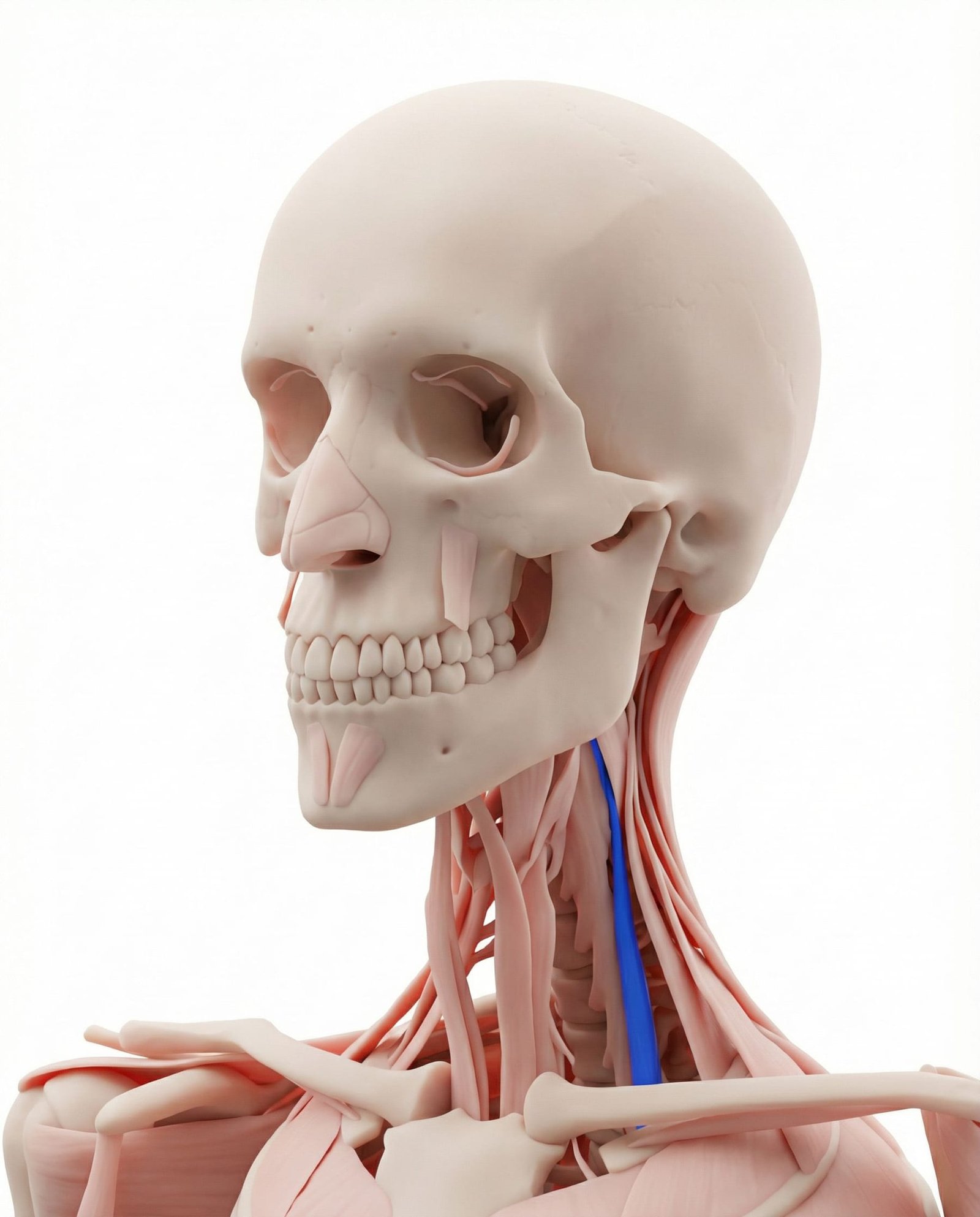
TrP 1
TrP1
Location. Side of neck, deep to SCM
Pain referral. Chest, shoulder, arm, hand
- Chest
- Shoulder
- Front of arm
- Back of arm
- Thumb and index finger
- Whole hand
Radiating ache from shoulder down the arm following brachial plexus distribution
Location. Side of neck, deep to SCM
Pain referral. Chest, shoulder, arm, hand
Location. Middle scalene, lateral aspect of neck
Pain referral. Pectoral region, medial arm, radial forearm, and thumb
Location. Posterior scalene, posterolateral neck
Pain referral. Deep upper back between scapulae
Arm pain. Radiating ache from shoulder down the arm following brachial plexus distribution
Numbness in hand. Paresthesia in fingers from scalene compression of brachial plexus nerve trunks
Chest pain. Anterior chest aching that mimics cardiac pain from pectoralis referral overlap
Shoulder pain. Deep shoulder ache from scalene-referred pain overlapping supraspinatus distribution
Thoracic outlet symptoms. Neurovascular compression causing arm numbness, weakness, and coolness in the hand
Arm pain radiating to thumb. Middle scalene trigger point compresses lower trunk brachial plexus referring pain distally to thumb
Pectoral ache. Referred anterior chest pain from scalene trigger point mimicking pectoralis pathology
Forearm pain on thumb side. Radial forearm pain from C6-C7 nerve root irritation at interscalene triangle compression
Hand weakness. Brachial plexus compression reduces motor output causing functional hand grip weakness
Numbness in thumb and index finger. Sensory fiber compression in scalene triangle produces C6 dermatome paresthesia pattern
Chest tightness on one side. Unilateral pectoral referred pain creates sensation of chest wall constriction
Deep aching between shoulder blades. Posterior scalene trigger point refers deep interscapular pain through posterior primary rami convergence
Upper back stiffness. Taut posterior scalene restricts cervicothoracic mobility creating upper back rigidity
Difficulty taking deep breath. Posterior scalene dysfunction impairs first rib elevation reducing thoracic expansion capacity
Interscapular pain worse with arm use. Arm movements alter scapular position stressing posterior scalene referral zone between scapulae
Posterior shoulder ache. Referred pain from posterior scalene radiates to posterior deltoid and scapular region
Shallow breathing. Upper chest breathing pattern chronically overworks scalenes as accessory respiratory muscles
Stress. Emotional tension elevates the first rib through sustained scalene contraction
Poor posture. Forward head position increases scalene workload to stabilize the cervical spine laterally
Carrying heavy bags. Shoulder strap weight depresses the shoulder causing reactive scalene elevation guarding
Sleeping position. Side sleeping with poor pillow support laterally flexes neck straining scalenes overnight
Whiplash. Rapid lateral cervical acceleration strains scalene fibers causing acute traumatic activation
Overhead activities. Sustained arm elevation requires continuous scalene stabilization of upper ribs
Shallow upper chest breathing. Accessory respiratory pattern recruits scalenes for every breath creating cumulative overuse
Carrying heavy loads at sides. Bilateral arm loading depresses shoulder girdle eccentrically straining scalenes
Whiplash injury. Cervical acceleration-deceleration traumatically overloads middle scalene fibers
Playing wind instruments. Forced expiratory effort against resistance requires sustained scalene respiratory activation
Sleeping with arm overhead. Overhead arm position during sleep compresses neurovascular bundle at scalene triangle
Chronic coughing or asthma. Repeated forceful expiration and respiratory distress overworks scalene accessory muscles
Forward head posture. Anterior head position eccentrically loads posterior scalene creating chronic strain and trigger points
Chronic respiratory issues. Persistent respiratory difficulty overworks posterior scalene as accessory breathing muscle
Paradoxical breathing patterns. Reversed diaphragmatic pattern forces all scalenes including posterior to work with every breath
Heavy overhead lifting. Overhead loading requires scalene cervical stabilization overworking posterior scalene fibers
Swimming (freestyle stroke). Repeated head rotation during freestyle breathing cyclically loads posterior scalene
Tilt your head slightly away from the painful side. Using the fingertips of the opposite hand, gently press into the muscles along the side of your neck just above the collarbone. Apply slow, steady pressure and hold each tender spot for 20-30 seconds. Work from just behind the ear down to the collarbone, never pressing on the front of the throat.
Place a warm, damp towel or microwavable moist heat pack along the side of your neck from behind the ear down to the top of the shoulder. The warmth should feel soothing, not burning. Sit in a relaxed position with your shoulders dropped and breathe slowly while applying the heat.
Sit or stand tall with relaxed shoulders. Slowly tilt your head to one side, bringing your ear toward your shoulder without lifting the shoulder. You should feel a gentle stretch along the opposite side of your neck. Hold for 20-30 seconds, then switch sides. For a deeper stretch, gently place your hand on top of your head to add light pressure.
Sit upright and turn your head about 45 degrees to one side. From this rotated position, gently tilt your head back slightly as if looking up at the ceiling at an angle. You should feel a stretch along the front-side of your neck on the opposite side. Hold for 15-20 seconds, return to neutral, and repeat on the other side. Keep your shoulders relaxed throughout.
Switch from single-strap bags to a backpack or cross-body bag to distribute weight evenly. At your desk, position your monitor at eye level and sit with your ears aligned directly over your shoulders. Practice diaphragmatic breathing by placing one hand on your chest and one on your belly, ensuring the belly hand rises more than the chest hand during each breath.
If you experience persistent numbness, tingling, or weakness in the arm and hand that does not improve with self-care within 2-3 weeks, schedule an appointment with a physical therapist or physician. Mention that your symptoms include arm radiation and hand numbness, as these may require evaluation for thoracic outlet syndrome or cervical radiculopathy.