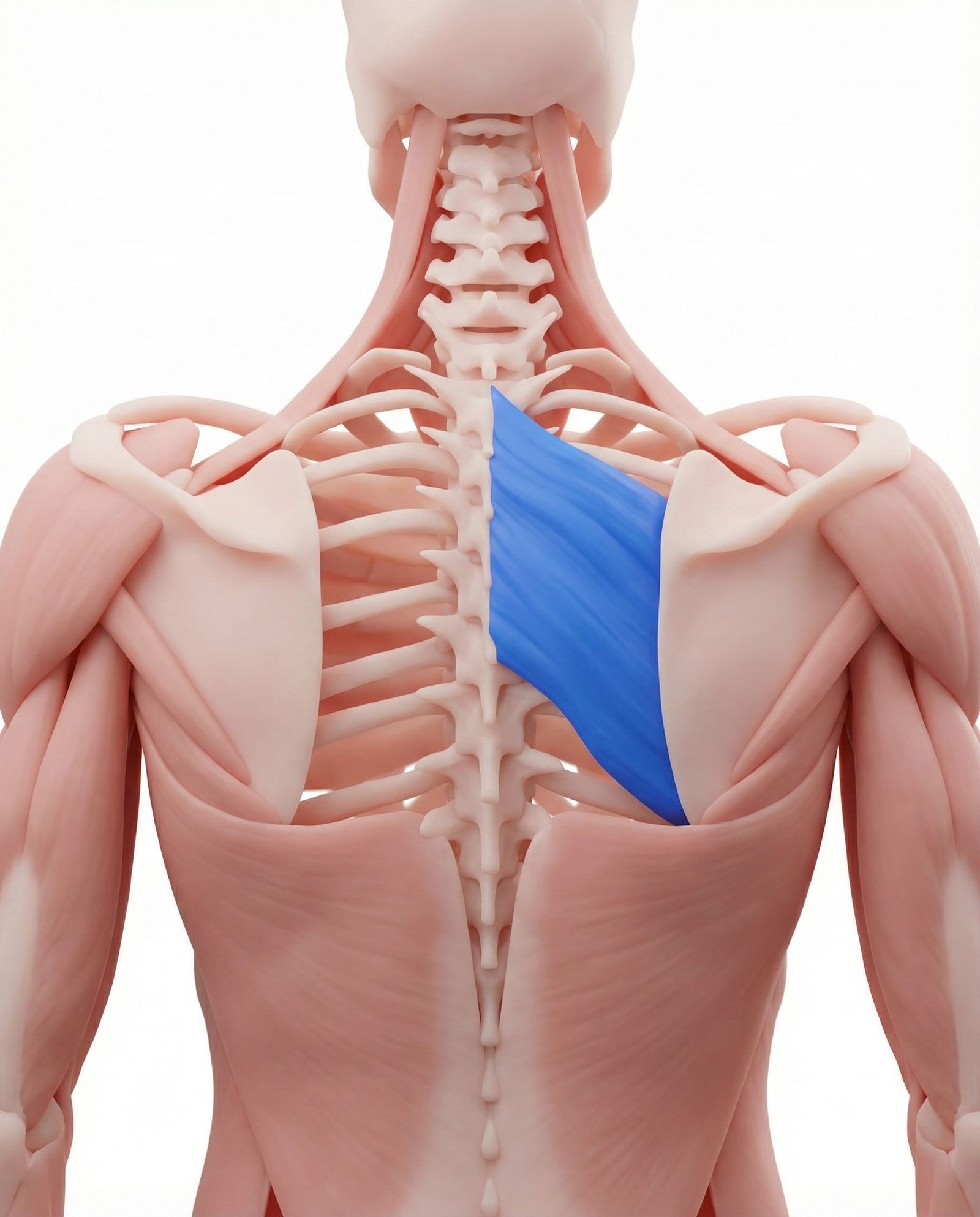
TrP 1
TrP1
Location. Between shoulder blades
Pain referral. Between shoulder blades, near spine
- Between shoulder blades
- Along medial scapular border
- Upper back
Persistent aching along medial scapular border worsened by sustained protraction
Location. Between shoulder blades
Pain referral. Between shoulder blades, near spine
Location. Rhomboid major at mid-medial scapular border
Pain referral. Superficial aching along medial scapular border
Location. Rhomboid minor near root of scapular spine
Pain referral. Supraspinous fossa area
Upper back pain. Persistent aching along medial scapular border worsened by sustained protraction
Pain between shoulder blades. Burning interscapular pain from eccentrically loaded rhomboids fighting protracted posture
Postural ache. Dull fatigue-like discomfort developing after prolonged seated desk work
Scapular pain. Localized tenderness along medial scapular border palpable as taut bands
Superficial interscapular ache. Rhomboid major trigger point produces superficial aching along medial scapular border and interscapular zone
Postural fatigue. Chronic rhomboid trigger point reduces scapular retractor endurance causing premature postural fatigue
Scapular border tenderness. Localized tenderness along medial scapular border from rhomboid trigger point periosteal irritation
Pain with arm protraction. Reaching forward stretches rhomboid across trigger point causing medial scapular border pain
Pain above scapular spine. Rhomboid minor trigger point refers to supraspinous fossa via scapular spine periosteal connections
Upper medial scapular ache. Trigger point at root of scapular spine produces aching at superior medial scapular angle
Difficulty reaching overhead. Rhomboid minor restriction limits scapular upward rotation required for full overhead elevation
Upper back stiffness. Taut rhomboid minor band restricts scapulothoracic mobility creating upper back rigidity
Pain with shoulder shrugging. Shoulder elevation changes rhomboid minor length stressing the trigger point during shrugging
Rounded shoulders. Chronic protraction eccentrically overloads rhomboids as they resist scapular abduction
Computer work. Sustained forward reach position places rhomboids in lengthened stressed position
Poor posture. Thoracic kyphosis with protracted scapulae creates constant eccentric rhomboid loading
Stress. Emotional tension causes reflexive shoulder elevation and scapular retraction guarding
Carrying heavy bags. Shoulder strap weight pulls scapula into protraction overloading rhomboid attachments
Reading in bed. Prolonged flexed posture with unsupported arms strains interscapular muscles
Driving. Extended arms-forward steering position maintains rhomboids in sustained eccentric stretch
Rounded shoulder posture. Chronic protraction eccentrically overloads rhomboids as they resist sustained scapular abduction
Prolonged computer work. Forward-reaching arm position during computing demands sustained eccentric rhomboid loading
Overhead reaching. Repeated overhead reach requires scapular upward rotation stretching rhomboids across trigger point
Rowing exercises with poor form. Improper rowing technique overloads rhomboids with excessive scapular retraction loading
Carrying heavy briefcase. Unilateral heavy carry depresses scapula eccentrically loading ipsilateral rhomboid fibers
Driving for long periods. Sustained arm-forward driving position eccentrically loads rhomboids in protracted shoulder posture
Excessive keyboard use. Sustained forward reaching for keyboard demands continuous eccentric rhomboid minor loading
Backpack carrying with straps on shoulders. Backpack weight depresses scapulae straining rhomboid minor at scapular spine root
Pull-up and rowing exercises. Heavy pulling exercises concentrically overload rhomboid minor with excessive retraction force
Stress-related shoulder elevation. Habitual stress shrugging creates sustained rhomboid minor tension at scapular spine insertion
Side sleeping with poor shoulder support. Unsupported arm during side sleeping protracts scapula stretching rhomboid minor across trigger point
Stand with your back against a wall. Place a tennis ball between the wall and the medial border of your shoulder blade (the edge closest to the spine). Lean into the ball and slowly roll it by bending your knees. Hold sustained pressure on tender spots for 30-60 seconds.
Apply a warm, damp towel or microwaveable heat pack across both shoulder blades and the area between them. Lie on your back with the heat underneath you for best contact. Relax your shoulders completely while the heat penetrates the deep rhomboid muscles.
Stand in a doorway with arms at 90 degrees on the frame. Step through and stretch the chest open. This indirectly helps rhomboids by lengthening their antagonists (pectorals), reducing the forward pull that overloads the rhomboids eccentrically.
Hold a resistance band at shoulder height with arms extended forward. Pull the band apart by squeezing your shoulder blades together. Hold for 5 seconds at full retraction, then slowly release. Focus on controlled movement, not speed.
Position your monitor at eye level and close to your body. Use a chair with upper back support. Set a timer to check your posture every 20-30 minutes. When you notice yourself hunching, squeeze your shoulder blades together 3 times and reset. Consider a standing desk to alternate positions.
If upper back pain between the shoulder blades persists beyond 3-4 weeks of consistent stretching and strengthening, consult a physiatrist. They can assess for thoracic spine dysfunction, perform targeted trigger point treatment, and evaluate whether scapular dyskinesis is contributing to the recurrence.