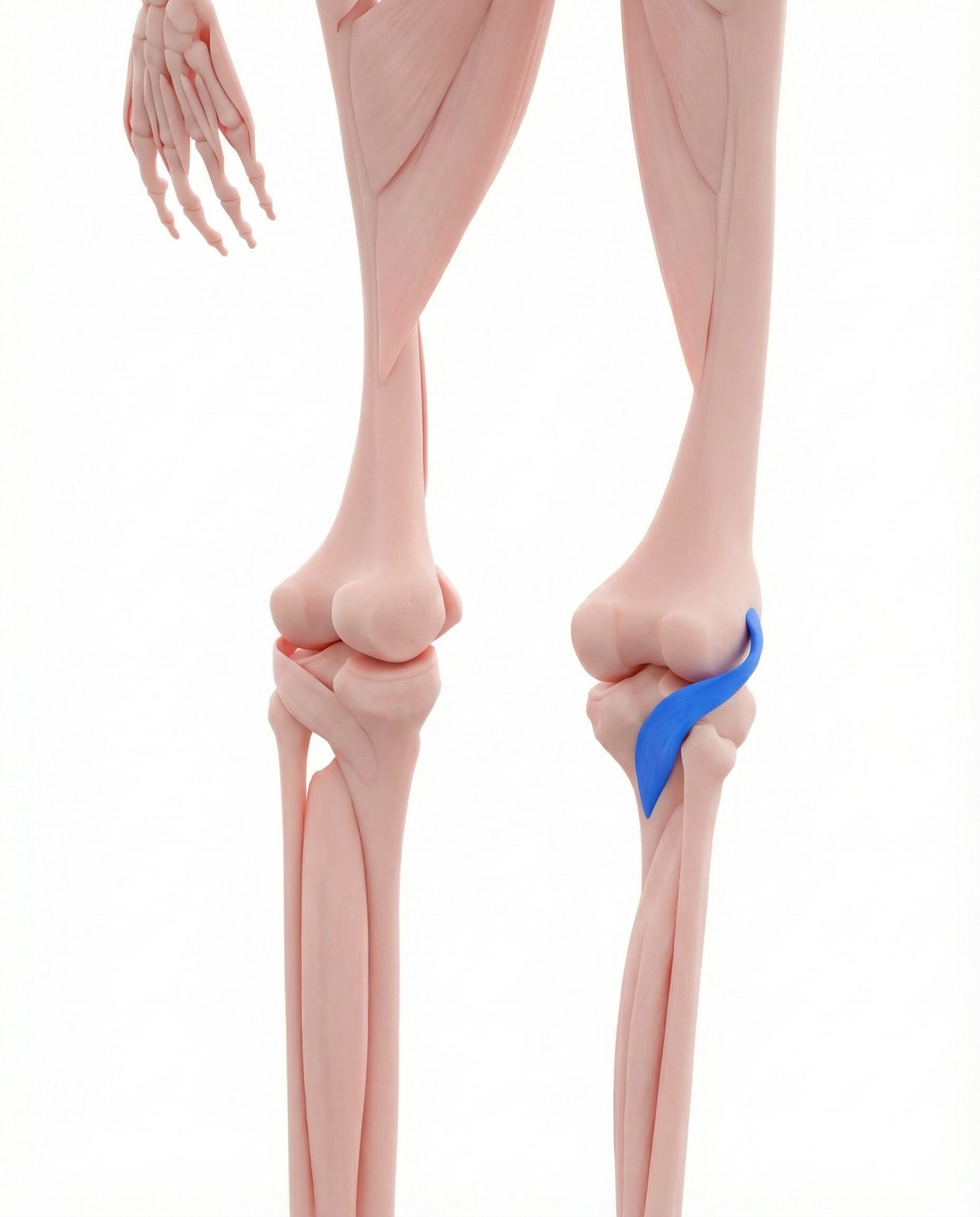
TrP 1
TrP1
Location. Back of knee, deep
Pain referral. Back of knee, calf
- Back of knee
- Calf
- Posterior knee
Deep posterior knee aching from popliteus trigger points in the popliteal fossa
Location. Back of knee, deep
Pain referral. Back of knee, calf
Location. Near tibial attachment of popliteus
Pain referral. Posterior knee and proximal calf
Location. Lateral meniscal attachment area
Pain referral. Lateral and posterior knee
Back of knee pain. Deep posterior knee aching from popliteus trigger points in the popliteal fossa
Calf pain. Referred upper calf discomfort from popliteus trigger point radiation into gastrocnemius area
Knee locking. Inability to initiate knee flexion from locked extension due to popliteus trigger points
Difficulty straightening knee. Posterior knee pain preventing full extension from popliteus taut band resistance
Posterior knee pain during knee flexion. Popliteus trigger point produces posterior knee ache during active knee flexion movements
Difficulty fully straightening knee. Taut popliteus band restricts terminal knee extension creating mechanical block sensation
Posterior knee locking sensation. Popliteus spasm mimics meniscal locking with pseudo-catching in the posterior knee
Pain walking downhill. Eccentric popliteus loading during downhill gait aggravates trigger points at tibial insertion
Popliteal fossa tenderness. Direct palpation of popliteal fossa elicits deep tenderness from sensitized popliteus trigger points
Lateral knee pain. Lateral knee ache from popliteus trigger point at lateral meniscal attachment creating joint line pain
Posterior knee catching sensation. Popliteus spasm creates pseudo-catching mimicking meniscal pathology at posterior knee
Pain with knee locking or unlocking. Popliteus trigger points impair its role in unlocking the knee from full extension
Difficulty with downhill walking. Eccentric popliteus loading during downhill gait aggravates trigger points at lateral attachment
Lateral knee joint line tenderness. Palpable lateral joint line tenderness from popliteus trigger point at meniscal attachment area
Running downhill. Eccentric popliteus loading during downhill deceleration overloads the muscle progressively
Sudden twisting. Rapid rotational knee movements strain the popliteus as primary internal rotation initiator
Knee hyperextension. Excessive knee extension stretches popliteus beyond normal length causing fiber damage
Cycling. Sustained repetitive knee flexion-extension during pedaling fatigues the popliteus muscle
Skiing. Sustained knee flexion with rotational control demands chronically overload the popliteus
Downhill running or hiking. Eccentric popliteus loading during downhill descent overloads its tibial attachment chronically
Hyperextension knee injury. Forced knee hyperextension strains popliteus as it resists excessive posterior tibial displacement
Rotational knee trauma. Sudden knee rotation overloads popliteus in its role as an internal tibial rotator
Prolonged crouching or squatting. Sustained deep knee flexion keeps popliteus contracted creating ischemic trigger point conditions
Post-ACL or meniscal surgery guarding. Protective posterior knee muscle guarding after surgery overloads popliteus chronically
Rotational knee injury. Sudden knee rotation overloads popliteus at lateral meniscal attachment creating acute trigger points
ACL injury compensation. Increased popliteus demand for rotational knee stability after ACL injury creates chronic overload
Downhill running or skiing. Repetitive eccentric popliteus loading during downhill descent overloads lateral attachment chronically
Sudden pivoting movements. Rapid knee pivoting creates high rotational forces through popliteus at meniscal attachment
Hyperextension injury. Forced knee hyperextension stretches popliteus creating trigger points at meniscal-tibial attachments
Sit on a chair and place a tennis ball behind the affected knee, nestled into the soft area at the back of the knee joint (popliteal fossa). Gently bend the knee to compress the ball into the tissue. Hold sustained pressure for 20-30 seconds, then slightly reposition the ball and repeat. The pressure should be firm but tolerable. Avoid pressing directly on any pulsing blood vessel.
Apply a warm, damp towel or microwavable heat pack to the back of the knee. Keep the knee slightly bent in a comfortable position. Ensure the heat is comfortably warm but not hot enough to burn the sensitive skin behind the knee.
Stand facing a step or low platform. Place the heel of the affected leg on the step with the knee straight. Keeping your back flat, gently lean forward from the hips until you feel a stretch behind the knee and along the back of the leg. Hold for 30 seconds. Then, with the same leg on the step, slightly bend the knee to shift the stretch to the calf and deeper posterior knee structures. Hold for another 30 seconds.
Loop a resistance band around a sturdy post at knee height and around the back of the affected knee. Stand facing the anchor point with slight tension on the band. From a slightly bent knee position, slowly straighten the knee fully against the band resistance. Hold the fully straight position for 3 seconds, then slowly return to the slightly bent position. This specifically strengthens the popliteus and surrounding knee stabilizers.
When walking downhill or descending stairs, take shorter steps and keep your knees slightly bent throughout. Lead with the unaffected leg when going down stairs. Slow your pace and use a handrail when available. Avoid locking the knee straight during the stance phase. For steep declines, consider a zigzag walking pattern to reduce the grade and decrease eccentric loading on the popliteus.
Consult an orthopedic specialist or sports medicine physician if you experience knee swelling, a feeling of the knee locking or catching, or the knee giving way during weight-bearing. These symptoms may indicate a meniscus tear, Baker cyst, or other structural knee problem that requires imaging and specific treatment beyond trigger point therapy.