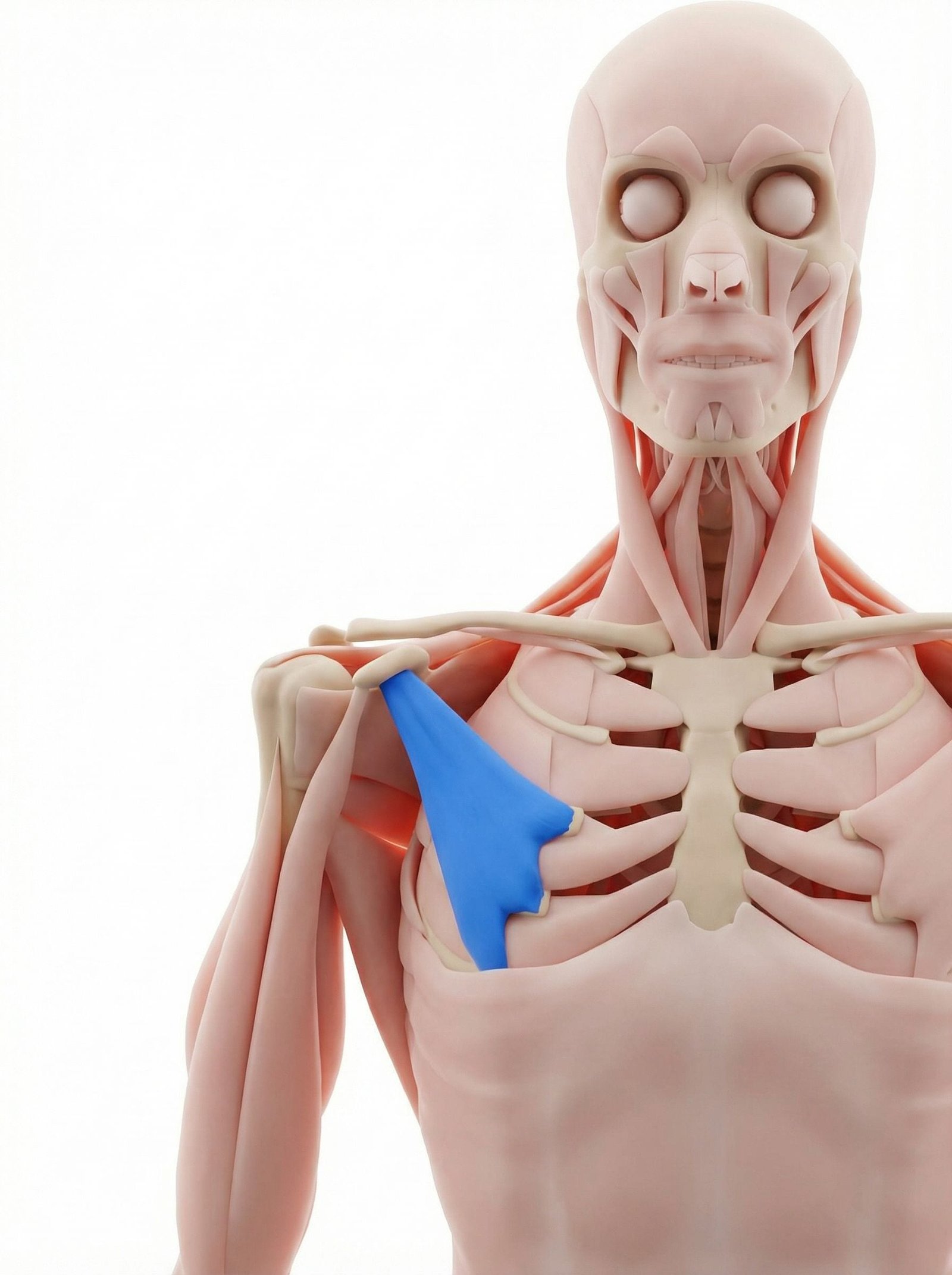
TrP 1
TrP1
Location. Deep chest, ribs 3-5 to shoulder
Pain referral. Front of shoulder, chest, down arm
- Front of shoulder
- Chest
- Down front of arm
- Fourth and fifth fingers
- Upper back
Anterior shoulder ache from pec minor compression of neurovascular bundle beneath coracoid
Location. Deep chest, ribs 3-5 to shoulder
Pain referral. Front of shoulder, chest, down arm
Location. Near coracoid process insertion of pectoralis minor
Pain referral. Anterior deltoid and down medial arm to hand
Location. Near 5th rib attachment inferiorly
Pain referral. Inferior anterior chest and precordial area
Shoulder pain. Anterior shoulder ache from pec minor compression of neurovascular bundle beneath coracoid
Chest pain. Deep precordial pain often confused with angina, worsened by protraction
Arm pain. Radiating pain down anterior arm from brachial plexus entrapment under shortened muscle
Numbness in hand. Paresthesias in fourth and fifth fingers from neurovascular compression at thoracic outlet
Thoracic outlet symptoms. Vascular and neural compromise as pec minor entraps subclavian vessels and brachial plexus
Anterior shoulder pain. Coracoid insertion trigger point refers pain to anterior deltoid from periosteal irritation
Numbness down medial arm to fingers. Pectoralis minor compression of neurovascular bundle causes medial arm and ulnar hand paresthesia
Hand weakness. Brachial plexus lower trunk compression beneath pectoralis minor reduces hand motor output
Thoracic outlet type symptoms. Pectoralis minor compresses neurovascular bundle at costoclavicular space causing outlet syndrome
Difficulty with overhead activities. Shortened pectoralis minor restricts scapular posterior tilt needed for full overhead reach
Anterior chest pain mimicking cardiac pain. Inferior pectoralis minor trigger points create precordial pain closely mimicking angina pectoris
Precordial catch sensation. Trigger points near the 5th rib create a sharp catching pain during inspiration at the precordium
Breast pain (inframammary). Referral to the inframammary fold creates breast pain that may prompt breast pathology investigation
Pain with deep breathing. Rib expansion during deep inspiration stretches pectoralis minor taut bands provoking anterior chest pain
Difficulty with arm elevation above head. Overhead reach tilts the scapula loading the pectoralis minor at its inferior rib attachments
Rounded shoulders posture. Sustained scapular protraction keeps pec minor chronically shortened and hypertonic
Computer work. Forward head and shoulder posture during desk work overloads pectoralis minor
Driving. Arms-forward position with sustained shoulder protraction shortens pec minor fibers
Swimming. Repetitive overhead pulling patterns overwork pec minor as scapular stabilizer
Overhead activities. Prolonged overhead reaching demands excessive pec minor eccentric control of scapula
Stress breathing. Shallow upper chest breathing recruits pec minor as accessory respiratory muscle
Rounded shoulder posture. Chronic protraction adaptively shortens pectoralis minor creating trigger points at coracoid insertion
Prolonged computer work. Forward-reaching arm position during computing sustains pectoralis minor in shortened state
Carrying heavy backpacks. Backpack straps compress pectoralis minor against coracoid process creating ischemic trigger points
Pectoralis minor shortening from bench pressing. Heavy pressing develops pectoralis minor without adequate lengthening creating adaptive shortening
Anxiety-driven chest breathing. Accessory breathing pattern recruits pectoralis minor for rib elevation with every breath
Prolonged driving. Sustained arm-forward position gripping steering wheel chronically shortens pectoralis minor
Chronic rounded shoulder posture. Habitual shoulder protraction shortens the pectoralis minor creating chronic ischemic trigger points
Breast weight in larger-chested individuals. Sustained anterior chest wall loading from breast mass overloads the pectoralis minor attachments
Pectoral muscle strain from bench press. Heavy bench pressing strains the pectoralis minor as a scapular stabilizer during chest exercise
Sustained desk work with forward reach. Prolonged forward reaching posture maintains pectoralis minor in a shortened contracted position
Post-mastectomy scar tissue compensation. Surgical scarring alters chest wall mechanics creating compensatory pectoralis minor trigger points
Stand facing a corner with your hands on the walls at shoulder height. Step forward and lean into the corner until you feel a deep stretch below the collarbone and in the front of the shoulder. This targets pec minor more effectively than a standard doorway stretch.
Place a tennis ball on the area just below your collarbone and above the armpit. Lean into a wall with the ball pressing into this area. Slowly roll the ball and hold on tender spots for 30-60 seconds. The pec minor is deep, so you need firm but tolerable pressure.
Lie face down on the floor or a bench. Raise your arms into a Y position (thumbs up), hold 5 seconds, lower. Then raise into a T position, hold, lower. Then a W position (elbows bent, squeeze shoulder blades), hold, lower. This strengthens the muscles that oppose pec minor.
Lie on your back with knees bent. Place one hand on your chest and one on your belly. Breathe in through your nose so your belly rises while your chest stays still. Exhale slowly through pursed lips. This reduces reliance on pec minor as an accessory breathing muscle.
Set up your workstation so your shoulders can stay relaxed and pulled back. Avoid leaning forward toward the screen. Use a chair with good back support. Take breaks every 30 minutes to stand and pull your shoulders back. Avoid carrying heavy bags on one shoulder.
If you experience numbness, tingling, or weakness in your arm or hand, especially in the ring and little fingers, consult a physiatrist or neurologist. Pec minor can compress the brachial plexus and blood vessels (thoracic outlet syndrome). Professional treatment may include targeted release, nerve gliding techniques, and comprehensive postural rehabilitation.