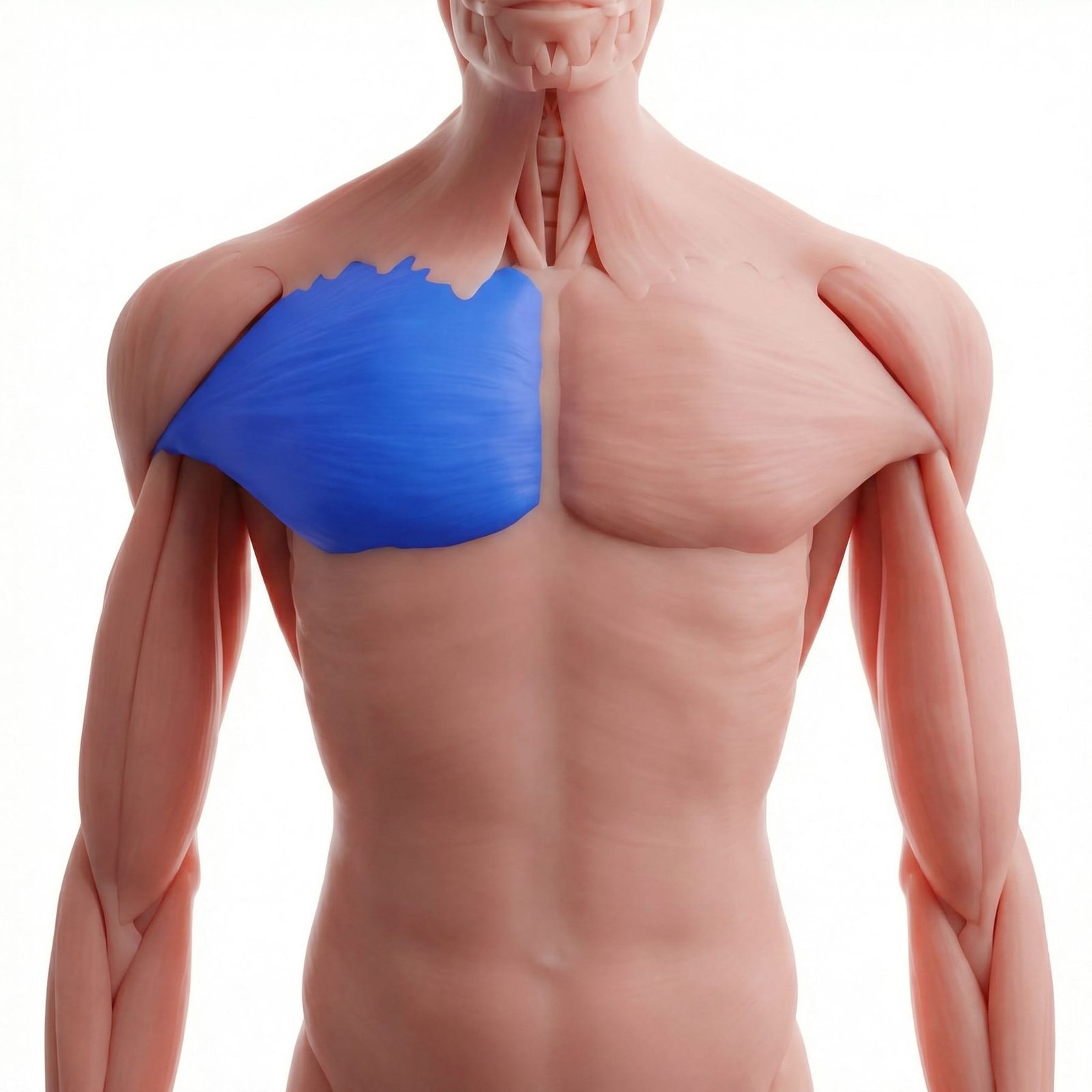
TrP 1
Pectoralis Major
Location. Chest, from sternum to shoulder
Pain referral. Chest, front of shoulder, inner arm
- Chest
- Front of shoulder
- Inner arm
- Fourth and fifth fingers
- Breast tissue
Substernal and precordial aching that may mimic cardiac pain at rest
Location. Chest, from sternum to shoulder
Pain referral. Chest, front of shoulder, inner arm
Chest pain. Substernal and precordial aching that may mimic cardiac pain at rest
Shoulder pain. Anterior deltoid region pain aggravated by horizontal adduction and internal rotation
Arm pain. Referred ache along medial arm and forearm following ulnar nerve distribution
Breast pain. Diffuse breast tenderness and hypersensitivity from underlying pectoral trigger points
Heart palpitations sensation. Perceived cardiac arrhythmia from pectoral spasm stimulating intercostal nerve fibers
Weightlifting (bench press). Eccentric overload during lowering phase strains sternal and clavicular fibers
Push-ups. Repetitive concentric loading with insufficient recovery fatigues pectoral fibers
Swimming. Sustained overhead pulling strokes overwork pectoralis major through full range
Stress. Chronic emotional tension causes sustained low-grade pectoral guarding and hypertonicity
Poor posture. Protracted shoulders shorten pectoral fibers creating sustained passive tension
Carrying heavy bags. Unilateral shoulder loading activates pectoral stabilizers asymmetrically under sustained load
Deep breathing during anxiety. Accessory breathing recruits pectorals as respiratory muscles causing overuse fatigue
Stand in a doorway with both arms raised to 90 degrees, forearms resting on the door frame. Step one foot forward and gently lean through the doorway until you feel a comfortable stretch across your chest. Keep your back straight and avoid arching your low back.
Place a tennis ball between your chest (just below the collarbone and toward the shoulder) and a wall. Lean into the ball with comfortable pressure and slowly roll it across the pectoral muscle. When you find a tender spot, hold sustained pressure for 30-60 seconds.
Lie lengthwise on a foam roller so it runs along your spine from head to tailbone. Let your arms fall out to the sides with palms up, allowing gravity to gently open the chest. Breathe deeply and focus on relaxing the pectoral muscles with each exhale.
Stand with your back against a wall, arms raised to shoulder height with elbows bent at 90 degrees. Slowly slide your arms up overhead keeping contact with the wall, then slide back down. This strengthens the mid-back while lengthening the pectorals.
Counteract chest tightness by strengthening the opposing muscles. Set reminders to check posture every 30 minutes. Roll shoulders back and down. Balance any chest exercises with equal or greater volume of rowing and pulling exercises to prevent pectoral dominance.
If chest pain persists despite self-care, or if you experience pain with exertion, shortness of breath, or radiation to the jaw or left arm, seek immediate medical evaluation. Once cardiac causes are excluded, a physiatrist can perform targeted trigger point treatment for persistent pectoral myofascial pain.