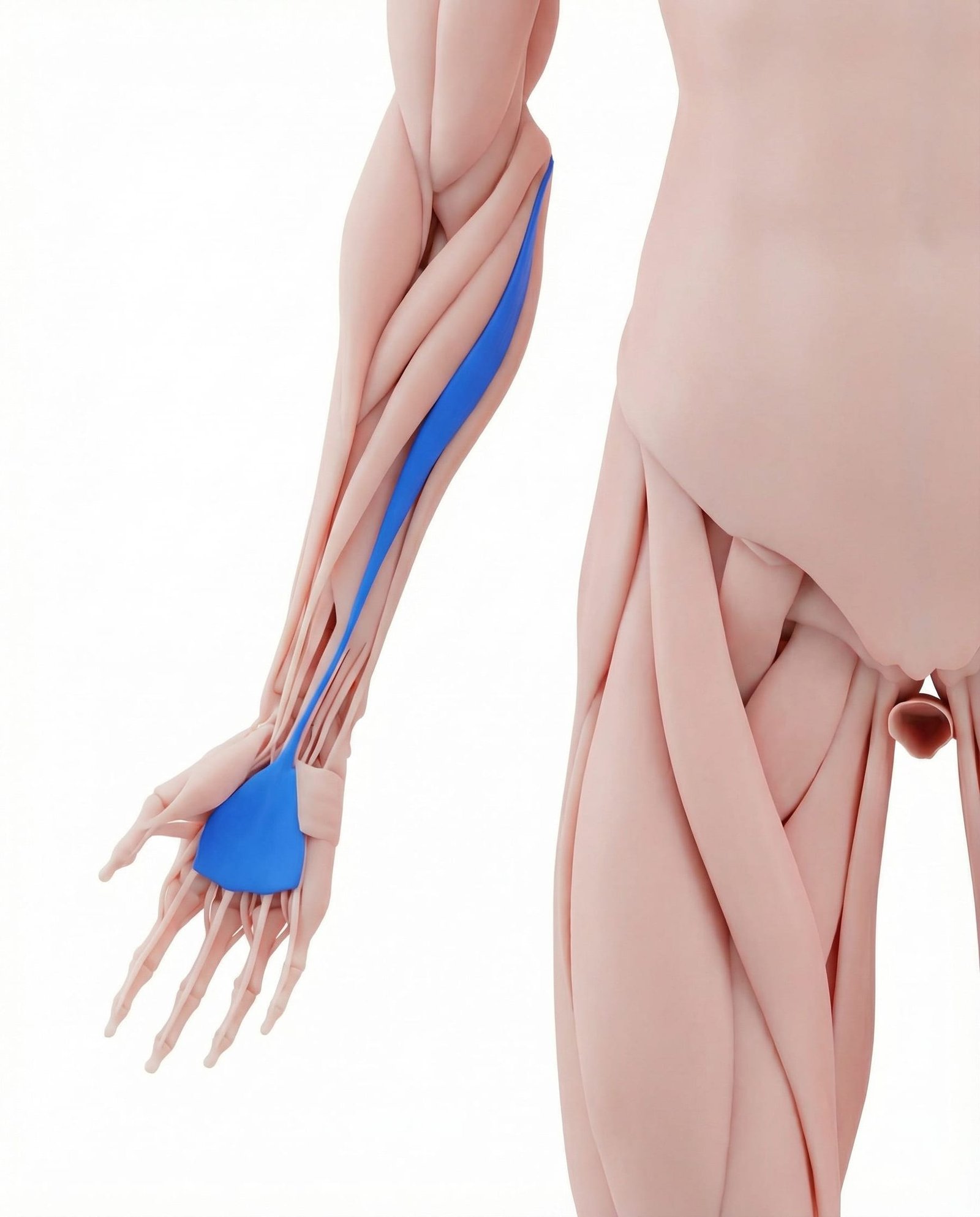
TrP 1
TrP1
Location. Inner forearm, superficial
Pain referral. Inner forearm, palm, wrist
- Inner forearm
- Palm
- Wrist
- Base of thumb
Aching along medial forearm from superficial flexor trigger point taut band activation
Location. Inner forearm, superficial
Pain referral. Inner forearm, palm, wrist
Location. Mid-forearm belly
Pain referral. Central palm and anterior wrist
Inner forearm pain. Aching along medial forearm from superficial flexor trigger point taut band activation
Palm pain. Referred pain to palmar fascia region from palmaris longus distal trigger point referral
Wrist discomfort. Volar wrist pain from trigger point tension in palmaris longus tendon approach zone
Prickling or needle-like sensation in palm. Palmaris longus trigger points create dysesthetic prickling referral across the central palmar surface
Anterior wrist aching. Referral to the anterior wrist crease creates aching along the palmaris longus tendon course
Palm tenderness with gripping. Gripping tensions the palmar aponeurosis via palmaris longus provoking central palmar trigger points
Difficulty with sustained grip. Trigger point-mediated palmaris longus fatigue reduces palmar tensioning for sustained grip support
Sense of forearm fatigue. Mid-forearm trigger points create localized fatigue sensation in the anterior forearm flexor mass
Repetitive wrist flexion. Sustained or repeated wrist flexion overloads superficial forearm flexor muscle fibers
Gripping. Forceful sustained grip requires palmaris longus co-contraction for wrist stabilization
Typing. Prolonged keyboard use with wrist flexion creates cumulative palmaris longus microtrauma
Tool use. Sustained hand tool gripping overloads forearm flexor muscles including palmaris longus
Repetitive gripping activities. Sustained gripping tensions the palmar aponeurosis through palmaris longus creating forearm overload
Excessive use of hand tools (pliers, wrenches). Forceful tool gripping maximally loads palmaris longus for palmar aponeurosis tensioning and grip support
Golf or racquet sports. Club and racquet grip combined with impact forces overload the palmaris longus during each stroke
Prolonged mouse use with wrist flexion. Sustained wrist flexion during mouse use maintains chronic palmaris longus activation
Playing guitar or piano with tense wrist. Excessive wrist tension during instrument playing chronically loads the palmaris longus muscle
Extend your arm in front of you with the palm facing up and elbow straight. Use your other hand to gently pull your fingers back toward the floor until you feel a comfortable stretch along the inner forearm. Hold the stretch without bouncing.
Using the thumb of the opposite hand, apply firm circular pressure across the palm, focusing on tender spots in the center of the palm and the base of the fingers. When you find a particularly tender point, hold steady pressure for 20-30 seconds until the tenderness fades. Work systematically from the heel of the palm to the base of each finger.
Rest your forearm on a table with your hand hanging off the edge, palm facing up. Hold a light weight (1-2 pounds or a water bottle). Slowly curl your wrist upward, hold for 2 seconds, then lower slowly over 4 seconds. Perform 10-15 repetitions. Start very light and increase weight only when the exercise is pain-free.
Replace thin, hard tool handles with padded, ergonomic grips that distribute pressure across a wider area of the palm. Use foam tubing or built-up handle wraps on pens, kitchen utensils, and hand tools. When possible, switch to power tools to reduce sustained gripping.
Set a timer for every 20-30 minutes during sustained gripping activities. During each break, fully open and spread your fingers wide for 5 seconds, then relax. Shake your hands gently and perform the forearm flexor stretch. Alternate between gripping tasks and non-gripping tasks when possible.
If palm burning, tingling, or numbness persists despite 3-4 weeks of self-care, or if numbness develops specifically in the thumb, index, and middle fingers, consult a hand specialist or neurologist. They can perform nerve conduction studies to differentiate palmaris longus trigger points from true carpal tunnel syndrome and recommend appropriate treatment.