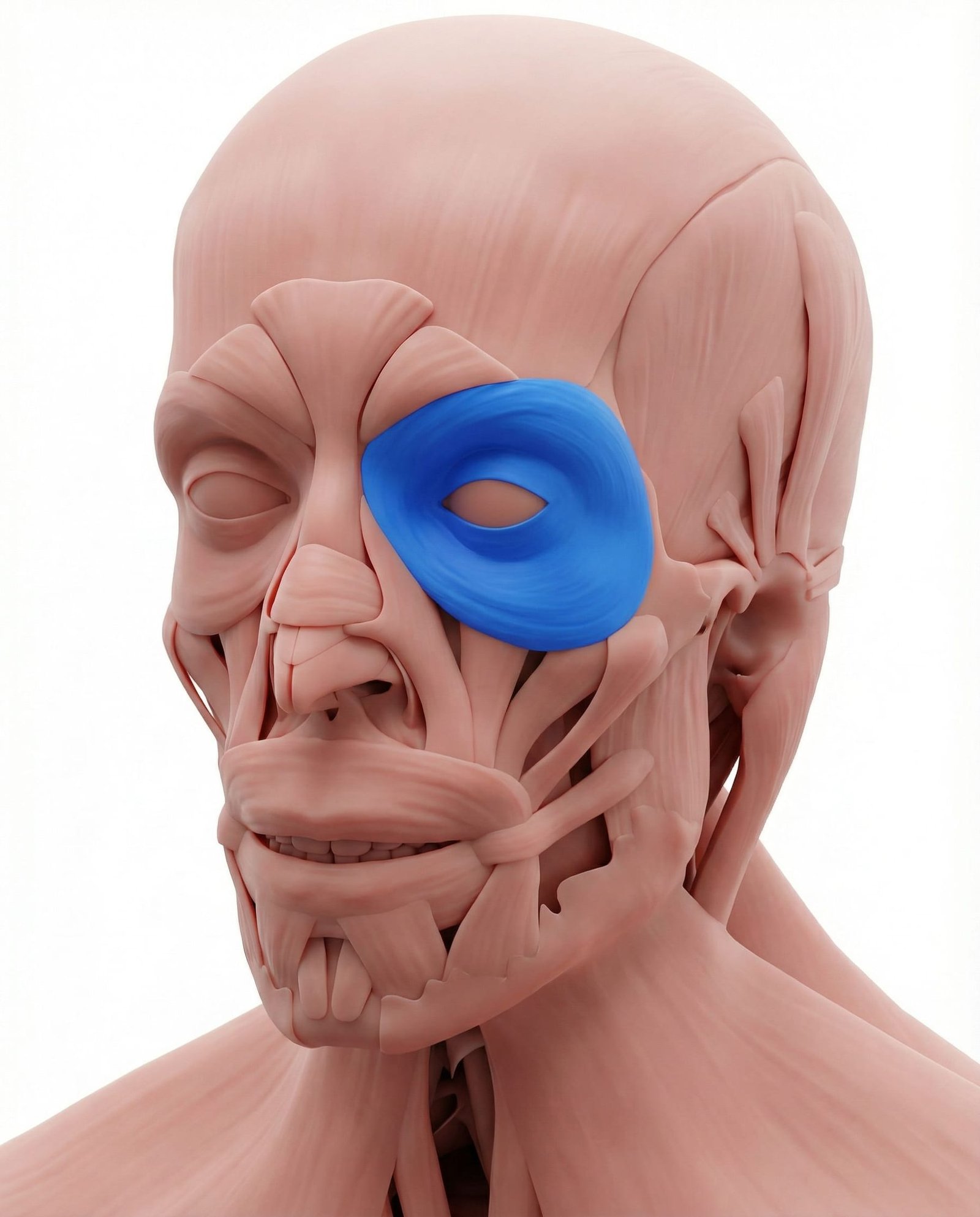
TrP 1
TrP1
Location. Around the eye
Pain referral. Eye area and surrounding region
- Around eye
- Eyebrow
- Temple
Aching or burning sensation around the orbital rim from periocular muscle tension
Location. Around the eye
Pain referral. Eye area and surrounding region
Location. Lower orbital portion beneath eye
Pain referral. Infraorbital region and upper cheek
Eye pain. Aching or burning sensation around the orbital rim from periocular muscle tension
Eyelid twitching. Involuntary fasciculation of eyelid fibers from irritable trigger point motor activity
Eye fatigue. Heavy tired sensation around the eyes from sustained orbicularis contraction
Brow ache. Dull supraorbital discomfort from trigger point referral to the eyebrow region
Under-eye aching. Lower orbicularis oculi trigger points create aching in the infraorbital region beneath the eye
Lower eyelid twitching. Trigger point-mediated fasciculation in the lower orbicularis fibers causes visible eyelid fluttering
Infraorbital tenderness. Taut bands beneath the eye create point tenderness along the infraorbital ridge on palpation
Sensation of puffiness under eyes. Trigger point-mediated local edema and sensitivity create a perceived puffiness below the eyes
Tearing from the affected eye. Orbicularis trigger points can irritate the lacrimal drainage pathway causing reflex tearing
Eye strain. Prolonged visual concentration causes sustained orbicularis contraction and metabolic overload
Squinting. Repeated forceful eyelid narrowing fatigues orbicularis oculi muscle fibers chronically
Computer use. Extended screen time reduces blink rate and increases periocular muscle tension
Reading. Sustained near-focus effort causes reflexive squinting that overworks orbicularis fibers
Stress. Emotional tension produces unconscious facial guarding and periocular muscle tightening
Lack of sleep. Sleep deprivation increases orbicularis irritability and lowers trigger point activation threshold
Chronic allergic eye rubbing. Repetitive vigorous eye rubbing mechanically overloads the delicate lower orbicularis oculi fibers
Extended screen time causing squinting. Sustained partial squinting during screen work chronically contracts lower orbicularis oculi muscles
Contact lens irritation. Chronic lens-related eye irritation triggers reflexive orbicularis contraction and protective squinting
Chronic sinusitis with periorbital congestion. Sinus congestion creates periorbital tissue edema increasing pressure on orbicularis oculi fibers
Facial tension from emotional stress. Psychogenic facial muscle tension chronically activates orbicularis oculi trigger points
Using your index finger or middle finger, gently press along the bony rim surrounding the eye — start at the inner corner near the nose, trace along the brow bone, around to the outer corner, and then along the lower orbital rim beneath the eye. When you find a tender spot, hold gentle steady pressure for 15-20 seconds until the tenderness begins to ease. Use very light pressure since the tissue here is delicate.
Soak a clean washcloth in comfortably warm water, wring it out, and drape it over both closed eyes while lying down. Alternatively, use a microwaveable eye mask designed for moist heat. Keep the eyes closed and breathe slowly throughout the application. Reheat or replace the compress if it cools before the session ends.
Every 20 minutes of screen use or close-focus work, look away from the screen and focus on an object at least 20 feet away for at least 20 seconds. During this break, consciously relax the muscles around your eyes — let your brow drop, unclench your eyelids, and blink several times slowly. Combine this with a gentle facial relaxation breath.
Sit comfortably and close your eyes gently. Raise your eyebrows as high as you can and hold for 5 seconds, then release completely. Next, squeeze your eyes shut tightly for 3 seconds, then let them relax fully. Repeat the cycle 5 times. Finish by placing your fingertips lightly on your closed eyelids and feeling the muscles soften beneath your fingers as you take slow, deep breaths.
Position your screen at arm's length (approximately 50-70 cm from your eyes) with the top of the screen at or slightly below eye level. Adjust screen brightness to match the ambient lighting in the room — the screen should not be noticeably brighter or dimmer than your surroundings. Increase text size to a comfortable reading level so you do not need to squint. Reduce blue light using a warm display setting or blue-light filtering mode, especially in the evening.
If periorbital pain persists despite self-care measures for more than 2-3 weeks, schedule an appointment with an eye care professional (optometrist or ophthalmologist) to rule out refractive errors, dry eye disease, or other ocular conditions. If the eye exam is normal, consider a referral to a myofascial pain specialist or physical therapist experienced in facial trigger point treatment for targeted manual therapy.