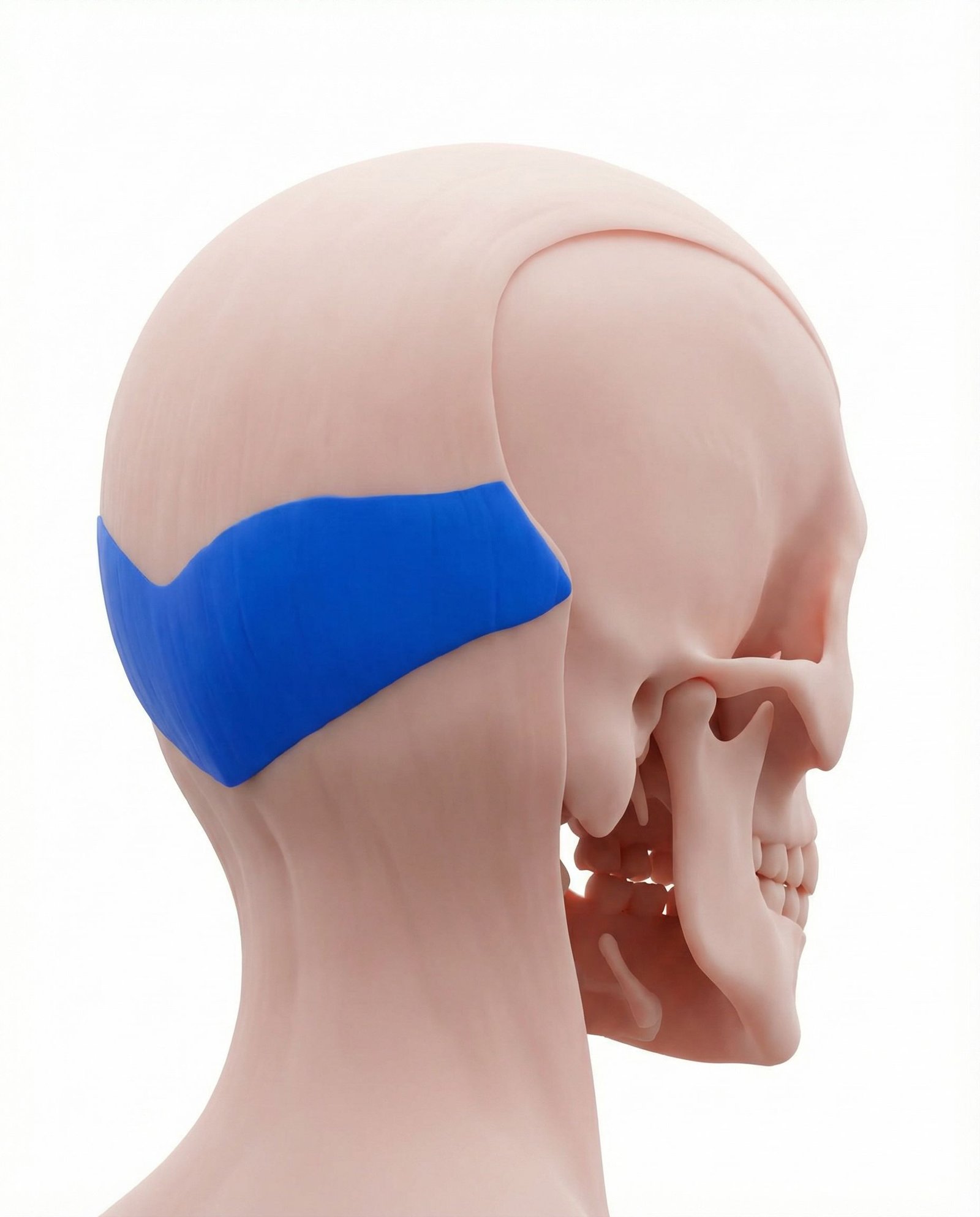
TrP 1
TrP1
Location. Back of skull
Pain referral. Back of head, occipital region
- Back of head
- Upper neck
- Behind eyes
Aching pain at the back of the skull radiating upward toward the vertex
Location. Back of skull
Pain referral. Back of head, occipital region
Location. Lateral attachment near mastoid process
Pain referral. Posterolateral skull and behind ear
Occipital headache. Aching pain at the back of the skull radiating upward toward the vertex
Scalp tenderness. Heightened sensitivity of the occipital scalp to touch or pressure
Pain at base of skull. Deep ache at the occipital ridge where the muscle attaches to bone
Pain behind ear mistaken for ear pathology. Occipitalis trigger points near the mastoid refer to the retroauricular area mimicking ear disease
Posterolateral headache. Referral creates a posterolateral cranial headache pattern behind and above the ear
Tenderness at skull base laterally. Taut bands at the lateral occipital attachment create palpable tenderness along the nuchal line
Scalp sensitivity behind ear. Central sensitization from trigger point referral increases scalp sensitivity in the retroauricular zone
Difficulty lying on affected side. Lateral recumbent position compresses trigger points against the pillow provoking retroauricular pain
Tension. Chronic muscle tension from stress creates sustained occipitalis contraction and ischemia
Forward head posture. Anterior head carriage increases occipitalis load to stabilize the cranium posteriorly
Stress. Psychological stress causes reflexive scalp muscle tension activating occipital trigger points
Tight neck muscles. Cervical muscle hypertonicity transfers mechanical strain upward into the occipitalis
Eye strain. Prolonged visual focus causes reciprocal occipitalis tension through frontalis-occipitalis connection
Sleeping on one side consistently. Sustained lateral compression of occipitalis against the pillow creates chronic ischemic trigger points
Tight eyeglasses frames pressing on mastoid area. External compression from glasses temples on the mastoid region irritates lateral occipitalis fibers
Forward head posture with lateral tilt. Combined anterior and lateral cervical posture asymmetrically overloads the lateral occipitalis muscle
Post-concussion muscular guarding. Post-traumatic cervical muscle guarding activates persistent occipitalis trigger points
Whiplash injury. Cervical acceleration-deceleration with rotational component traumatically overloads lateral occipitalis
Place both hands behind your head with your fingertips at the base of your skull where it meets the neck. Using your fingertips, apply firm but comfortable pressure in small circular motions along the ridge at the bottom of the skull. Work from the center outward toward the ears, spending extra time on any tender spots. Hold sustained pressure on each tender point for 20-30 seconds until you feel the tension release.
Lie on your back on a firm surface and place a tennis ball under the base of your skull where you feel tenderness. Allow the weight of your head to create pressure on the ball. Slowly turn your head slightly left and right to massage different areas along the skull base. When you find a particularly tender spot, hold still and breathe deeply for 30 seconds. Adjust the ball position to cover the entire occipital ridge.
Sit tall in a chair and gently tuck your chin toward your chest, feeling a stretch at the back of your neck and base of your skull. Hold for 20 seconds. Next, gently tilt your head to one side, bringing your ear toward your shoulder until you feel a stretch on the opposite side. Hold for 20 seconds and repeat on the other side. Finally, place both hands behind your head and gently pull your chin further toward your chest for an enhanced stretch of the occipital area.
Sit or stand with your back straight and shoulders relaxed. Without tilting your head up or down, gently glide your chin straight back as if making a double chin. You should feel a gentle stretch at the base of your skull and a lengthening of the back of your neck. Hold for 5 seconds, then relax. The movement is small and controlled, focusing on retracting the head over the shoulders rather than looking down.
Choose a pillow that supports the natural curve of your neck without pushing your head too far forward or letting it fall too far back. When sleeping on your back, use a pillow that fills the space between your neck and the mattress while keeping your head in a neutral position. Consider a contoured cervical pillow with a built-in neck roll. If you sleep on your side, ensure the pillow thickness matches your shoulder width. Avoid sleeping on very firm or flat pillows that increase pressure on the back of the skull.
If occipital headaches persist despite 2-3 weeks of self-care, consult a healthcare professional experienced in myofascial pain or headache management. A physical therapist can perform targeted manual therapy including sustained pressure release and dry needling of the occipitalis. A physician can rule out occipital neuralgia, cervicogenic headache, or other neurological causes. Bring a headache diary noting frequency, duration, triggers, and what makes the pain better or worse.