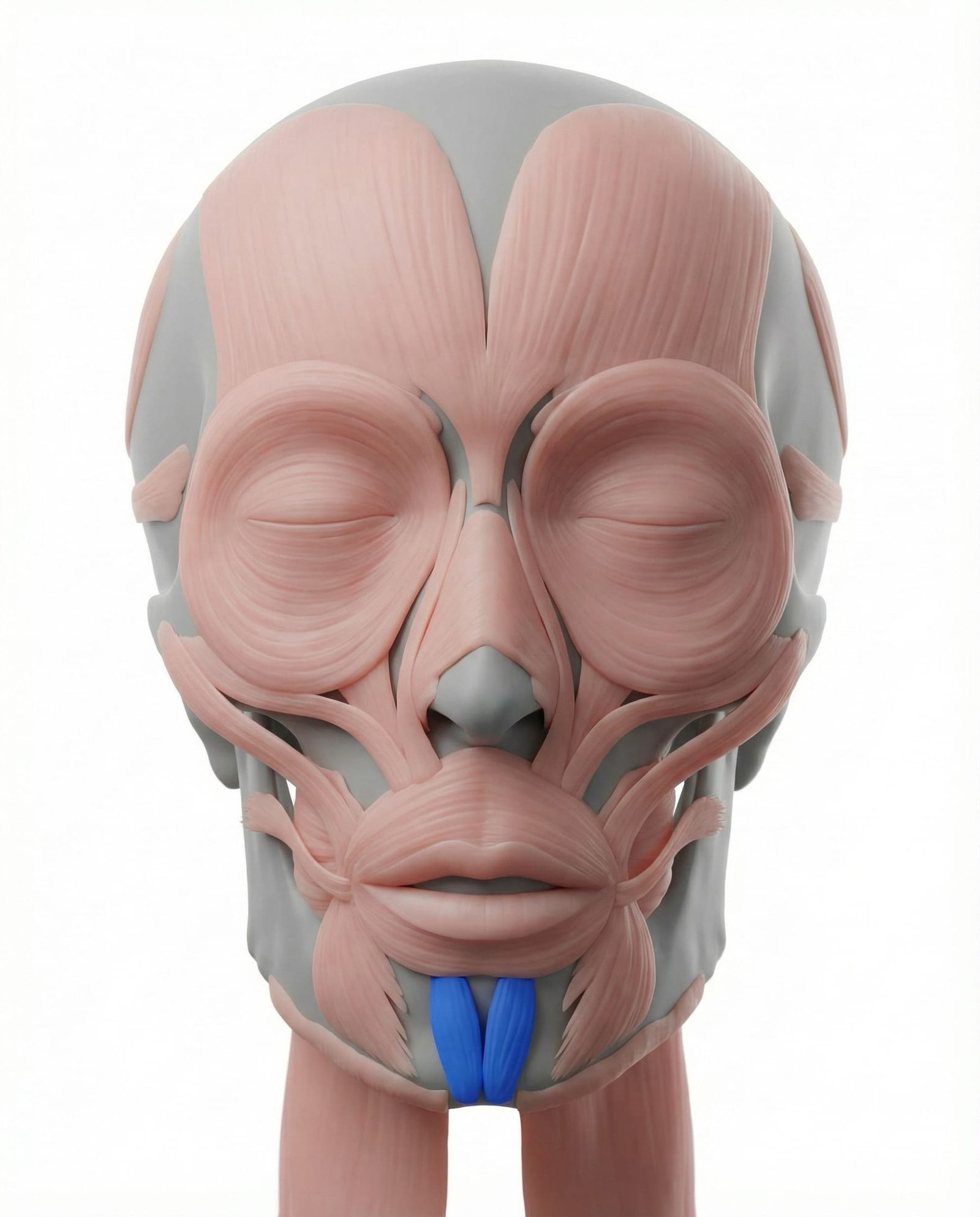
TrP 1
TrP1
Location. Chin
Pain referral. Chin, lower lip
- Chin
- Lower lip
- Jaw area
Localized chin aching from mentalis trigger points in the chin prominence musculature
Location. Chin
Pain referral. Chin, lower lip
Location. Deeper fibers near chin prominence
Pain referral. Chin and lower lip
Chin pain. Localized chin aching from mentalis trigger points in the chin prominence musculature
Lower lip discomfort. Referred sensation to lower lip from mentalis trigger point near labial attachment
Chin pain and tenderness. Deep mentalis trigger points create localized tenderness and pain at the chin prominence
Lower lip numbness or tingling. Trigger point proximity to the mental nerve can cause localized lower lip paresthesias
Chin dimpling or puckering involuntarily. Trigger point-mediated mentalis fasciculation creates involuntary chin dimpling and puckering
Lower incisor sensitivity. Referral to the mandibular incisor area creates perceived dental sensitivity without pathology
Discomfort resting chin on hand. External pressure on chin trigger points from hand support intensifies localized tenderness
Lip pursing. Habitual lip pursing or pouting creates sustained mentalis contraction causing fiber fatigue
Stress. Emotional tension manifests as involuntary chin muscle tightening and sustained contraction
Facial expressions. Repetitive chin dimpling and lower lip protrusion overloads small mentalis muscle fibers
Habitual chin resting on hand. Sustained external compression of the mentalis against the mandible creates ischemic trigger points
Playing chin-rest instruments (violin/viola). Chin-rest contact and clamping force chronically compresses the mentalis muscle during playing
Orthodontic changes affecting bite. Altered occlusion from orthodontic treatment changes mentalis loading for lip competence
Chronic lower lip biting. Habitual lip biting requires sustained mentalis contraction to position the lower lip
Post-dental work involving lower anterior teeth. Dental procedures on lower incisors can create local mentalis irritation and secondary trigger points
Gently push your lower lip upward and over your upper lip, creating a stretch in the chin muscle. Hold this position for 10-15 seconds, then slowly release. You should feel a gentle pulling sensation across the chin prominence. Keep the rest of your face relaxed during the stretch and breathe normally through your nose.
Soak a small washcloth in comfortably warm water and wring it out. Fold it and place it over your chin and lower lip area. Hold in place for 10 minutes, reheating the cloth as needed. The moist warmth relaxes the mentalis muscle and increases circulation to the area. Keep your jaw slack and teeth apart during the application.
Using your index and middle fingertips, lightly and rhythmically tap the chin prominence and the area just below the lower lip. Tap at a steady, gentle pace for about 1 minute. This percussive stimulation helps reset muscle tone and release superficial tension. Follow with slow, circular massage over the same area using light pressure.
Place your thumb under your chin and your index finger on the chin prominence. Apply gentle pinching pressure and slowly massage in small circles across the mentalis muscle. Then use your fingertips to stroke downward from the lower lip to the bottom of the chin, encouraging the muscle fibers to lengthen. Perform with your jaw in a relaxed, slightly open position.
Place small reminder stickers on your computer monitor, phone, or work area. Each time you notice one, check whether your teeth are clenched or your chin is tense. If so, separate your teeth, relax your jaw, and let your chin muscles go soft. Over time, this builds awareness of habitual clenching patterns and helps break the cycle of unconscious mentalis tension.
If chin pain or visible mentalis tension persists beyond 2-3 weeks of self-care, consult an orofacial pain specialist or a dentist experienced with TMJ and facial muscle disorders. They can assess for underlying dental malocclusion, TMJ dysfunction, or habitual bruxism contributing to mentalis overactivity. Professional intraoral and extraoral manual therapy techniques can effectively address persistent mentalis trigger points.