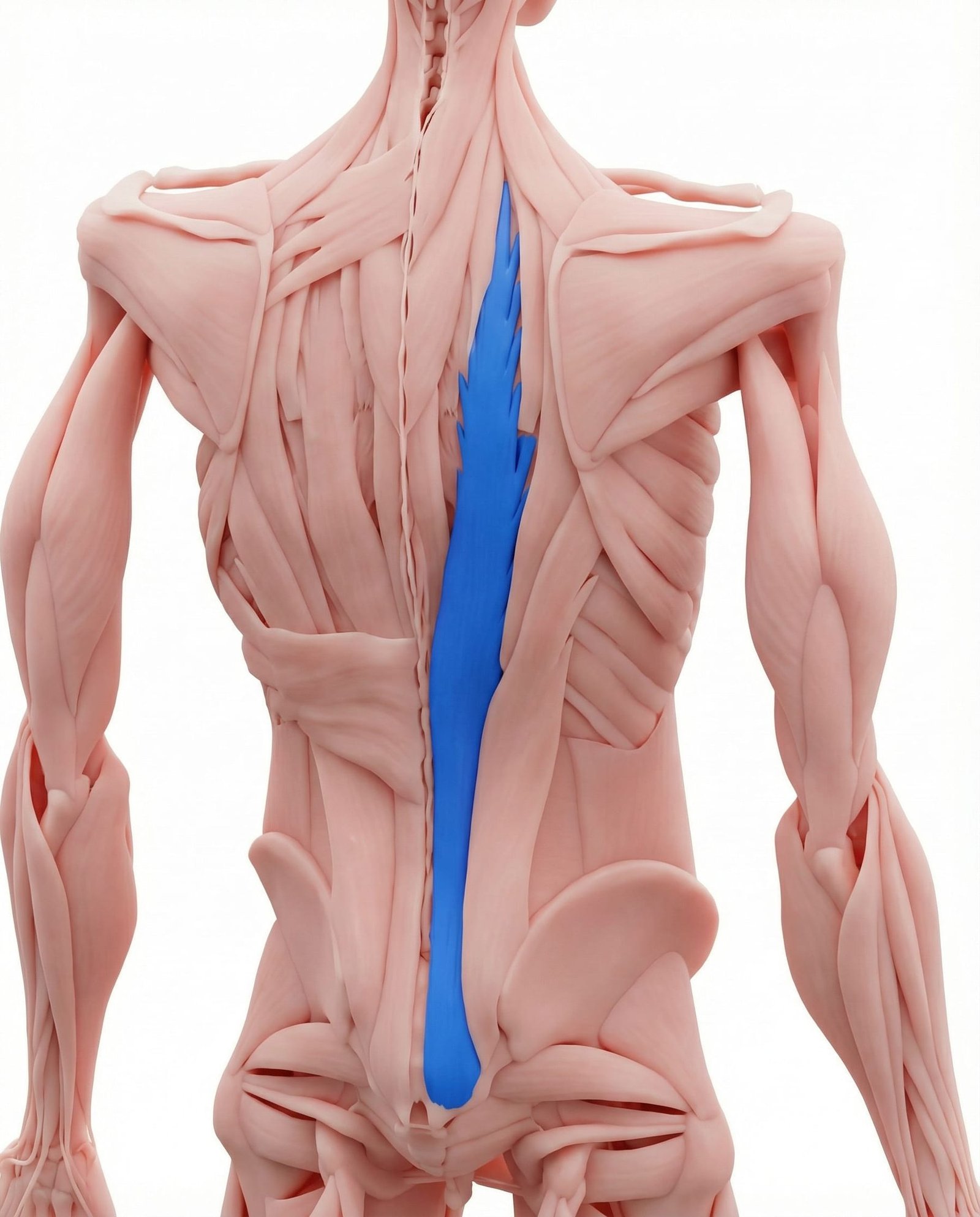
TrP 1
TrP1
Location. Along thoracic spine
Pain referral. Mid back, buttock
- Mid back
- Lower back
- Buttock
- Posterior thigh
Paravertebral thoracic aching from longissimus trigger points along spinal column attachments
Location. Along thoracic spine
Pain referral. Mid back, buttock
Location. Lower thoracic portion T8-T12
Pain referral. Lower thoracic and upper lumbar paraspinal region
Mid back pain. Paravertebral thoracic aching from longissimus trigger points along spinal column attachments
Lower back pain. Pain referred caudally from thoracic longissimus trigger points to lumbar paraspinal region
Buttock pain. Distant referral to gluteal region from thoracolumbar longissimus trigger point activation
Thoracolumbar junction stiffness. Rigidity at T12-L1 junction from longissimus trigger points restricting segmental mobility
Pain with prolonged standing. Static erect posture fatigues longissimus creating ischemic trigger point pain at lower thoracic level
Lower thoracic paraspinal ache. Dull aching lateral to lower thoracic spinous processes from longissimus trigger point referral
Difficulty with trunk extension. Inhibited longissimus contraction impairs active trunk extension at thoracolumbar junction
Upper lumbar area tenderness. Referred tenderness at upper lumbar region from lower longissimus thoracis trigger points
Poor posture. Chronic thoracolumbar flexion overloads longissimus maintaining erect spinal posture against gravity
Lifting. Repetitive or heavy lifting creates excessive loading on thoracic paraspinal extensor muscles
Prolonged sitting. Sustained seated posture creates continuous low-grade loading on thoracic paraspinal muscles
Weak core. Core insufficiency forces compensatory erector spinae overactivation for spinal stability control
Prolonged standing. Extended static standing creates sustained longissimus contraction maintaining erect posture under gravity
Deadlifts with rounded back. Flexed thoracic posture during deadlifts shifts load to longissimus creating eccentric overload
Scoliosis compensation. Spinal curvature creates asymmetric longissimus loading overworking the convex side chronically
Gardening or bending activities. Repetitive forward bending eccentrically overloads longissimus during trunk lowering and raising
Chronic lower thoracic postural strain. Sustained poor posture creates chronic low-grade longissimus overload at thoracolumbar region
Lie on your back on the floor with your knees bent. Place a tennis ball under the muscles alongside your thoracic spine on the painful side, not directly on the spine. Allow your body weight to create pressure on the ball. When you find a particularly tender point, hold steady pressure on it for 30-60 seconds until the tenderness begins to diminish. Shift the ball position to cover the entire painful area from mid-back to lower ribs.
Place a foam roller horizontally on the floor. Lie on your back with the roller positioned at the level of your mid-thoracic spine. Support your head with your hands behind your neck. Gently extend your upper back over the roller, allowing your thoracic spine to arch back over it. Hold for 3-5 seconds, then return to neutral. Move the roller up or down one vertebral level and repeat. Perform 3-5 extensions at each level.
Start on your hands and knees with a neutral spine. Slowly extend your right arm forward and your left leg backward simultaneously, keeping your hips and shoulders level. Hold for 5-10 seconds, then return to the starting position. Repeat with the left arm and right leg. Perform 10-12 repetitions on each side for 2-3 sets. Focus on maintaining a stable, neutral spine throughout the movement.
Lie face down on a firm surface with your arms extended alongside your body, palms down. Gently lift your chest and upper body a few inches off the surface by contracting your back muscles. Hold the lifted position for 5-10 seconds, then slowly lower back down. Perform 10-15 repetitions for 2-3 sets. Keep the movement controlled and avoid hyperextending your lower back. Progress by holding longer or adding small arm movements.
Set a timer to remind you to stand up and move every 30-45 minutes during prolonged sitting. When the timer goes off, stand up, walk around for 1-2 minutes, and perform a gentle standing back extension by placing your hands on your lower back and leaning back slightly. This interrupts the sustained flexion loading on your thoracic paraspinals and helps restore normal blood flow to the muscles.
If mid-back pain persists beyond 4 weeks or is accompanied by radiating symptoms into the legs, numbness, or progressive weakness, consult a healthcare professional. A thorough spinal examination including assessment of segmental mobility, neurological screening, and potentially imaging can identify underlying conditions. A physiotherapist can provide manual therapy, specific exercise prescription, and ergonomic guidance tailored to your longissimus thoracis dysfunction.