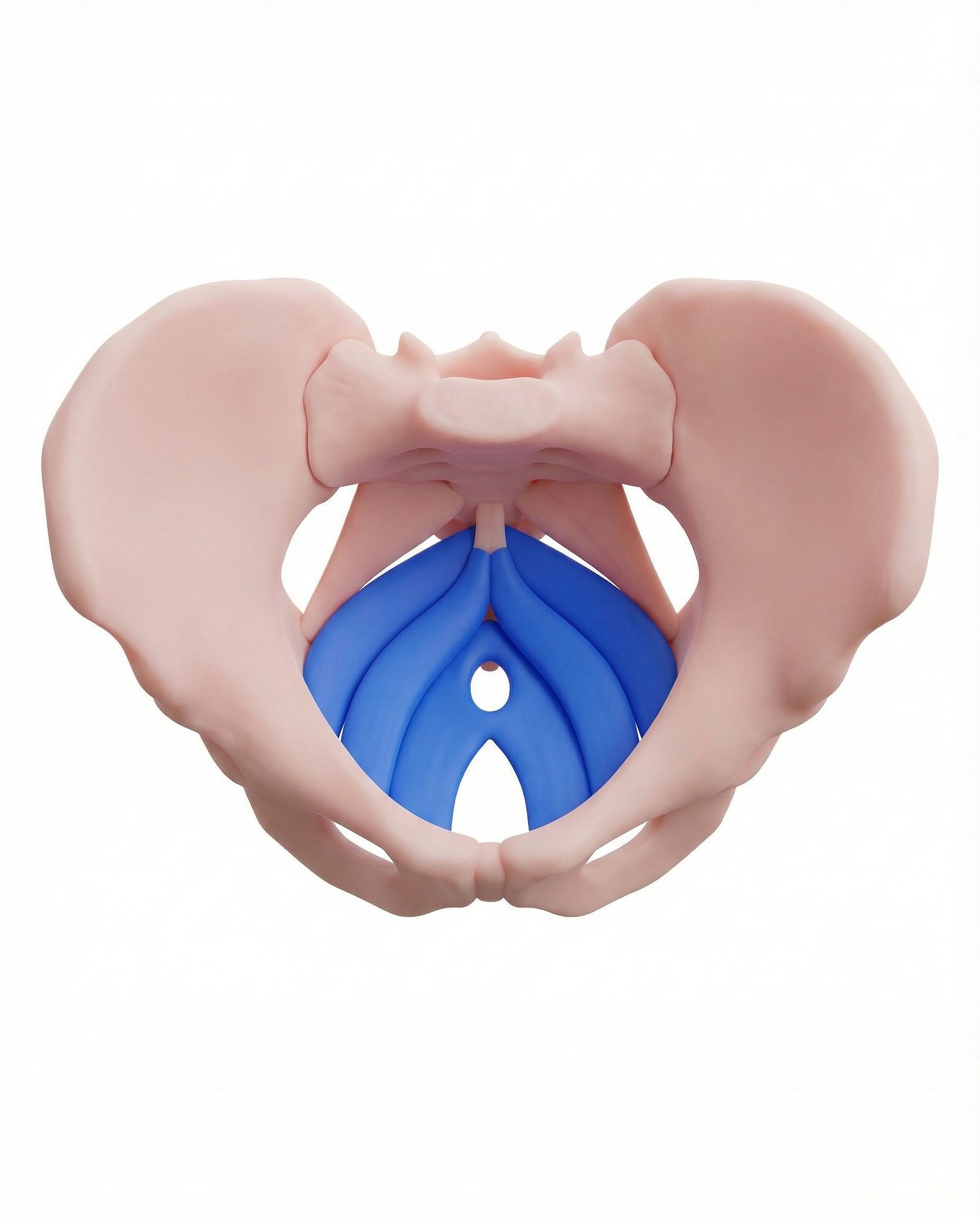
TrP 1
Levator Ani
Location. Pelvic floor
Pain referral. Pelvic floor, perineum
- Pelvic floor
- Perineum
- Lower pelvis
Deep pelvic aching in the levator ani sling aggravated by sitting and pelvic floor contraction
Location. Pelvic floor
Pain referral. Pelvic floor, perineum
Pelvic floor pain. Deep pelvic aching in the levator ani sling aggravated by sitting and pelvic floor contraction
Perineum discomfort. Perineal aching from levator ani trigger points creating constant awareness of pelvic floor region
Pelvic dysfunction. Impaired pelvic floor coordination from trigger point inhibition affecting continence and support
Childbirth. Vaginal delivery stretches and traumatizes levator ani creating post-partum trigger point activation
Pelvic surgery. Surgical disruption of pelvic floor tissues creates levator ani scarring and trigger point formation
Stress. Chronic emotional tension manifests as sustained pelvic floor guarding and levator ani hypertonicity
Pelvic dysfunction. Sacroiliac or pubic symphysis dysfunction creates compensatory levator ani overactivation and guarding
Lie on your back with knees bent and feet flat on the floor, or recline in a comfortable position. Place one hand on your lower abdomen. Breathe in slowly through your nose for 4 counts, directing the breath deep into the belly so your hand rises. As you inhale, consciously allow the pelvic floor to gently descend and relax, as if the muscles are softening and opening. Exhale slowly for 6 counts through pursed lips, allowing the pelvic floor to naturally recoil without actively squeezing. Focus on the release phase of each breath cycle.
Fill a bathtub with warm water (37-40 degrees Celsius / 98-104 degrees Fahrenheit) deep enough to cover your hips when seated, or use a dedicated sitz bath basin that fits over the toilet. Sit in the warm water and consciously relax the pelvic floor muscles during the soak. Adding Epsom salts (1-2 cups) may provide additional muscle relaxation. Focus on breathing deeply and releasing all tension in the pelvic region during the soak.
For child pose, kneel on a mat with knees wide apart and toes touching. Sit your hips back toward your heels and extend your arms forward on the floor, resting your forehead down. Hold for 30-60 seconds while breathing deeply into the pelvic floor. For supported deep squat, stand with feet wider than shoulder-width, toes turned out slightly. Slowly lower into a deep squat, using a doorframe or sturdy surface for balance. Hold the bottom position for 20-30 seconds, focusing on allowing the pelvic floor to open and lengthen.
Unlike traditional Kegels which strengthen by contracting, reverse Kegels train the pelvic floor to release and lengthen. Sit comfortably or lie on your back. Gently bear down as if you are trying to pass gas or initiate urination, creating a subtle opening and descending sensation in the pelvic floor. Hold this gentle release for 5-10 seconds, then fully relax. The effort should be very gentle, about 20-30% of maximum. Do not strain or push hard.
Avoid prolonged sitting on hard surfaces which directly compresses the levator ani. Use a cushion with a central cutout (donut cushion or coccyx cushion) to offload pressure from the perineum and pelvic floor. Take standing breaks every 30 minutes. When seated, shift your weight periodically and avoid crossing your legs. Manage stress through mindfulness or progressive muscle relaxation, as emotional tension directly increases pelvic floor guarding. Avoid heavy lifting or straining during bowel movements.
Consult a pelvic floor physical therapist if pelvic floor pain persists beyond 3-4 weeks of self-care. A specialized pelvic floor PT can perform internal manual assessment to identify specific trigger points within the levator ani and surrounding muscles, and can provide targeted internal myofascial release, biofeedback training for pelvic floor down-training, and individualized exercise programming. They can also rule out other conditions such as pudendal neuralgia, endometriosis, or interstitial cystitis.