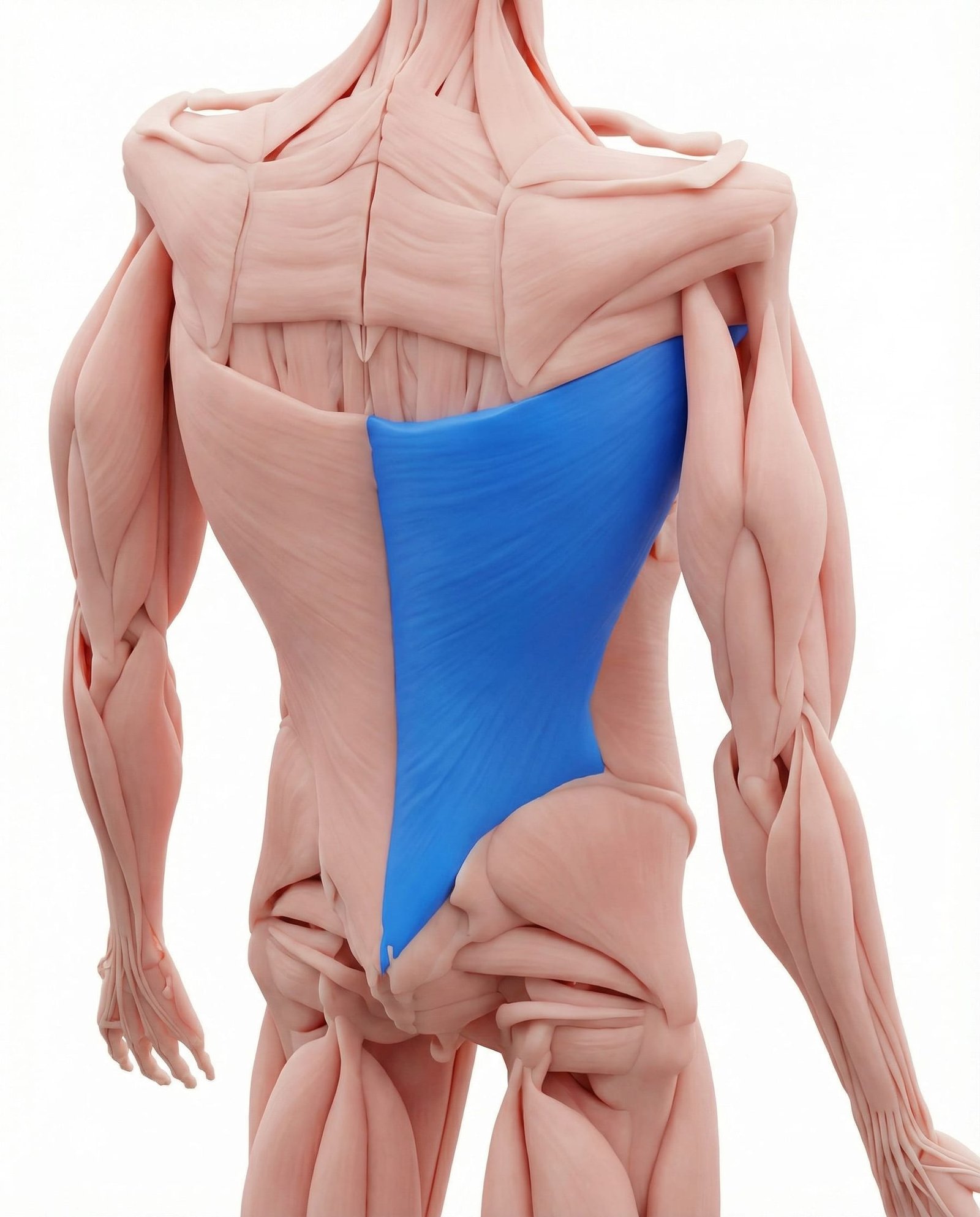
TrP 1
TrP1
Location. Mid to lower back, side
Pain referral. Mid back, lower back, shoulder, arm
- Mid back
- Lower back
- Shoulder
- Inner arm
- Fourth and fifth fingers
- Abdomen
Mid to lower back aching from widespread latissimus dorsi trigger point taut bands
Location. Mid to lower back, side
Pain referral. Mid back, lower back, shoulder, arm
Location. Lateral upper back, inferior angle of scapula region
Pain referral. Side of upper back and below the armpit
Location. Mid-axillary line, lateral chest wall
Pain referral. Medial arm and 4th-5th fingers (ulnar distribution)
Location. Near inferior angle of scapula, latissimus attachment
Pain referral. Inferior angle of scapula and lower posterior shoulder
Back pain. Mid to lower back aching from widespread latissimus dorsi trigger point taut bands
Shoulder pain. Posterior shoulder pain from latissimus dorsi trigger point referral to deltoid area
Arm pain. Medial arm pain radiating distally through ulnar distribution from latissimus trigger points
Abdominal pain. Lateral trunk and abdominal wall pain from anterior latissimus dorsi fiber referral
Difficulty raising arm. Restricted shoulder flexion and abduction from latissimus trigger point taut band shortening
Pain in the side of the upper back. Lateral thoracic aching from upper latissimus trigger points near the inferior scapular angle
Pain reaching overhead. Shoulder flexion pain from shortened latissimus resisting full overhead arm elevation range
Difficulty raising the arm. Restricted shoulder flexion from taut latissimus bands limiting glenohumeral overhead mobility
Aching under the armpit. Posterior axillary fold pain from latissimus trigger points in the axillary portion
Restricted shoulder flexion. Limited overhead reach from chronically shortened upper latissimus fibers restricting scapulohumeral rhythm
Medial arm aching. Lateral chest wall latissimus trigger point refers pain along medial arm following ulnar territory
Ulnar-sided hand tingling. Referred paresthesia to fourth and fifth fingers from latissimus neurovascular compression
Difficulty reaching behind back. Combined extension and internal rotation stretches latissimus loading axillary line trigger point
Arm fatigue with sustained elevation. Latissimus trigger point dysfunction impairs shoulder mechanics causing premature arm elevation fatigue
Pain at bottom of shoulder blade. Latissimus trigger point near inferior scapular angle creates localized periosteal aching at bone tip
Lower posterior shoulder ache. Referred aching from latissimus near scapular attachment to lower posterior shoulder region
Difficulty with reaching behind. Latissimus taut band restricts shoulder flexion and abduction needed for reaching behind
Pain with internal rotation. Shoulder internal rotation contracts latissimus directly loading inferior scapular trigger point
Scapular border tenderness. Trigger point at inferolateral scapular border creates palpable tenderness along bone margin
Pull-ups. Repetitive shoulder extension against body weight creates cumulative latissimus dorsi overload
Swimming. Sustained pull-through phase during swim strokes repetitively loads latissimus dorsi fibers
Rowing. Forceful repetitive pulling movements overload latissimus dorsi during rowing stroke cycles
Pulling movements. Any sustained pulling activity creates progressive overload on latissimus dorsi muscle fibers
Reaching overhead. Repeated overhead reaching eccentrically loads latissimus during arm lowering deceleration
Carrying heavy items. Sustained shoulder adduction to hold heavy loads isometrically overloads latissimus dorsi
Pull-ups and lat pulldowns. Repetitive vertical pulling overloads upper latissimus through sustained concentric and eccentric demands
Climbing. Sustained overhead pulling during climbing demands maximal latissimus force production repeatedly
Carrying heavy loads at the side. Unilateral load carrying activates latissimus for shoulder depression and trunk stabilization
Overhead reaching. Repeated overhead work eccentrically loads latissimus during sustained arm elevation positions
Lat pulldowns and pull-ups. Heavy pulling exercises maximally load lateral chest wall latissimus fibers creating overuse trigger points
Swimming (lat-dominant strokes). Powerful lat-driven swimming strokes cyclically overload lateral chest wall fibers
Rowing activities. Rowing demands sustained latissimus contraction along lateral trunk creating cumulative fiber fatigue
Reaching overhead repeatedly. Repeated overhead reaching cyclically stretches and contracts lateral latissimus fibers
Chopping wood. Overhead chopping motion demands forceful latissimus contraction for arm adduction and extension
Climbing activities. Sustained pulling during climbing maximally loads lateral latissimus for body elevation
Heavy rowing exercises. Intense rowing overloads latissimus at inferior scapular angle where fibers converge for retraction
Pull-ups and chin-ups. Bodyweight pulling demands maximal latissimus force near inferior scapular attachment region
Paddling and kayaking. Sustained paddle strokes cyclically load latissimus at inferior scapular angle with each stroke
Raking and shoveling. Repetitive pulling and lifting with trunk rotation overloads latissimus near scapular attachment
Prolonged arm adduction activities. Sustained arm adduction maintains latissimus contraction at inferior scapular angle region
Carrying heavy objects at sides. Bilateral carrying demands sustained latissimus isometric contraction for arm stabilization
Lie on your side with a foam roller under your armpit area. Extend the bottom arm overhead. Roll slowly from the armpit down to the lower ribs, pausing on tender spots for 20-30 seconds. This releases the broad latissimus dorsi muscle along the side of your back.
Stand next to a doorway. Reach the affected arm overhead and grab the top of the door frame. Step away from the doorway and lean your body to the opposite side, letting your hips shift toward the stretched side. You should feel a deep stretch along your side and back.
Kneel on the floor and sit back on your heels. Reach both arms forward on the ground, then walk your hands to the right to stretch the left lat. Hold for 30 seconds, then walk hands to the left. This deeply stretches the lats through spinal lateral flexion.
On all fours, slowly arch your back (cow) focusing on opening the chest and extending the mid-back, then round your back (cat) pulling the belly button toward the spine. Move slowly and emphasize the mid-back rather than the low back during each cycle.
If you do pull-ups, rows, or swimming, ensure you balance these with chest stretches and pushing exercises. Gradually increase pulling volume rather than sudden increases. Warm up the lats with gentle stretches before pulling activities.
If mid-back or shoulder pain persists beyond 3-4 weeks of self-care, consult a physiatrist. They can differentiate latissimus dorsi trigger points from thoracic spine dysfunction, shoulder impingement, or visceral referred pain and provide targeted treatment.
Stand in a doorway and grasp the door frame with the affected arm at about head height. Step forward with the opposite foot and lean your body away from the raised arm, creating a stretch along the lateral trunk and armpit. Add a gentle side bend away from the arm to intensify the stretch along the upper latissimus fibers. Hold for 20-30 seconds while breathing deeply. Return to the starting position and repeat 3-4 times.
Lie on your side with a foam roller positioned under the lateral upper back, just below the armpit. Support your head with your lower arm and place your upper hand on the floor for balance. Slowly roll from the armpit area down to the inferior angle of the scapula, pausing on tender points for 20-30 seconds. Slightly rotate your body forward and backward to access different fibers of the upper latissimus. Keep the pressure moderate and breathe through any discomfort.
Stand with your back flat against a wall, feet about 12 inches from the base. Place the backs of your hands and forearms against the wall at shoulder height with elbows bent at 90 degrees. Slowly slide your arms upward along the wall, maintaining contact with the back of your hands and forearms throughout the movement. Reach as high as you can while keeping contact with the wall, then slowly lower back to the starting position. Perform 10-15 repetitions for 2-3 sets. This exercise restores shoulder flexion mobility restricted by tight upper latissimus fibers.
Stand on the middle of a light resistance band and hold one end in each hand. With arms straight and palms facing forward, slowly raise both arms in front of you and overhead as far as comfortable. Control the return to the starting position over 3-4 seconds. Perform 12-15 repetitions for 2-3 sets. This strengthens the deltoids and overhead muscles that oppose the latissimus dorsi, restoring muscular balance around the shoulder.
Temporarily reduce the volume of pull-ups, lat pulldowns, rows, and swimming by 50 percent until symptoms resolve. Avoid wide-grip variations that maximally stretch the latissimus under load. When returning to these activities, warm up with overhead stretches and light shoulder flexion exercises before heavy pulling. Distribute pulling exercises across the week rather than concentrating them in a single session. Incorporate equal or greater volume of pushing and overhead pressing exercises to maintain muscular balance.
If lateral upper back pain, restricted overhead reach, or inner arm referral persists beyond 3-4 weeks of self-care, consult a physiotherapist or massage therapist experienced in myofascial trigger point therapy. They can perform targeted latissimus dorsi release techniques, assess for associated teres major and subscapularis involvement, and evaluate shoulder mechanics. Treatment may include deep tissue massage, dry needling of the upper latissimus fibers, and a progressive shoulder mobility rehabilitation program.