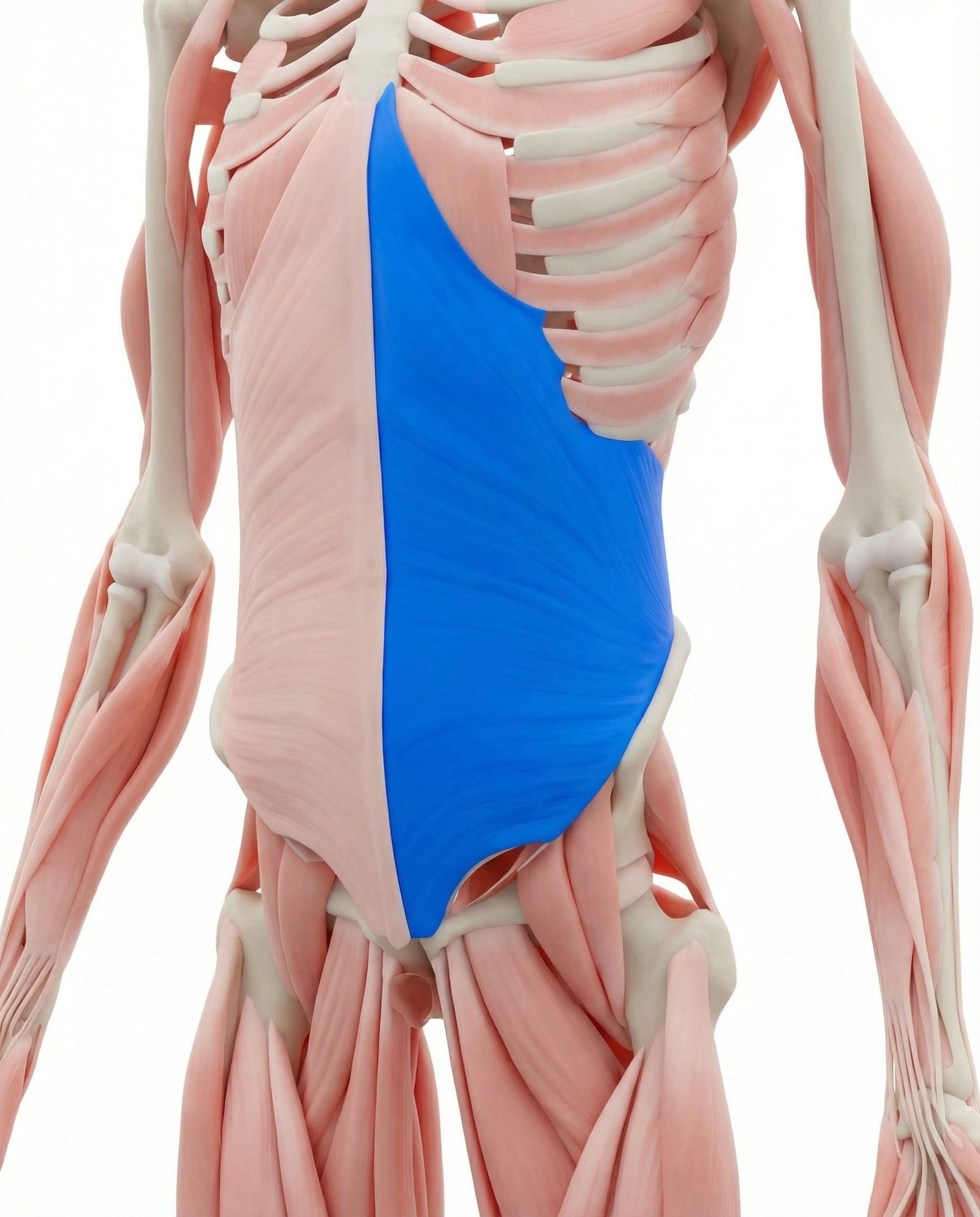
TrP 1
TrP1
Location. Deep side of abdomen
Pain referral. Side of abdomen, lower chest
- Side of abdomen
- Lower rib area
- Groin
- Lower back
Deep lateral abdominal aching from internal oblique trigger points beneath external layer
Location. Deep side of abdomen
Pain referral. Side of abdomen, lower chest
Location. Upper fibers near costal margin
Pain referral. Costal margin and upper lateral abdomen
Location. Lower fibers near inguinal ligament
Pain referral. Lower abdomen and inguinal region
Deep side pain. Deep lateral abdominal aching from internal oblique trigger points beneath external layer
Rib discomfort. Lower costal margin discomfort from trigger points near the rib cage attachment sites
Groin pain. Referred inguinal aching from lower internal oblique trigger point referral patterns
Pain with trunk rotation. Sharp deep trunk pain during rotational movements from internal oblique taut bands
Costal margin pain mimicking rib pathology. Upper internal oblique trigger points at the costal margin create pain mimicking rib fracture or costochondritis
Upper lateral abdominal ache. Taut bands near the costal attachment create diffuse aching in the upper lateral abdominal wall
Pain with deep breathing. Rib expansion during deep inspiration stretches upper internal oblique taut bands provoking pain
Side stitch-like pain. Upper lateral trigger point activation during exertion creates a persistent side stitch sensation
Tenderness along lower rib margin. Palpation along the costal margin reveals point tenderness at internal oblique attachment sites
Inguinal pain mimicking hernia. Groin ache resembling inguinal hernia from lower oblique fiber tension near inguinal canal
Lower abdominal cramping. Spasmodic lower abdominal wall pain from sustained contraction of inferior oblique fibers
Groin discomfort. Deep groin crease ache from trigger point referral along inguinal ligament attachment
Pain with Valsalva maneuver. Increased intra-abdominal pressure during straining loads sensitized lower oblique fibers
Suprapubic ache. Referred dull pain above pubic symphysis from lower internal oblique trigger points
Twisting. Forceful or sustained trunk rotation overloads internal oblique fibers causing taut bands
Coughing. Repeated forceful expiratory contraction strains internal oblique muscle fibers progressively
Sports. Rotational sporting activities demand repetitive internal oblique activation causing cumulative fatigue
Core exercises. Intensive core training with rotation components overloads internal oblique muscle fibers
Carrying items. Asymmetric load carrying forces internal obliques to stabilize trunk against rotation
Excessive oblique exercises. High-volume rotational core exercises overload the upper internal oblique fibers at their costal attachments
Chronic cough. Repeated forceful coughing generates sustained internal oblique contraction creating ischemic trigger points
Rib fracture with secondary guarding. Post-fracture protective guarding of the internal obliques creates persistent secondary trigger points
Thoracolumbar scoliosis. Spinal curvature creates asymmetric internal oblique loading on the concave side of the curve
Prolonged side-lying posture. Sustained lateral recumbent position compresses upper internal oblique fibers against the costal margin
Heavy lifting with poor form. Excessive lower abdominal wall strain during lifting overloads inguinal oblique fibers
Sports hernia-type activities. Repetitive cutting and twisting motions stress lower oblique insertions near inguinal region
Chronic straining (constipation). Repeated Valsalva maneuver during bowel movements overworks lower abdominal wall musculature
Post-inguinal hernia repair adhesions. Surgical scarring restricts lower oblique mobility creating secondary trigger points
Excessive hip flexor and abdominal training. Combined hip flexor and core overtraining fatigues lower oblique and inguinal region muscles
Lie on your back with your knees bent and feet flat on the floor to relax the abdominal wall. Using your fingertips, apply gentle, circular pressure along the lower side of your abdomen, from the hip bone toward the midline. When you find a tender area, hold gentle sustained pressure for 20-30 seconds. Do not press deeply or forcefully, as the abdominal wall is sensitive.
Apply a warm, damp towel or microwavable heat pack to the lower side of the abdomen. Lie in a comfortable position with knees bent. Ensure the heat is comfortably warm but not hot enough to burn. Allow the warmth to relax the deep abdominal muscles before stretching.
Lie on the unaffected side with your bottom arm extended overhead. Slowly reach your top arm overhead as well, creating a long arching stretch along the entire affected side. You should feel a gentle stretch through the lower abdomen and side. Avoid forcing the stretch. Breathe deeply and allow the side to open gradually.
Lie on your back with your arms extended toward the ceiling and your hips and knees bent at 90 degrees. Slowly lower your right arm overhead while extending your left leg toward the floor, keeping your lower back pressed into the ground. Return to the start and repeat on the opposite side. This gently strengthens the obliques without aggressive twisting.
Sit or lie comfortably. Inhale slowly through your nose for 4 counts, allowing your belly and pelvic floor to gently expand. Exhale slowly through your mouth for 6 counts, allowing complete relaxation without actively engaging the core. Focus on releasing tension in the lower abdomen and pelvic floor with each exhale. This counteracts the chronic tension that perpetuates internal oblique trigger points.
Consult a physician if lower abdominal or groin pain persists beyond 3-4 weeks, or immediately if you notice a visible bulge, have fever, or experience bowel or bladder changes. A physical examination and possibly imaging studies are needed to rule out inguinal hernia, gynecological conditions, or urological problems before attributing symptoms solely to trigger points.