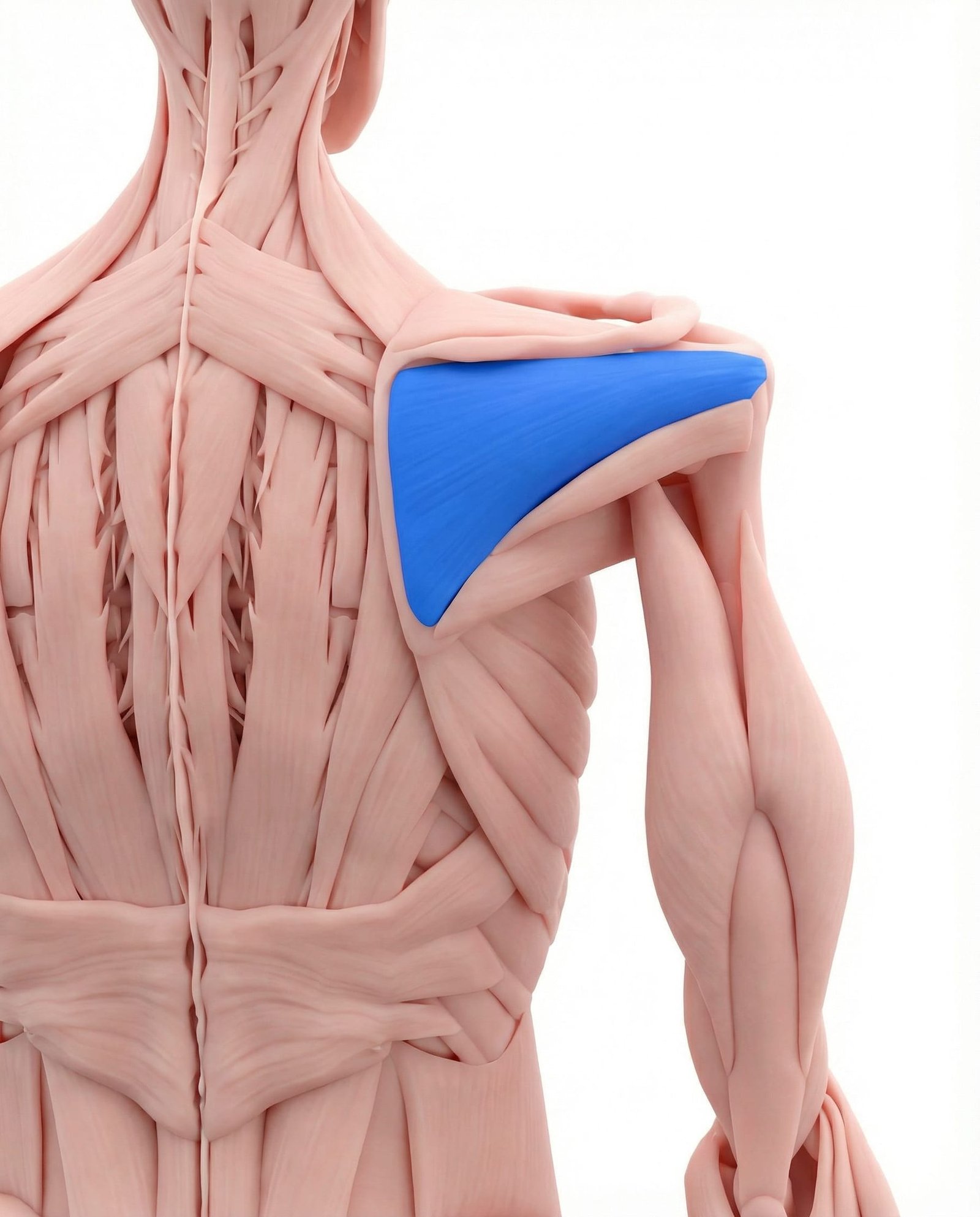
TrP 1
TrP1
Location. Back of shoulder blade
Pain referral. Front of shoulder, down arm
- Front of shoulder
- Down front of arm
- Biceps area
- Wrist
- Upper back
Deep aching in anterior shoulder that intensifies with internal rotation movements
Location. Back of shoulder blade
Pain referral. Front of shoulder, down arm
Location. Medial infraspinatus border, near spine of scapula
Pain referral. Medial scapular border and suboccipital area
Location. Lateral infraspinatus, near greater tuberosity attachment
Pain referral. Deep anterior shoulder and bicipital groove
Shoulder pain. Deep aching in anterior shoulder that intensifies with internal rotation movements
Arm weakness. Reduced strength in external rotation making overhead tasks difficult
Difficulty reaching behind back. Restricted internal rotation limits reaching back pocket or bra clasp
Pain when lifting. Sharp anterior shoulder pain during arm elevation especially under load
Medial scapular pain. Infraspinatus TrP2 refers aching medially to scapular border via posterior primary rami convergence
Suboccipital headache from shoulder trigger point. Unusual upward referral from infraspinatus to suboccipital region through cervicoscapular neural connections
Upper back ache. Interscapular aching from medial infraspinatus trigger point spreading to adjacent thoracic tissues
Pain between shoulder blades. Referred pain from medial infraspinatus to interscapular muscles and thoracic paraspinals
Deep anterior shoulder pain. Lateral infraspinatus trigger point refers deeply to anterior glenohumeral joint capsule region
Pain mimicking biceps tendinitis. Referred pain to bicipital groove creates false impression of biceps long head tendinopathy
Shoulder catching sensation. Infraspinatus dysfunction alters humeral head mechanics creating mechanical catching during movement
Night pain in front of shoulder. Nocturnal anterior shoulder aching from sustained infraspinatus trigger point compression while sleeping
Difficulty with arm elevation. Infraspinatus dysfunction impairs humeral head depression during elevation causing impingement
Overhead activities. Prolonged shoulder elevation causes sustained infraspinatus contraction and fatigue
Throwing sports. Eccentric deceleration phase places high demand on infraspinatus muscle fibers
Swimming. Repetitive overhead strokes overload external rotators during recovery phase
Repetitive arm movements. Continuous shoulder rotation without rest causes cumulative microtrauma to muscle
Poor posture. Rounded shoulders shorten infraspinatus and maintain it in chronically contracted state
Sleeping on side. Sustained compression of infraspinatus between body weight and scapula overnight
Overhead sports (tennis, swimming). Repetitive overhead motions eccentrically overload infraspinatus during deceleration phase
Sleeping on affected side. Lateral compression of infraspinatus against scapula during side sleeping maintains ischemia
Repetitive external rotation tasks. Repeated external rotation exceeds infraspinatus fiber endurance creating medial trigger points
Computer mouse use with arm abducted. Sustained shoulder abduction for mouse use chronically loads infraspinatus in shortened position
Driving with hands at 10-and-2. Prolonged shoulder external rotation gripping steering wheel fatigues infraspinatus
Poor scapular mechanics. Scapular dyskinesis alters infraspinatus length-tension creating abnormal loading patterns
Bench press and push-ups. Infraspinatus eccentrically controls humeral head during pressing creating insertion strain
Repetitive overhead reaching. Repeated arm elevation demands sustained infraspinatus activation for humeral head stabilization
Sleeping with arm overhead. Prolonged overhead arm position during sleep compresses infraspinatus insertion region
Rock climbing. Sustained overhead gripping demands prolonged infraspinatus isometric contraction at insertion
Lie on your back on the floor with a tennis ball placed on the back of your shoulder blade, in the fleshy area below the bony spine of the scapula. Position the ball between the shoulder blade and the spine, roughly in the middle of the infraspinatus muscle. Let your body weight press into the ball and slowly roll it around the area, pausing on tender spots for 20-30 seconds. You can also do this standing against a wall for less pressure.
Stand or sit upright. Bring the affected arm across your body at chest height. Use the opposite hand to gently pull the arm closer to your chest until you feel a stretch in the back of the shoulder. Keep the affected shoulder relaxed and do not shrug. Hold the stretch while breathing deeply. This stretches the posterior shoulder capsule and the infraspinatus muscle.
Stand with your elbow bent to 90 degrees and tucked against your side. Hold a resistance band that is anchored at elbow height on the opposite side. Keeping your elbow firmly against your body, slowly rotate your forearm outward away from your belly. Control the return slowly. Start with a light resistance band and focus on smooth, controlled movements. A rolled-up towel between your elbow and torso can help maintain proper positioning.
Lie on your affected side with the shoulder and elbow both bent to 90 degrees, so your forearm points toward the ceiling. Using your other hand, gently push the forearm down toward the floor, internally rotating the shoulder. You should feel a stretch in the back of the shoulder. Apply gentle, sustained pressure rather than forcing the movement. Keep your body from rolling backward.
Lean forward at the waist and support yourself with your unaffected arm on a table or counter. Let the affected arm hang straight down, completely relaxed. Gently swing the arm in small circles, forward and back, and side to side, letting gravity and momentum create the movement. The arm should be completely passive with no muscle effort from the shoulder. Gradually increase the size of the circles as comfort allows.
Avoid sleeping on the affected shoulder, as this compresses the infraspinatus all night. Sleep on your back or the unaffected side with a pillow supporting the affected arm. At your workstation, keep your mouse and keyboard close to your body to avoid reaching. Position your mouse at elbow height to minimize shoulder strain. Avoid repetitive overhead reaching and take frequent breaks during arm-intensive tasks.
If shoulder pain limits daily activities such as dressing, reaching overhead, or sleeping, or if you notice weakness when rotating the arm outward, seek evaluation from a healthcare provider. They can differentiate infraspinatus trigger points from rotator cuff tears, shoulder impingement, or frozen shoulder through physical examination and imaging if needed.