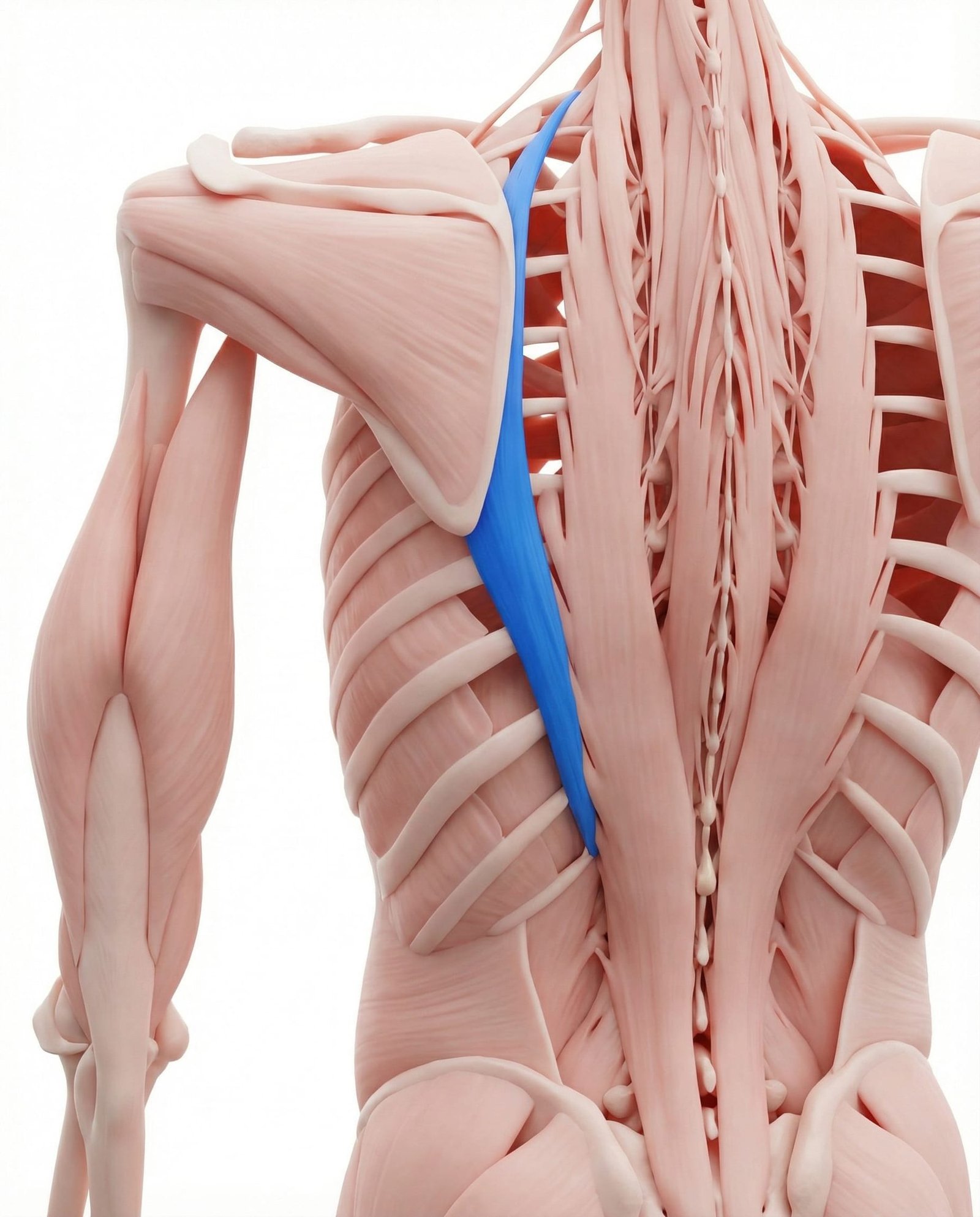
TrP 1
TrP1
Location. Outer thoracic spine
Pain referral. Outer back, rib area
- Outer back
- Rib area
- Lateral trunk
Lateral thoracic aching from iliocostalis trigger points along rib angle attachment sites
Location. Outer thoracic spine
Pain referral. Outer back, rib area
Location. Lower rib attachment near 10th-12th ribs
Pain referral. Lateral lower thoracic and flank region
Side back pain. Lateral thoracic aching from iliocostalis trigger points along rib angle attachment sites
Rib discomfort. Pain along posterior rib cage from trigger point referral near costal angle insertions
Trunk pain. Lateral trunk wall pain from iliocostalis thoracis trigger point widespread referral zone
Lateral lower thoracic ache. Dull aching at lateral lower thoracic wall from iliocostalis trigger points at lower rib attachments
Flank pain. Lateral flank ache from iliocostalis referral mimicking renal or visceral pathology patterns
Pain with lateral bending. Side-bending stretches or contracts iliocostalis trigger points aggravating lateral thoracic pain
Lower rib cage tenderness. Palpable tenderness along lower posterior ribs from iliocostalis attachment trigger points
Difficulty with deep side breathing. Impaired lateral rib expansion from iliocostalis taut bands restricting lower rib cage excursion
Poor posture. Chronic thoracic malalignment overloads lateral erector spinae maintaining spinal upright position
Lifting. Heavy or repetitive lifting creates excessive loading on lateral thoracic paraspinal muscles
Twisting. Repetitive trunk rotation creates shearing forces across lateral erector spinae muscle fibers
Weak core. Core insufficiency forces compensatory iliocostalis thoracis overactivation for trunk stabilization
Unilateral carrying habits. Asymmetric load carrying overworks ipsilateral iliocostalis to maintain trunk alignment against lateral forces
Side-bending activities. Repetitive lateral trunk flexion overloads iliocostalis as a primary lateral flexor muscle
Scoliosis compensation. Spinal curvature creates sustained asymmetric iliocostalis loading on the concave side chronically
Coughing (one-sided). Asymmetric coughing forces create unilateral iliocostalis overload at lower rib attachments
Sleeping on one side chronically. Habitual side-lying posture shortens dependent iliocostalis promoting trigger point formation
Lie on your back with a foam roller placed horizontally beneath your mid-back, just to the side of your spine on the painful side. Keep your knees bent and feet flat on the floor. Slowly roll up and down along the muscles between your spine and shoulder blade, pausing on any tender spots for 30-60 seconds until the tenderness begins to release. Avoid rolling directly on the spine itself.
Lie on your side with both knees bent to about 90 degrees and arms extended in front of you. Slowly open your top arm, rotating your upper body toward the ceiling while keeping your knees stacked together. Follow your hand with your eyes. Hold the open position for 15-20 seconds, breathing deeply. Return to the starting position. Repeat 8-10 times on the affected side.
Start on your hands and knees with wrists under shoulders and knees under hips. Inhale as you drop your belly toward the floor, lifting your chest and tailbone (cow). Exhale as you round your back toward the ceiling, tucking your chin and tailbone (cat). Move slowly and focus on articulating each segment of the thoracic spine. Perform 15-20 repetitions.
Sit in a sturdy chair and interlace your hands behind your head. Place a rolled towel at the back of the chair at mid-back level for a fulcrum. Gently lean back over the towel, extending your thoracic spine. Hold for 5 seconds at end range, then return to upright. Perform 10-15 repetitions. Keep your lower back relatively stable and focus the movement in your mid-back.
Adjust your chair so your feet are flat on the floor and your hips are level with or slightly above your knees. Place a lumbar support roll or small pillow in the curve of your lower back. Position your monitor at eye level and at arm's length. Keep your shoulders relaxed and elbows at about 90 degrees. Take a 30-second standing break every 30 minutes to reset your spinal posture.
If lateral thoracic pain persists beyond 3-4 weeks despite self-care, consult a healthcare professional. A physiotherapist can perform specific assessment of rib mobility, thoracic spine segmental motion, and paraspinal muscle condition. Treatment may include manual therapy, dry needling of the iliocostalis trigger points, and a tailored exercise program.