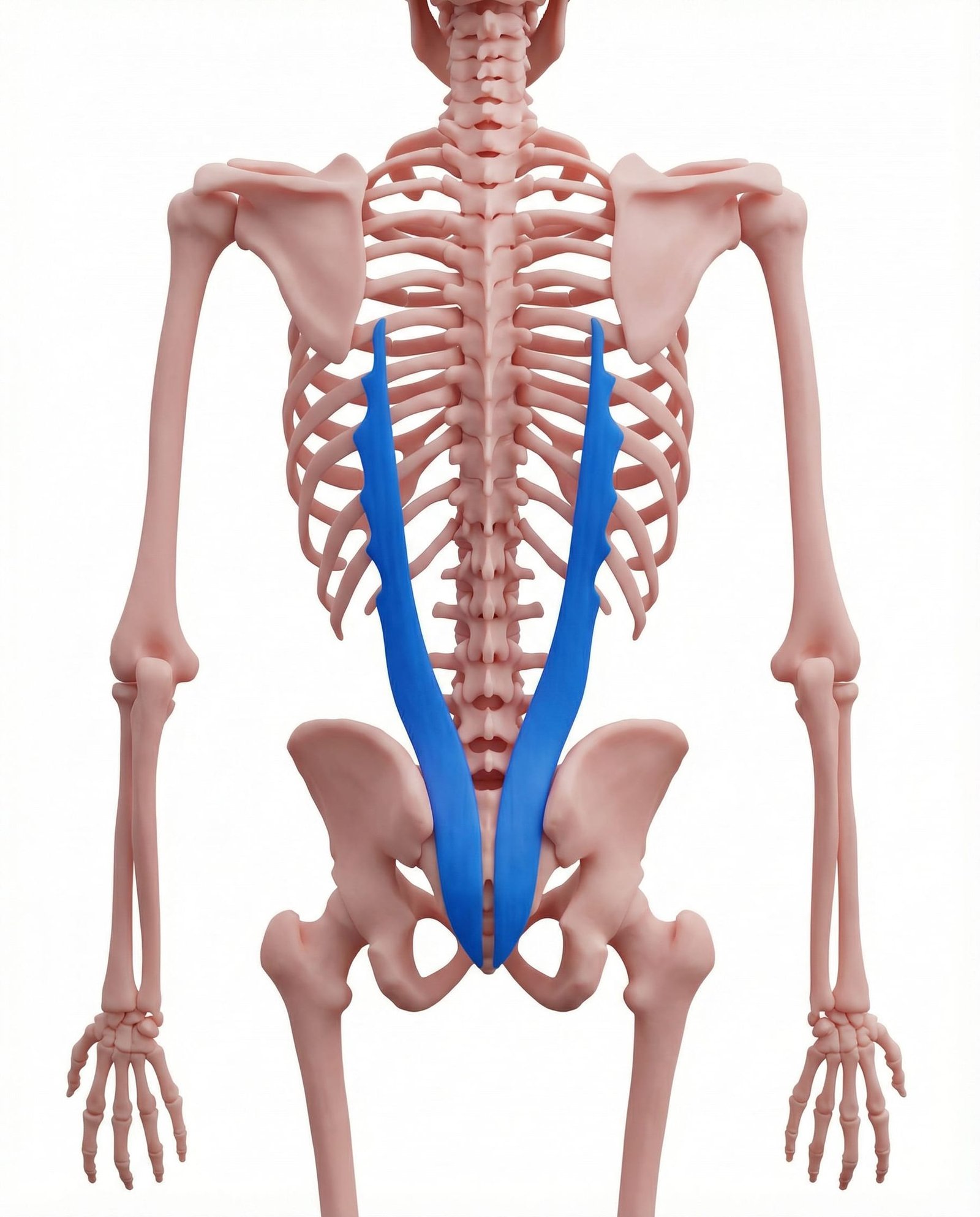
TrP 1
TrP1
Location. Outer lower back, ribs to pelvis
Pain referral. Lower back, outer rib area
- Lower back
- Outer rib cage
- Iliac crest
Lateral lumbar aching from iliocostalis taut bands along the iliac crest attachment
Location. Outer lower back, ribs to pelvis
Pain referral. Lower back, outer rib area
Location. Upper lumbar attachment near L1-L3
Pain referral. Upper lumbar and lower thoracic region
Location. Lower lumbar and sacral attachment near L4-S1
Pain referral. Lower lumbar and sacroiliac region
Lower back pain. Lateral lumbar aching from iliocostalis taut bands along the iliac crest attachment
Rib pain. Referred discomfort along the lower rib cage from thoracolumbar trigger point radiation
Lateral trunk pain. Side trunk aching worsened by lateral bending and rotational trunk movements
Upper lumbar back pain. Iliocostalis lumborum trigger points at L1-L3 create localized upper lumbar paraspinal aching
Pain bending sideways. Lateral bending stretches the contralateral iliocostalis lumborum provoking trigger point pain
Morning stiffness in lower back. Overnight trigger point contracture in the iliocostalis creates morning lumbar stiffness
Difficulty with prolonged standing. Sustained antigravity loading fatigues the iliocostalis lumborum causing progressive trigger point pain
Pain radiating to flank. Lateral referral from upper lumbar iliocostalis extends to the flank mimicking renal pathology
Low back pain near sacrum. Lower iliocostalis lumborum trigger points at L4-S1 create lumbosacral junction aching
Sacroiliac joint area ache. Referral to the SI joint region mimics sacroiliac dysfunction with posterior pelvic pain
Difficulty sitting for prolonged periods. Seated position compresses lumbosacral iliocostalis against the iliac crest provoking trigger points
Pain rising from seated position. Sit-to-stand demands lumbar extension loading shortened iliocostalis trigger points at their origin
Buttock pain (upper, referred). Caudal referral from lower iliocostalis projects into the upper gluteal region
Poor posture. Sustained asymmetric trunk posture overloads lateral erector spinae fibers unilaterally
Lifting. Heavy lifting with lateral trunk deviation overloads iliocostalis lumborum on one side
Prolonged sitting. Extended seated posture without support fatigues lateral trunk stabilizers progressively
Weak core. Insufficient core stability increases lateral trunk muscle compensatory workload significantly
Prolonged standing with pelvic tilt asymmetry. Asymmetric pelvic tilt creates unilateral iliocostalis overload during sustained standing
Repetitive lateral bending (shoveling, raking). Repeated lateral trunk bending eccentrically overloads the iliocostalis on the lengthening side
Poor lifting mechanics. Improper spinal alignment during lifting overloads the lateral erector column beyond its capacity
Running on cambered surfaces. Cambered road surfaces create asymmetric pelvic alignment overloading the uphill iliocostalis lumborum
Leg length discrepancy. Unequal leg lengths create chronic pelvic obliquity asymmetrically loading the lumbar iliocostalis
Prolonged sitting with poor posture. Sustained lumbar flexion in sitting creates chronic ischemia in lower iliocostalis lumborum fibers
Deadlift or squat exercises with poor form. Improper spinal alignment under heavy load overloads lower iliocostalis at its sacral attachment
Gardening with sustained flexion. Prolonged stooped posture eccentrically overloads the lower iliocostalis during garden activities
Long-distance driving. Extended seated driving with vibration fatigues the lower lumbar paraspinals including iliocostalis
Sacroiliac joint dysfunction with secondary muscle guarding. SI joint irritation reflexively activates protective iliocostalis guarding creating secondary trigger points
Lie on your side on a firm surface with a tennis ball positioned between your body and the floor, just lateral to your spine in the lower back area. Slowly roll your body over the ball, pausing on any particularly tender spots for 20-30 seconds. Adjust pressure by supporting some of your weight with your arms.
Stand with feet shoulder-width apart. Raise one arm overhead and slowly lean your trunk to the opposite side until you feel a comfortable stretch along the side of your lower back. Keep your hips level and avoid rotating your trunk. Hold the stretch for 20-30 seconds. Return to center and repeat on the other side. Perform 5 repetitions per side.
Start on your hands and knees with your back flat. Simultaneously extend your right arm forward and left leg backward until both are parallel to the floor. Hold for 5 seconds while keeping your hips level and core engaged. Return to the starting position and repeat with the opposite arm and leg. Perform 3 sets of 10 repetitions per side.
Begin with a modified side plank by lying on your side with knees bent and propping yourself up on your forearm. Lift your hips off the ground and hold for 10-15 seconds. As strength improves, progress to a full side plank with legs straight. Work toward holding for 30 seconds per side. Perform 3 repetitions per side.
Adjust your desk, kitchen counter, or workbench height so you can stand or sit without leaning to one side. For standing work, ensure the surface is at elbow height. Use an anti-fatigue mat for prolonged standing. Alternate between sitting and standing throughout the day to avoid sustained loading on one side.
If lateral low back pain persists beyond 4-6 weeks of self-care, consult a physical therapist or spine specialist. They can assess for rib dysfunction, sacroiliac joint involvement, or lumbar facet joint irritation that may be contributing to your symptoms alongside the iliocostalis trigger points.