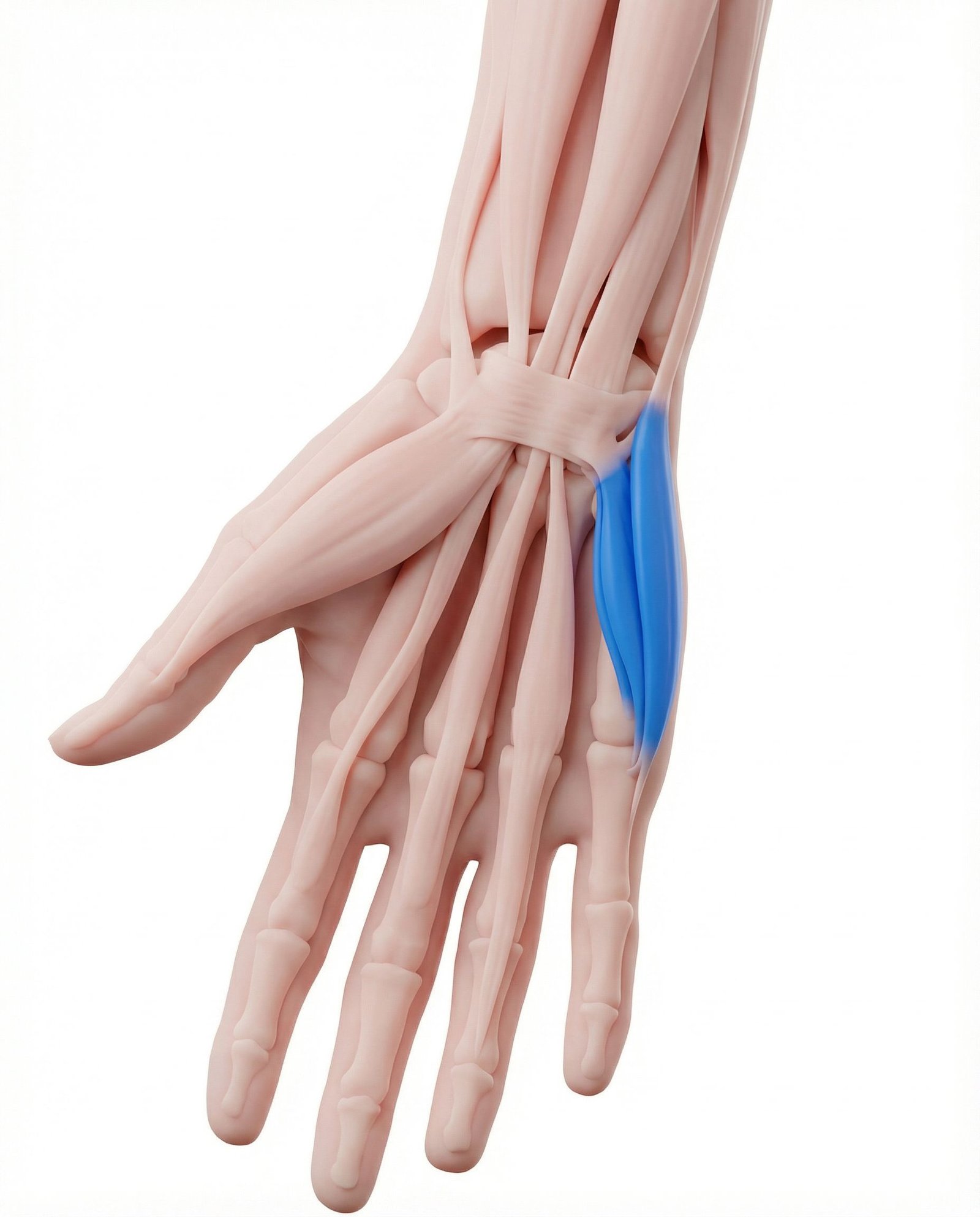
TrP 1
Hypothenar Eminence Muscles
Location. Base of little finger, palm
Pain referral. Base of little finger, ulnar palm
- Base of little finger
- Little finger
- Ulnar palm
Aching at the hypothenar eminence worsened by gripping and ulnar deviation tasks
Location. Base of little finger, palm
Pain referral. Base of little finger, ulnar palm
Little finger base pain. Aching at the hypothenar eminence worsened by gripping and ulnar deviation tasks
Ulnar palm ache. Persistent discomfort along the ulnar palm from hypothenar trigger point activation
Grip weakness. Reduced power grip strength from pain inhibition of hypothenar muscle contraction
Repetitive gripping. Sustained power grip activities overload hypothenar muscles that stabilize the ulnar palm
Cycling. Prolonged handlebar pressure compresses hypothenar muscles causing ischemia and trigger points
Tool use. Forceful gripping of handles concentrates pressure on hypothenar eminence during work
Writing. Sustained hand position during writing places continuous load on ulnar palm muscles
Pressure on palm. Direct compression from leaning on palm or using palm as hammer activates trigger points
Using the thumb of your opposite hand, apply firm sustained pressure to the tender spot along the fleshy outer edge of your palm. Hold for 10-15 seconds on each tender point, then release. Work slowly along the entire hypothenar eminence from the wrist crease to the base of the little finger.
Place your hand flat on a table with fingers together. Slowly spread all fingers apart as wide as possible, hold for 5 seconds, then bring them back together. Repeat 10-15 times. For added resistance, wrap a rubber band around your fingers and spread against it.
Squeeze a soft stress ball or tennis ball with your full hand, focusing on engaging the little finger side. Hold the squeeze for 5 seconds, then relax completely for 5 seconds. Complete 3 sets of 10 repetitions. Gradually progress to a firmer ball as comfort allows.
Position a padded wrist rest along the front edge of your keyboard to reduce direct pressure on the hypothenar eminence while typing. Ensure the wrist rest supports the forearm rather than the wrist itself, and keep wrists in a neutral position without bending sideways.
Use padded cycling gloves with gel inserts when riding to reduce handlebar pressure on the hypothenar area. Avoid resting the palm on hard surfaces for extended periods. When using hand tools, choose those with cushioned grips and take regular breaks.
If numbness or tingling in the ring and little fingers persists despite self-care, consult a hand specialist or neurologist for nerve conduction studies. These tests can differentiate between hypothenar trigger points and true ulnar nerve entrapment at the wrist or elbow, guiding appropriate treatment.