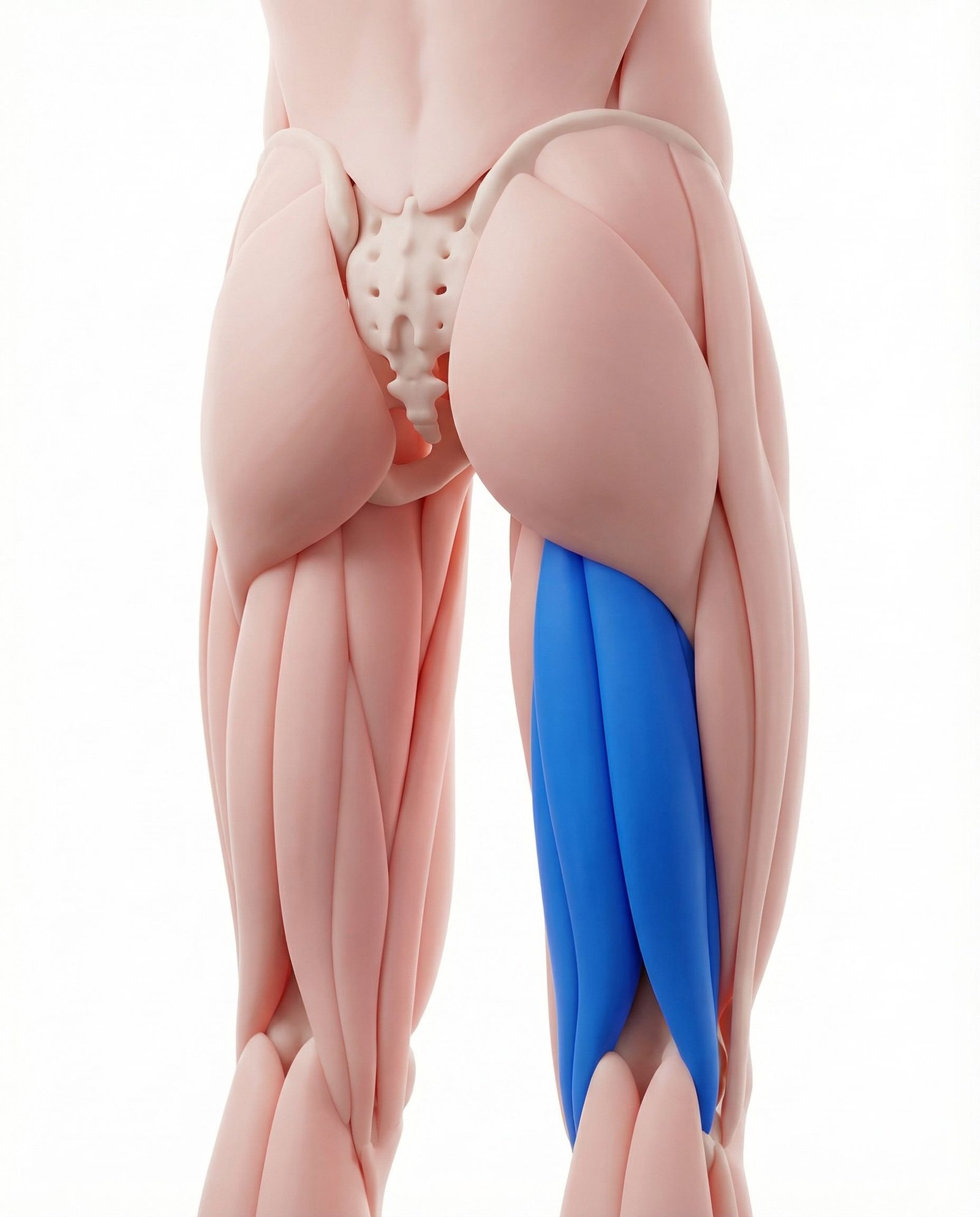
TrP 1
TrP1
Location. Back of thigh, outer
Pain referral. Back of thigh, back of knee, buttock
- Back of thigh
- Back of knee
- Buttock
- Posterior thigh
Posterior thigh aching along the lateral hamstring belly worsened by acceleration activities
Location. Back of thigh, outer
Pain referral. Back of thigh, back of knee, buttock
Location. Lower medial thigh, semitendinosus belly
Pain referral. Medial knee and upper medial calf
Location. Deep posterior thigh near ischial tuberosity
Pain referral. Ischial tuberosity and upper posterior thigh (sitting pain)
Back of thigh pain. Posterior thigh aching along the lateral hamstring belly worsened by acceleration activities
Knee pain. Posterior and posterolateral knee aching from distal biceps femoris trigger point referral
Buttock pain. Referred ache at the ischial tuberosity from proximal hamstring trigger point activation
Difficulty bending forward. Restricted hip flexion range from hamstring taut bands limiting forward reach
Medial knee pain. Semitendinosus trigger points refer to the medial knee joint line and pes anserinus region
Inner calf aching. Distal referral extends past the knee into the proximal medial gastrocnemius area
Pain with knee flexion. Active contraction of semitendinosus with trigger points generates pain at medial knee
Medial hamstring tenderness. Palpable taut bands in the semitendinosus belly create localized and referred tenderness
Pain walking upstairs. Stair climbing demands knee flexor activation that provokes medial hamstring trigger points
Sitting bone pain. Proximal semimembranosus trigger points refer to the ischial tuberosity region during seated loading
Upper hamstring ache. Taut bands near the ischial origin create localized proximal posterior thigh pain
Pain with initial hamstring stretch. Stretching taut semimembranosus fibers from the ischial attachment provokes immediate trigger point pain
Difficulty sitting on hard surfaces. Hard surfaces compress proximal semimembranosus against the ischial tuberosity aggravating trigger points
Pain at start of running. Initial hamstring loading during acceleration activates proximal trigger points before warm-up resolves them
Running. Repetitive eccentric hamstring loading during late swing phase fatigues biceps femoris fibers
Sprinting. High-speed eccentric hamstring demand during deceleration phase strains muscle fibers acutely
Kicking. Forceful hip flexion with rapid knee extension eccentrically overloads hamstring muscles
Poor flexibility. Chronically shortened hamstrings are more susceptible to trigger point formation during activity
Weak hamstrings. Insufficient hamstring strength relative to quadriceps increases strain risk and trigger points
Previous strain. Prior hamstring injury creates scar tissue that predisposes to recurrent trigger point activation
Sitting. Prolonged seated posture compresses ischial hamstring attachments causing ischemic trigger points
Running (especially long distance). Repetitive medial hamstring loading during prolonged running fatigues semitendinosus fibers
Kicking sports (soccer). Rapid knee extension during kicking eccentrically overloads semitendinosus in deceleration phase
Hamstring strain (medial). Prior medial hamstring injury creates persistent trigger points in healing scar tissue
Yoga forward folds with poor form. Aggressive passive hamstring lengthening overstretches semitendinosus creating reactive trigger points
Pilates with excessive hamstring loading. Repeated hamstring-dominant exercises without adequate recovery fatigues medial hamstring fibers
Sitting cross-legged frequently. Combined hip flexion and knee flexion position shortens medial hamstrings creating chronic contracture
Proximal hamstring strain. Tendon-muscle junction injury near ischium creates persistent trigger points during scar maturation
Prolonged sitting. Sustained ischial compression of proximal semimembranosus creates chronic ischemia and trigger points
Sprinting without adequate warm-up. High-velocity proximal hamstring loading on cold tissue causes microtrauma at musculotendinous junction
Yoga overstretching (forward folds). Excessive passive stretch of proximal hamstrings creates reactive trigger points near ischial origin
Cycling (saddle pressure). Repetitive ischial loading against bicycle saddle compresses proximal semimembranosus fibers
Waterskiing. Sustained hip flexion against resistance with extended knees overloads proximal hamstring attachments
Sit on a firm chair or bench with a tennis ball under the affected thigh. Roll slowly by shifting your weight to locate the most tender spots along the back of the thigh. When you find one, hold sustained pressure for 30-60 seconds. Avoid placing the ball directly behind the knee.
Lie on your back. Loop a towel or strap around the ball of one foot. Keeping the knee straight, gently pull the leg toward you until you feel a comfortable stretch in the back of the thigh. Keep the opposite leg flat on the floor and your low back pressed down.
Kneel on a soft surface with someone holding your ankles or your feet anchored. Slowly lean forward, controlling the descent with your hamstrings for 3-5 seconds. Catch yourself with your hands when you can no longer control the fall. Push back to start. This is the gold standard for hamstring strengthening.
Stand on one leg with a slight knee bend. Hinge forward at the hip, extending the free leg behind you for balance. Lower your trunk until you feel a stretch in the standing hamstring, then return to upright. Use light dumbbells for added resistance as you progress.
Use a cushioned or ergonomic seat pad when sitting for long periods. Avoid chairs that compress the back of the thigh. Stand and do a brief hamstring stretch every 30-45 minutes. When driving long distances, use cruise control to occasionally straighten one leg.
If hamstring pain persists beyond 3-4 weeks of consistent stretching and strengthening, or if the pain radiates below the knee, consult a physiatrist. They can differentiate hamstring trigger points from sciatica, hamstring tendinopathy, or ischial bursitis and provide targeted treatment.