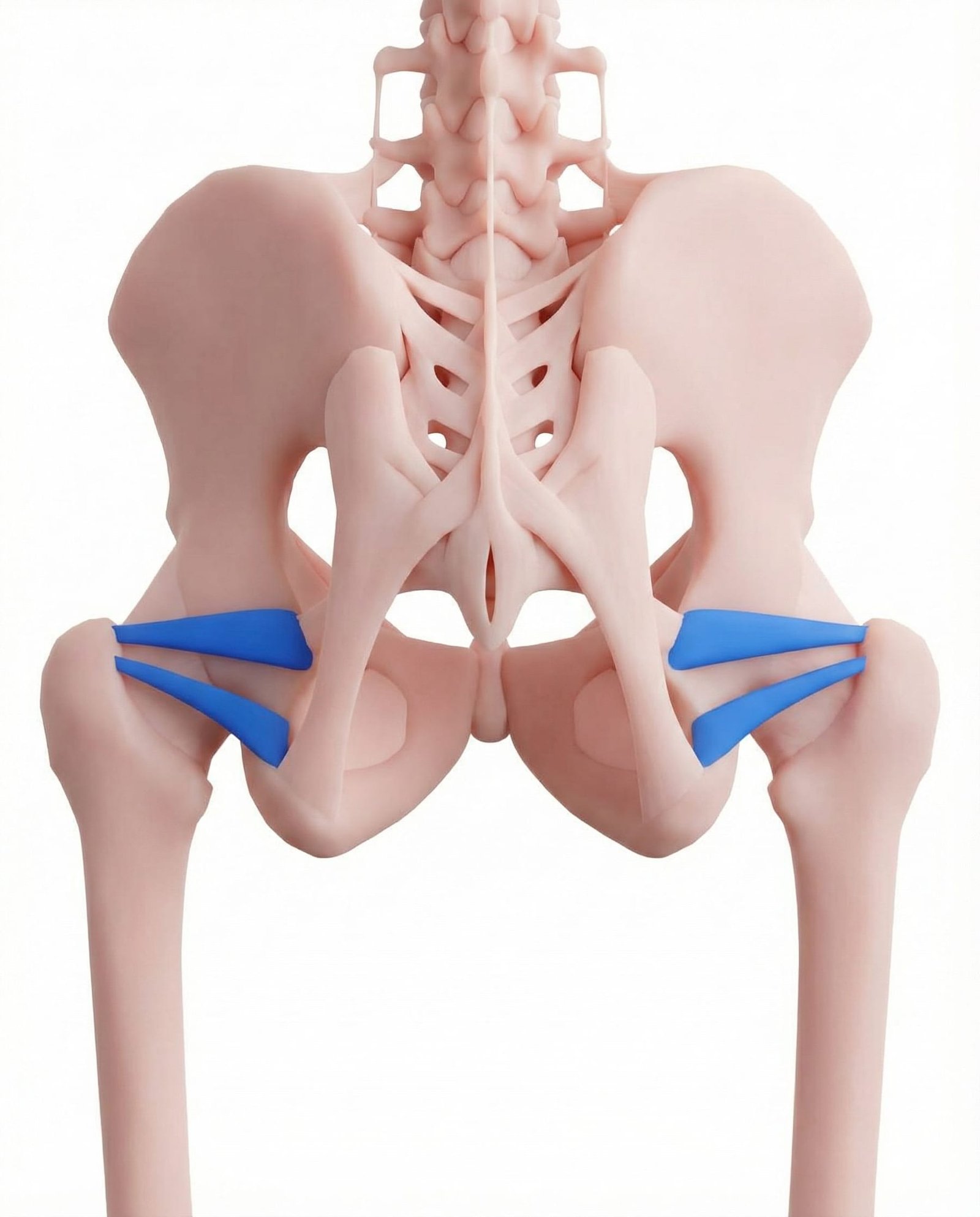
TrP 1
TrP1
Location. Deep hip rotators
Pain referral. Deep buttock, hip, posterior thigh
- Deep buttock
- Hip
- Posterior thigh
- Calf
Deep posterior hip aching from trigger points in the small external hip rotator muscles
Location. Deep hip rotators
Pain referral. Deep buttock, hip, posterior thigh
Location. Obturator internus belly deep in pelvis
Pain referral. Deep buttock and perineal region
Deep buttock pain. Deep posterior hip aching from trigger points in the small external hip rotator muscles
Hip pain. Deep hip joint area discomfort from rotator trigger point referral mimicking joint pathology
Posterior leg pain. Referred ache down the posterior thigh from deep hip rotator trigger point radiation
Sitting pain. Ischial and deep buttock discomfort from compression of deep rotator trigger points
Pain with prolonged sitting. Sitting compresses deep pelvic rotator trigger points against ischium causing deep buttock pain
Perineal discomfort. Referred perineal ache from obturator internus trigger point through pelvic floor connections
Coccyx area ache. Referred coccygeal pain from deep pelvic rotator trigger points via coccygeus muscle connections
Pain with hip external rotation. Active external rotation contracts obturator internus aggravating deep pelvic trigger points
Running. Repetitive hip rotation during running gait fatigues the small deep hip rotator muscles
Hip rotation activities. Sustained or repetitive external rotation movements overload deep hip rotators cumulatively
Sitting. Prolonged sitting compresses deep hip rotators between pelvis and seat causing ischemia
Hip instability. Insufficient hip stabilization increases compensatory deep rotator activation and overload
Prolonged sitting on hard surfaces. Sustained ischial compression on hard seats creates obturator internus ischemia and trigger points
Pelvic floor dysfunction. Pelvic floor hypertonicity creates obturator internus co-contraction developing secondary trigger points
Post-childbirth pelvic muscle trauma. Birth trauma to pelvic floor musculature creates obturator internus guarding and trigger points
Chronic hip external rotation posture. Habitual externally rotated hip posture shortens obturator internus promoting trigger point formation
Cycling (saddle pressure). Sustained saddle pressure compresses perineal region creating obturator internus trigger points
Sit on a firm chair and place a tennis ball under the affected buttock, targeting the deep area between the sit bone and the outer hip. Shift your weight onto the ball and slowly roll to find the most tender spot. When you locate it, hold sustained pressure for 20-30 seconds. Adjust position slightly to work adjacent areas.
Lie on your back with both knees bent. Cross the affected ankle over the opposite knee to form a figure-4 shape. Reach through and grasp behind the uncrossed thigh, pulling it gently toward your chest. You should feel a deep stretch in the buttock of the crossed leg. Keep your head and shoulders relaxed on the floor.
Lie on your side with hips and knees bent to about 45 degrees and a light resistance band around both knees. Keeping your feet together, lift the top knee as high as you can without rotating your pelvis backward. Pause at the top for 2 seconds, then lower slowly. Focus on feeling the contraction deep in the buttock rather than at the outer hip.
Sit in a chair with feet flat on the floor and knees bent to 90 degrees. Place a fist or small ball between your outer ankle and a table leg or wall. Press your ankle outward against the resistance without actually moving. Hold the contraction for 8-10 seconds, then relax. This gently strengthens the deep rotators without large joint movements.
Use a cushion designed to reduce pressure on the sit bones and deep buttock when sitting for extended periods. A memory foam or coccyx cushion works well. Also stand and walk briefly every 30-45 minutes to relieve sustained compression on the deep hip rotators. Avoid crossing your legs while seated.
If deep buttock pain persists beyond 4 weeks despite self-care, consult a physiotherapist or sports medicine specialist. They can differentiate deep hip rotator trigger points from piriformis syndrome, hip labral tears, sacroiliac dysfunction, or lumbar radiculopathy through targeted clinical testing and imaging. Manual therapy and dry needling can access these deep muscles more effectively than self-treatment.