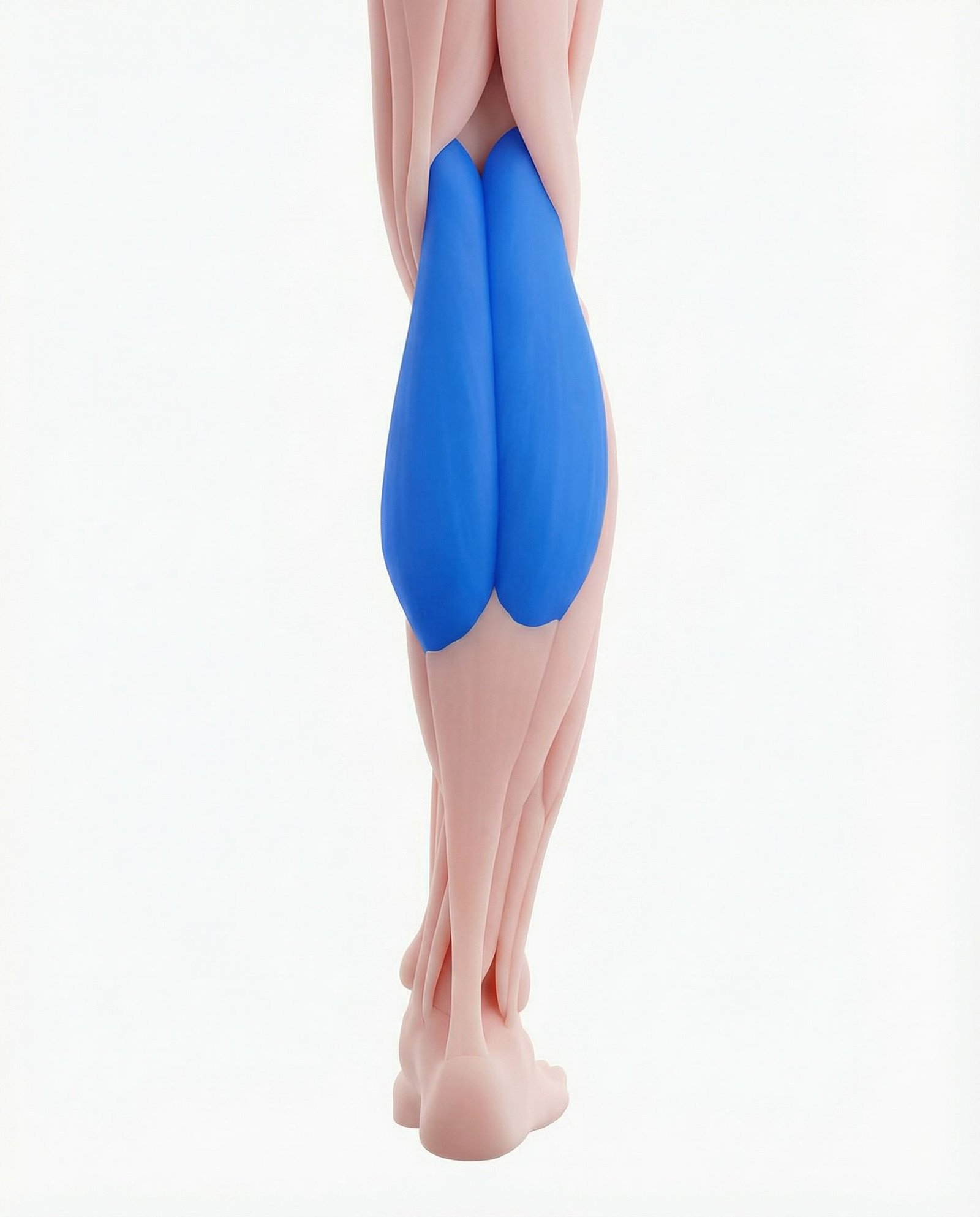
TrP 1
Gastrocnemius
Location. Upper calf, large superficial muscle
Pain referral. Calf, back of knee, ankle, foot
- Calf
- Back of knee
- Ankle
- Sole of foot
- Achilles area
Deep aching pain in posterior calf worsened by weight-bearing and walking
Location. Upper calf, large superficial muscle
Pain referral. Calf, back of knee, ankle, foot
Calf pain. Deep aching pain in posterior calf worsened by weight-bearing and walking
Cramps. Involuntary sustained muscle contractions from trigger point hyperirritability in calf fibers
Ankle pain. Referred pain projecting distally to the ankle joint from upper calf trigger points
Foot pain. Referred pain extending to the sole and arch via posterior compartment pain pattern
Night cramps. Nocturnal involuntary contractions due to sustained muscle shortening during sleep positioning
Running. Repetitive eccentric loading during push-off phase creates cumulative microtrauma in calf fibers
Jumping. High-force concentric contractions during takeoff overload gastrocnemius muscle fibers
High heels. Sustained plantarflexion shortens gastrocnemius chronically causing adaptive fiber contracture
Prolonged standing. Sustained isometric contraction to maintain posture creates ischemia in calf muscle
Dehydration. Inadequate fluid intake impairs electrolyte balance needed for proper muscle relaxation cycles
Mineral deficiency. Low magnesium or potassium disrupts calcium-mediated muscle contraction and relaxation mechanism
Sudden increase in activity. Rapid training volume increase exceeds tissue adaptation capacity causing fiber overload
Stand facing a wall with one foot forward and one foot back. Keep the back knee straight and heel on the ground. Lean into the wall until you feel a stretch in the upper calf of the back leg. This specifically targets the gastrocnemius since it crosses the knee joint.
Sit on the floor with a foam roller under your calf. Cross the other leg on top for added pressure. Roll slowly from behind the knee to the mid-calf, pausing on tender spots for 20-30 seconds. Rotate your leg inward and outward to access all parts of the gastrocnemius.
Stand on a step with just the balls of your feet on the edge. Rise up onto your toes using both legs, then shift your weight to the affected leg and slowly lower the heel below the step over 3-5 seconds. Use the other leg to push back up. Keep the knee straight throughout.
Stand on one foot near a wall for balance. Rise up onto your toes as high as possible, hold for 2 seconds, then lower slowly. This builds calf endurance, which is essential for reducing trigger point formation during prolonged walking or standing.
Stay well hydrated throughout the day. Consider magnesium supplementation (300-400mg daily) after consulting your doctor. Stretch calves before bed. If night cramps are frequent, sleep with a slight wedge under your feet or let your feet hang off the bed to prevent sustained plantarflexion.
If calf pain, cramping, or swelling persists beyond 3-4 weeks, consult a physiatrist. They can differentiate gastrocnemius trigger points from Achilles tendinopathy, compartment syndrome, or vascular issues and provide targeted treatment.