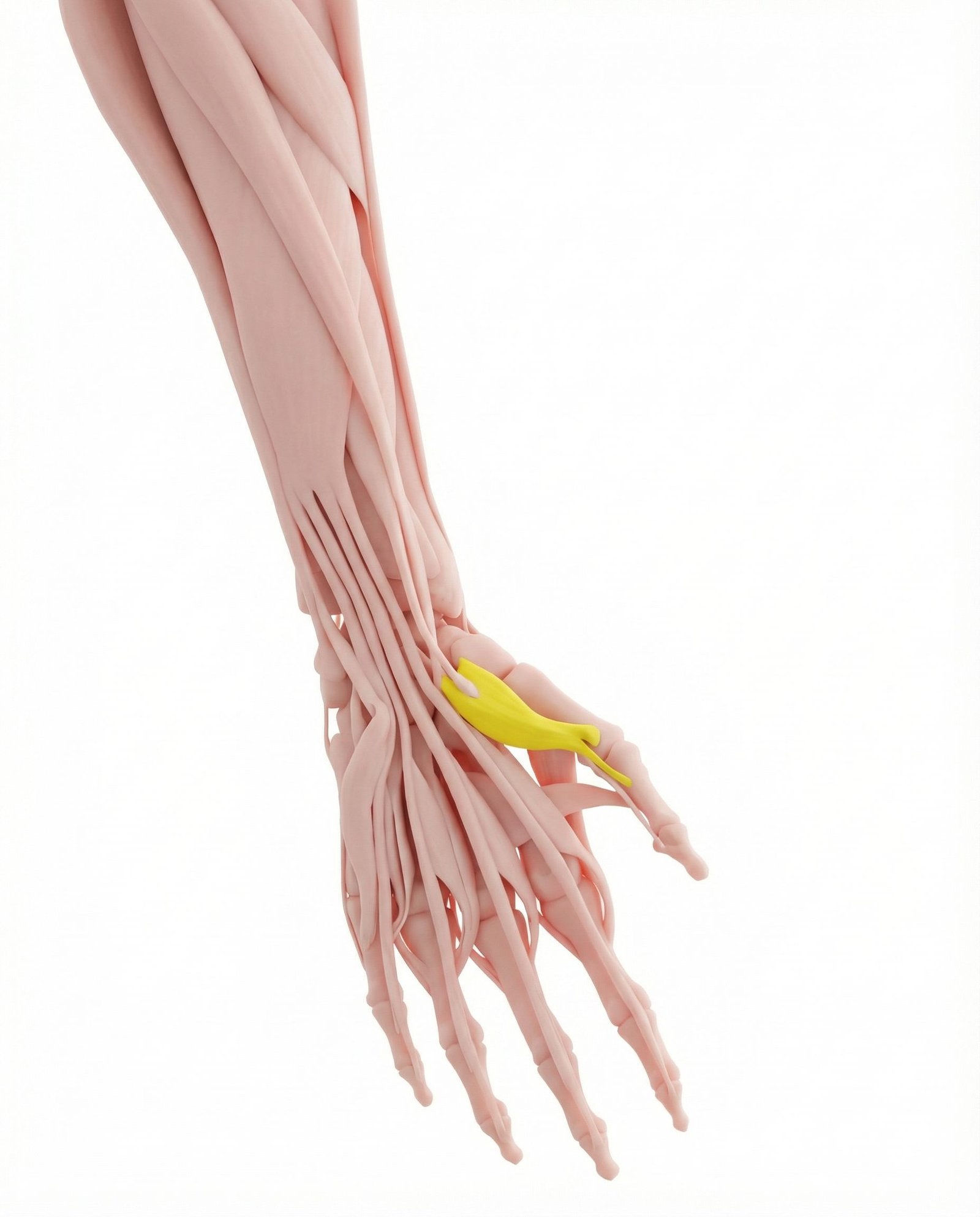
TrP 1
Flexor Pollicis Brevis
Location. Base of thumb, palm side
Pain referral. Base of thumb, palm
- Base of thumb
- Thenar eminence
- Palm
Localized aching at the first metacarpophalangeal joint aggravated by pinch grip activities
Location. Base of thumb, palm side
Pain referral. Base of thumb, palm
Thumb base pain. Localized aching at the first metacarpophalangeal joint aggravated by pinch grip activities
Weakness in flexion. Diminished thumb flexion strength impairing precision grip and pinch force generation
Palm discomfort. Diffuse thenar eminence soreness radiating into the central palm area
Repetitive thumb use. Sustained pinch and grip activities fatigue short thumb flexor fibers causing taut bands
Gripping. Prolonged forceful grip compresses thenar muscles creating ischemia and trigger point activation
Texting. Repetitive thumb tapping on phone screens overloads flexor pollicis brevis with micro-movements
Tool use. Sustained handle gripping during manual tool work creates chronic flexor pollicis brevis overload
Hold the affected hand with the palm facing up. Using the opposite hand, gently bend the thumb across the palm toward the base of the little finger, holding for 15-20 seconds. Then gently extend the thumb backward (away from the palm) to a comfortable stretch, holding for 15-20 seconds. Move slowly and stop at the point of gentle tension, never forcing into pain.
Using the thumb of the opposite hand, apply deep circular pressure to the fleshy pad at the base of the affected thumb. Start at the base near the wrist crease and work toward the thumb metacarpophalangeal joint. When you encounter a tender nodule or taut band, hold sustained pressure for 30-60 seconds. Adjust pressure to be firm but tolerable — a good pain level around 5 out of 10.
Take a small ball of therapy putty (start with soft resistance). Pinch it between the thumb pad and the pads of the index and middle fingers, squeezing firmly for 5 seconds. Release and reshape. Also practice rolling the putty into a ball using only the thumb against the fingers. Progress to firmer putty as strength improves over weeks.
Switch from one-handed thumb typing to two-handed typing or use voice-to-text when possible. Hold the phone with one hand and type with the index finger of the other. Use a phone stand or pop-socket to reduce the grip force required to hold the device. Limit continuous smartphone sessions to 10-15 minutes and take hand breaks between.
Fill a basin with comfortably warm water (about 100-104 degrees F or 38-40 degrees C). Submerge both hands and gently open and close the fingers, flex and extend the thumbs, and make gentle fist-to-spread movements in the warm water. The warmth reduces viscosity in stiff tissues and promotes circulation to the thenar muscles.
If thumb base pain and weakness persist beyond 4-6 weeks of home management, seek referral to a certified hand therapist (CHT). They can perform specialized assessment including grip and pinch dynamometry, assess for trigger thumb or thumb CMC arthritis, and provide treatments such as therapeutic ultrasound, custom thumb splinting, or targeted manual therapy techniques.