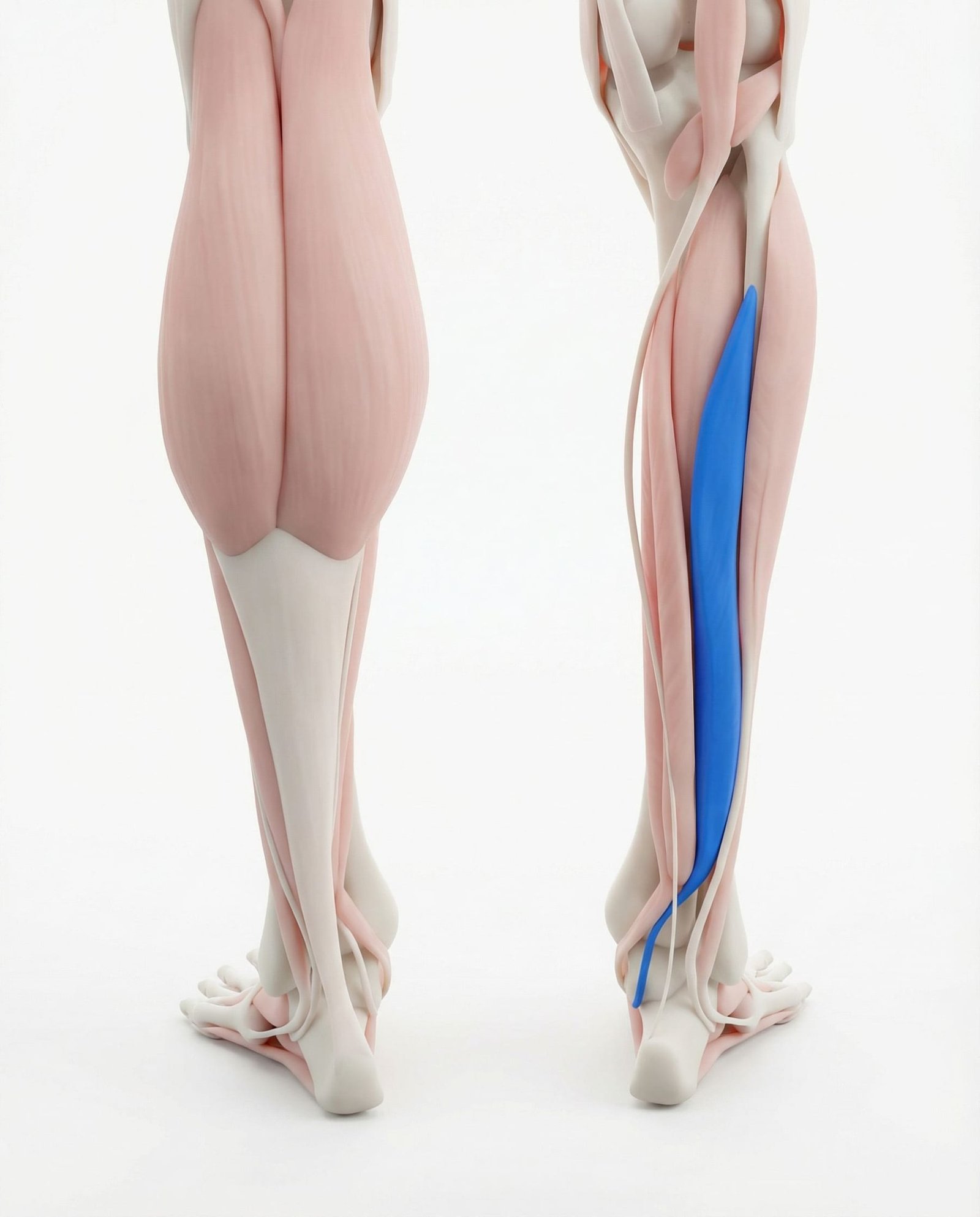
TrP 1
TrP1 (Foot)
Location. Sole, big toe
Pain referral. Sole of big toe, ball of foot
- Sole of big toe
- Ball of foot
- Big toe tip
Plantar hallux aching aggravated by push-off phase during walking and running activities
Location. Sole, big toe
Pain referral. Sole of big toe, ball of foot
Big toe sole pain. Plantar hallux aching aggravated by push-off phase during walking and running activities
Ball of foot pain. First metatarsal head pain from flexor hallucis longus tension at the sesamoid apparatus
Toe cramping. Involuntary painful great toe flexion from fatigued flexor hallucis longus trigger point spasm
Running. Repetitive push-off loading through the great toe overloads flexor hallucis longus with each stride
Dancing. Sustained releve and pointe positions maximally load flexor hallucis longus in shortened position
Pushing off. Forceful toe-off during propulsion phase demands maximal flexor hallucis longus contraction repeatedly
Overuse. Cumulative great toe flexion loading without recovery creates persistent taut bands in this muscle
While seated, place a tennis ball or lacrosse ball under the arch of the affected foot. Apply moderate downward pressure and slowly roll the ball from the heel toward the ball of the foot, pausing on any tender spots for 15-20 seconds. Focus on the medial arch where the flexor hallucis longus tendon runs beneath the foot.
Sit with your foot on the opposite knee. Grasp the big toe and gently pull it upward into extension while stabilizing the ball of the foot with the other hand. Hold at the point of a comfortable stretch without forcing. You should feel a stretch along the sole of the foot and the underside of the big toe.
Place a small towel flat on the floor. Using only your toes, scrunch the towel toward you by curling and releasing the toes repeatedly. After completing a set, scatter several marbles on the floor and practice picking them up one at a time with your toes, placing them in a cup. These exercises strengthen the intrinsic foot muscles and improve coordination of the flexor hallucis longus.
Stand on the affected foot on a step or raised surface with the heel hanging off the edge. Slowly rise up onto your toes, focusing on pushing through the big toe rather than rolling outward. Hold the top position for 2-3 seconds, then slowly lower back down below the level of the step. Use a wall or railing for balance. This eccentrically loads and strengthens the flexor hallucis longus through its full range.
Use shoes with a wide toe box that allows the big toe to spread naturally without being compressed. Place a metatarsal pad just behind the first metatarsal head inside your shoe to offload pressure from the sesamoid area. Avoid high heels or shoes with narrow toe boxes that force the big toe into sustained flexion. For runners, consider shoes with adequate forefoot cushioning and avoid excessively stiff-soled shoes.
Consult a podiatrist or sports medicine specialist if big toe and ball-of-foot pain persists beyond 3-4 weeks of self-care. They can perform imaging to rule out sesamoiditis, hallux rigidus, or stress fracture, and can assess foot biomechanics. Treatment may include custom orthotics, targeted manual therapy of the flexor hallucis longus, or ultrasound-guided dry needling of the trigger point.