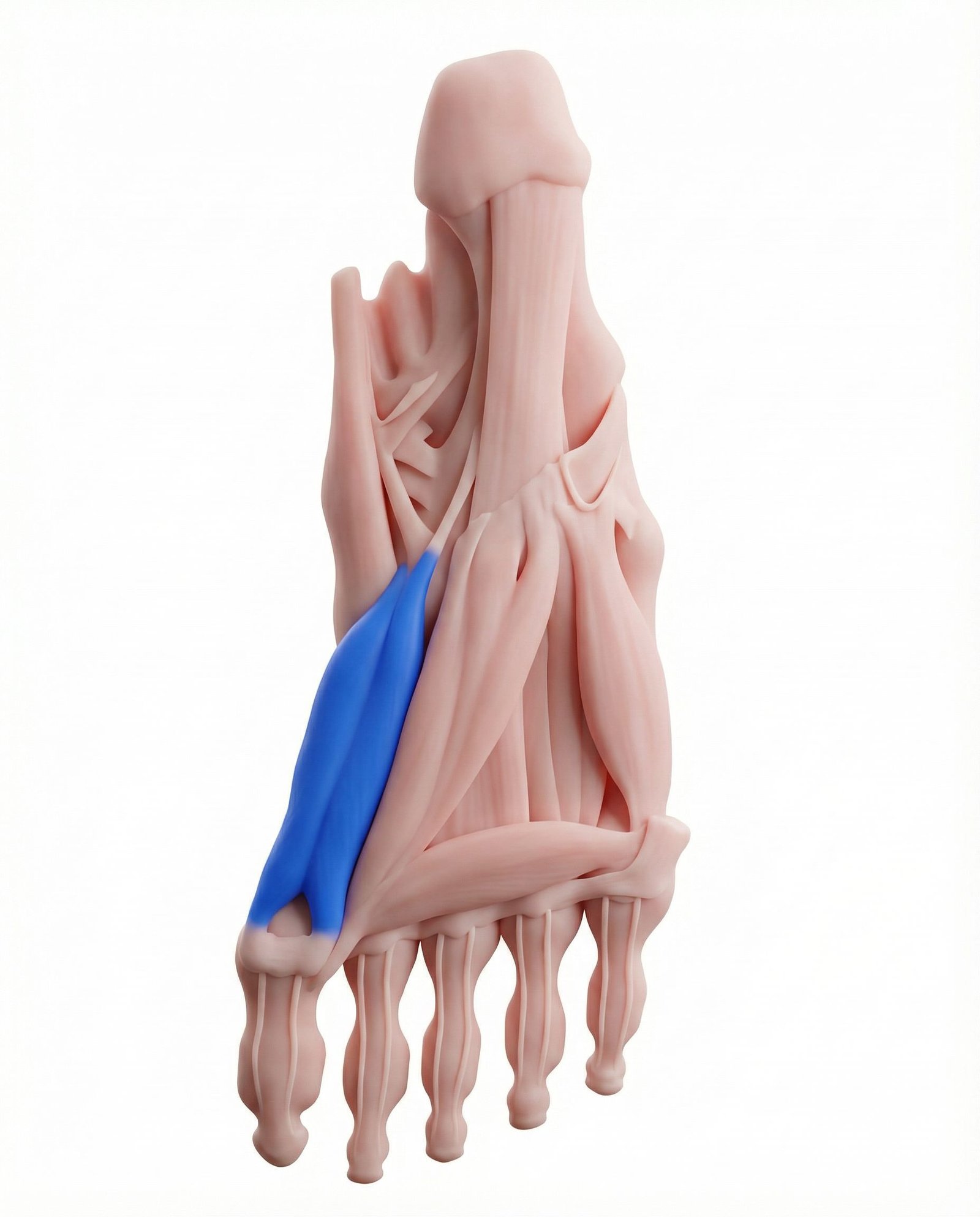
TrP 1
Flexor Hallucis Brevis
Location. Sole of foot, under big toe
Pain referral. Ball of foot, big toe
- Ball of foot
- Big toe
- First metatarsal head
Pain under first metatarsal head from trigger points near sesamoid bone region
Location. Sole of foot, under big toe
Pain referral. Ball of foot, big toe
Ball of foot pain. Pain under first metatarsal head from trigger points near sesamoid bone region
Big toe pain. Aching in hallux from flexor hallucis brevis trigger point distal referral pattern
Pain when pushing off. Toe-off phase maximally loads compromised flexor hallucis brevis during propulsion
Sesamoid-like pain. Pain mimicking sesamoiditis from trigger points adjacent to medial and lateral sesamoids
Running. Repetitive forefoot propulsion creates cumulative overload on hallux flexor mechanism
Dancing. Sustained releve and push-off positions maximally load flexor hallucis brevis muscle
High heels. Forced metatarsal head weight-bearing chronically overloads first ray flexor muscles
Overuse. Exceeding first ray muscle recovery capacity causes persistent trigger point activation
Poor footwear. Inadequate forefoot cushioning increases mechanical stress on ball-of-foot muscles
Sit comfortably and place the affected foot on the opposite knee. Use your thumb to apply firm, sustained pressure directly under the first metatarsophalangeal (big toe) joint. Hold each tender spot for 20-30 seconds, then release slowly. Repeat on any additional tender areas you find across the ball of the foot. Apply enough pressure to feel a productive discomfort without sharp pain.
Sit with the foot flat on the floor. Manually pull your big toe upward into full extension, holding for 15 seconds. Then curl the big toe downward into full flexion, holding for 15 seconds. Repeat this cycle 10 times. You can also perform this stretch by placing the toes against a wall with the foot at an angle to stretch the toe extensors and plantar flexors alternately.
Place a small towel flat on the floor and set your bare foot on top of it. Using only your toes, scrunch the towel toward you by curling all five toes. Spread the towel back out and repeat. Perform 3 sets of 10 scrunches. For added resistance, place a light book or water bottle on the far end of the towel.
Purchase a felt or gel metatarsal pad designed for sesamoid offloading. Place the pad inside your shoe just behind the ball of the foot so that it sits proximal to (behind) the first metatarsal head. The pad should redistribute pressure away from the big toe joint. Ensure the pad does not bunch or shift during walking. Replace the pad when it loses its cushioning properties.
Replace high heels and thin-soled shoes with footwear that has a low heel drop (less than 2 cm), a firm but cushioned sole, and a wide toe box. When selecting shoes, ensure there is adequate space for the big toe to move without compression. If dress shoes are required, choose styles with a platform or wedge that reduces forefoot loading compared to stilettos.
If pain under the big toe joint persists beyond 3-4 weeks of self-care, schedule an appointment with a podiatrist or sports medicine physician. The clinician can perform imaging to rule out sesamoiditis, sesamoid fracture, hallux rigidus, or gout. They may recommend custom orthotics, corticosteroid injection, or a specific rehabilitation protocol based on the findings.