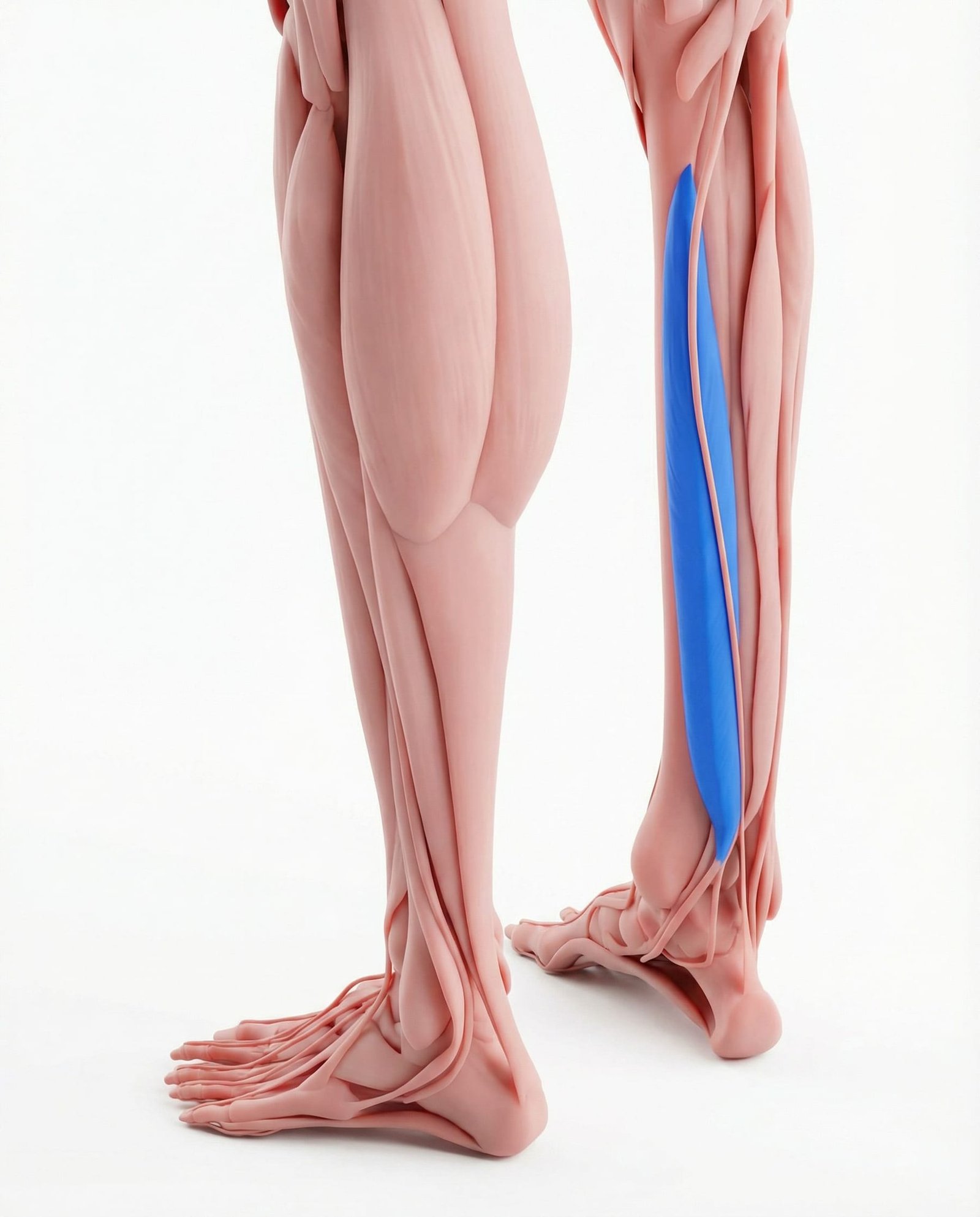
TrP 1
TrP1
Location. Deep back of leg
Pain referral. Calf, sole of foot, toes
- Posterior leg
- Sole of foot
- Toes
- Calf
Deep posterior calf aching from trigger points in the deep flexor compartment
Location. Deep back of leg
Pain referral. Calf, sole of foot, toes
Location. Sole, toes
Pain referral. Sole of toes, mid foot
Location. Mid-deep posterior compartment of lower leg
Pain referral. Ball of foot and metatarsal heads (metatarsalgia)
Location. Proximal fibers near tibial attachment
Pain referral. Medial ankle and plantar forefoot
Calf pain. Deep posterior calf aching from trigger points in the deep flexor compartment
Foot sole pain. Referred pain to plantar surface mimicking plantar fascia or intrinsic foot pathology
Toe cramping. Involuntary toe flexion spasms from hyperirritability in digital flexor muscle fibers
Pain when curling toes. Active toe flexion directly loads compromised flexor digitorum longus trigger points
Toe sole pain. Plantar digital pain beneath the lesser toes aggravated by push-off and toe gripping
Mid foot discomfort. Central plantar aching from flexor digitorum longus trigger points in the midfoot region
Ball of foot pain. Flexor digitorum longus trigger points refer distally to the plantar metatarsal head region
Metatarsalgia-like symptoms. Referral to the plantar forefoot mimics metatarsalgia from mechanical or neurogenic causes
Pain with push-off. Toe flexion during push-off contracts the flexor digitorum longus provoking forefoot referred pain
Forefoot burning. Sustained trigger point referral to metatarsal heads creates a burning dysesthetic forefoot sensation
Toe curling difficulty. Taut bands in flexor digitorum longus impair smooth toe flexion creating weakness and incoordination
Medial ankle pain. Deep medial ankle ache from FDL trigger point tension along posterior tibial groove
Plantar forefoot ache. Referred plantar metatarsal pain from proximal FDL trigger points through flexor tendons
Difficulty gripping with toes. Inhibited FDL contraction from trigger points reduces lateral toe flexion grip strength
Arch pain during push-off. FDL trigger points cause medial arch pain when toe flexors engage during gait push-off
Medial lower leg tightness. Taut FDL fibers in deep posterior compartment restrict ankle dorsiflexion and create tightness
Running. Repetitive toe-off propulsion phase overloads deep digital flexor muscle fibers cumulatively
Climbing. Sustained toe gripping for foot purchase creates prolonged flexor digitorum contraction
Toe gripping. Habitual toe clenching in footwear causes sustained involuntary flexor muscle contraction
Overuse. Exceeding deep flexor compartment recovery capacity results in persistent fiber dysfunction
Poor footwear. Ill-fitting shoes promote compensatory toe gripping increasing flexor muscle workload chronically
Repetitive finger use. Sustained toe gripping during balance activities overloads flexor digitorum longus chronically
Wearing high heels. Plantarflexed position shortens the deep toe flexors while shifting body weight onto the forefoot
Running on hard surfaces. Repetitive impact loading on hard ground increases demand on toe flexors for grip and push-off
Morton foot structure (short first metatarsal). Altered forefoot mechanics shift propulsive load to lesser toes overworking flexor digitorum longus
Toe gripping from unstable shoes. Involuntary toe gripping to stabilize the foot in loose footwear chronically overloads toe flexors
Ballet and dance (demi-pointe). Sustained demi-pointe position maximally loads flexor digitorum longus for toe stabilization
Walking barefoot on hard floors. Absence of cushioning increases toe flexor demand for propulsion and surface grip on hard surfaces
Excessive running mileage. High-volume running overloads FDL through repetitive toe-off flexion demands each stride
Walking barefoot on hard surfaces. Increased toe flexor gripping demand on hard floors fatigues FDL without cushioning support
Ballet and dance activities. Repeated releve and pointe work maximally loads FDL through full plantarflexion range
Chronic ankle instability with compensatory gripping. Toe flexor overuse compensates for lateral ankle instability creating FDL trigger points
Flat feet with compensatory toe flexor overuse. Collapsed arches increase FDL demand as toe flexors compensate for lost arch support
Place a firm ball (lacrosse ball or golf ball) on the floor and stand with the ball under the ball of your foot, just behind the toes. Apply moderate pressure and slowly roll the ball back and forth across the metatarsal heads and the area just behind them. Pause on any especially tender spots for 15-20 seconds. You can do this seated for less pressure or standing for more. Avoid rolling directly on the toes.
Sit and cross the affected foot over your opposite knee. Grasp the toes with one hand and gently pull them back toward your shin until you feel a stretch along the bottom of the foot and toes. With the other hand, apply gentle pressure along the arch to enhance the stretch. Hold for 30 seconds. You can also do this standing by placing the tops of your toes on the ground behind you and gently pressing the foot forward.
Place 15-20 marbles (or small objects) on the floor next to a cup or bowl. Sit in a chair with your foot bare on the floor. Using only your toes, pick up one marble at a time and place it into the cup. Focus on controlled, deliberate toe movements rather than speed. This exercise strengthens the intrinsic foot muscles and improves coordination of the toe flexors, reducing the load on the extrinsic flexor digitorum longus.
Stand facing a wall with the affected leg behind you. Bend both knees while keeping the rear heel on the ground, and lean forward until you feel a stretch deep in the lower calf, closer to the Achilles tendon. This targets the soleus and deep posterior compartment muscles including the flexor digitorum longus, unlike the straight-knee stretch which primarily targets the gastrocnemius. Hold for 30 seconds.
Purchase an adhesive metatarsal pad (available at pharmacies or online). Place it inside your shoe just behind the ball of your foot — not directly under the metatarsal heads, but slightly behind them toward the arch. The pad should spread the metatarsal bones apart and reduce pressure on the ball of the foot during push-off. Test placement by walking and adjusting until the forefoot pressure feels most evenly distributed.
Consult a podiatrist or sports medicine physician if forefoot pain and toe cramping persist beyond 4-6 weeks of self-care. They can perform diagnostic ultrasound to evaluate for Morton neuroma, assess for metatarsal stress fractures, and differentiate between intrinsic foot pathology and referred pain from deep posterior compartment trigger points. Treatments may include custom orthotics, ultrasound-guided injection, or dry needling of the deep calf compartment.
Sit comfortably and place the affected foot on the opposite knee. Using your thumbs, apply firm circular pressure under the metatarsal heads (ball of foot) and along the plantar surface toward the toes. Spend extra time on tender spots, holding sustained pressure for 15-20 seconds before moving on.
Sit with your foot accessible. Gently grasp all the lesser toes with one hand and slowly extend them upward (pulling them back toward the top of the foot) while stabilizing the ball of the foot with the other hand. Hold at the point of gentle stretch without forcing into pain.
Sit with feet flat on the floor. Practice lifting only the big toe while keeping the lesser toes down, then reverse — press the big toe down while lifting the lesser toes. Progress to spreading all toes apart and holding for 5 seconds. These exercises retrain the intrinsic foot muscles to work independently.
Purchase adhesive metatarsal pads from a pharmacy or online. Place the pad just behind (proximal to) the metatarsal heads inside your shoe or adhered to a removable insole. The pad should sit behind the ball of the foot, not directly under it, to spread the metatarsal bones and reduce pressure on the toe flexors.
Wear supportive footwear with cushioned soles indoors and outdoors. Use house slippers or supportive sandals instead of going barefoot on tile, hardwood, or concrete. Choose shoes with a wide toe box that allows toes to spread naturally without being compressed.
Consult a podiatrist or sports medicine specialist if toe cramping and forefoot pain persist beyond 3-4 weeks of self-care. They can assess for developing hammer toes, metatarsalgia, Morton neuroma, or biomechanical issues. Treatment may include custom orthotics, targeted manual therapy, or corrective taping.