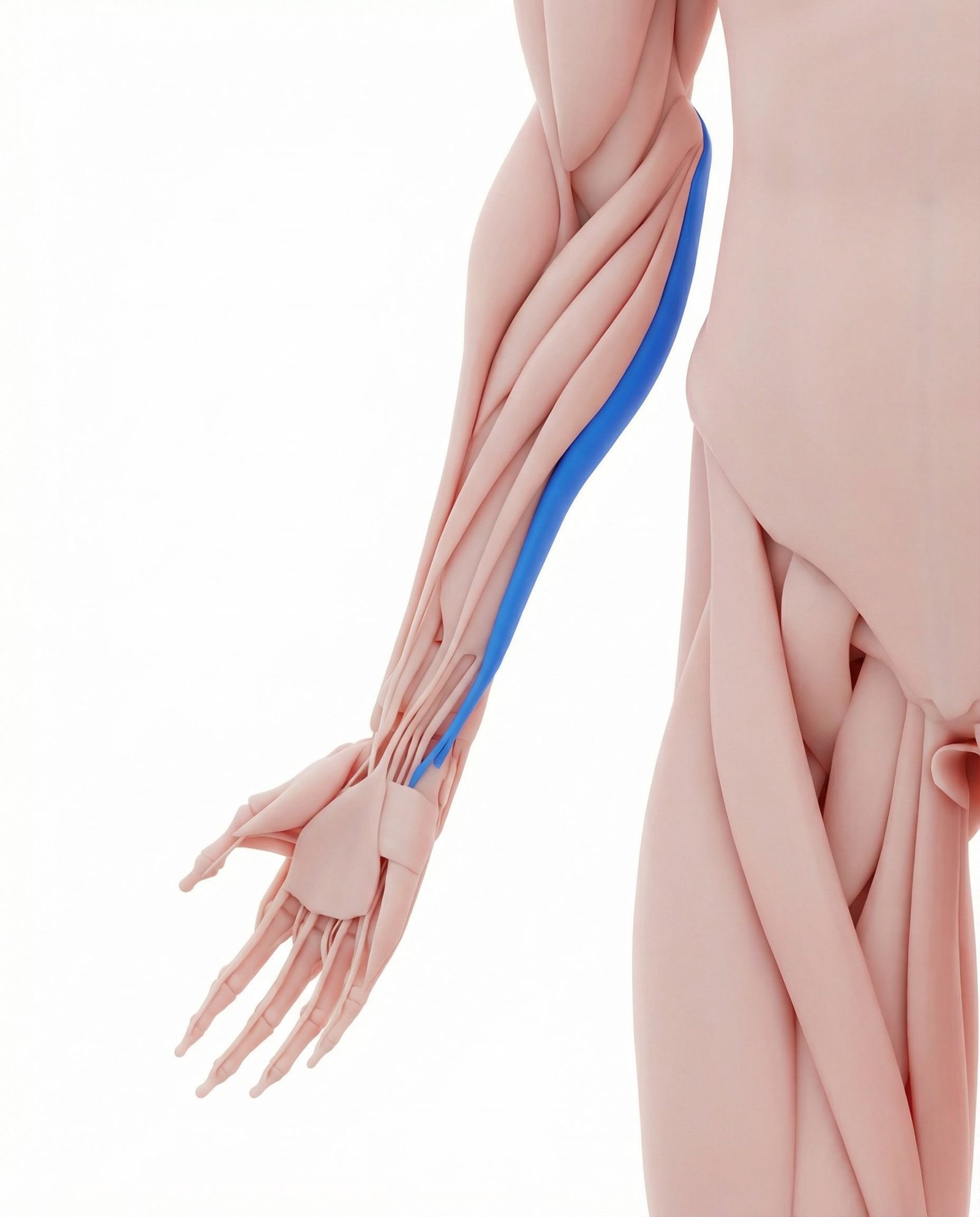
TrP 1
TrP1
Location. Inner forearm, little finger side
Pain referral. Inner wrist, little finger side
- Inner wrist
- Little finger side palm
- Forearm
Ulnar volar wrist aching from flexor carpi ulnaris trigger point near pisiform bone
Location. Inner forearm, little finger side
Pain referral. Inner wrist, little finger side
Location. Proximal fibers near medial epicondyle
Pain referral. Medial elbow and ulnar wrist
Wrist pain. Ulnar volar wrist aching from flexor carpi ulnaris trigger point near pisiform bone
Ulnar palm discomfort. Hypothenar palm pain from trigger point referral along ulnar wrist flexor pathway
Weakness in flexion. Impaired ulnar wrist flexion from flexor carpi ulnaris trigger point force inhibition
Medial elbow pain (golfer elbow-like). Medial epicondyle ache from proximal FCU trigger point mimicking medial epicondylitis symptoms
Ulnar wrist ache. Referred pain to ulnar wrist and pisiform from FCU trigger point at medial epicondyle origin
Weak grip (ulnar deviation). Inhibited FCU contraction reduces wrist ulnar deviation and flexion power during grip
Medial forearm tightness. Taut FCU fibers along medial forearm create restriction and aching during wrist movements
Pisiform area tenderness. Referred tenderness at pisiform bone from FCU trigger point tension through its distal tendon
Typing. Sustained keyboard use with ulnar deviation creates cumulative flexor carpi ulnaris overload
Gripping. Forceful gripping requires flexor carpi ulnaris co-contraction for ulnar wrist stabilization
Wrist flexion. Repetitive wrist flexion with ulnar deviation directly overloads flexor carpi ulnaris fibers
Sports. Racket and club sports requiring wrist flexion overload flexor carpi ulnaris muscle repeatedly
Golf (trailing hand). Golf swing creates high wrist flexion and ulnar deviation forces overloading FCU at medial epicondyle
Repetitive wrist ulnar deviation. Chronic ulnar wrist deviation during tasks overloads FCU as a primary ulnar deviator
Typing with ulnar deviation. Keyboard positioning that promotes ulnar wrist deviation chronically overloads FCU muscle fibers
Throwing sports. Throwing creates valgus stress at elbow and wrist flexion overloading FCU at medial epicondyle
Weightlifting (press movements). Heavy pressing movements with wrist flexion load FCU at its proximal attachment significantly
Extend your arm in front of you with the palm facing down. Use your opposite hand to gently bend the wrist toward the thumb side (radial deviation), creating a stretch along the ulnar (pinky) side of the forearm. Hold without bouncing. Then reverse by gently bending the wrist toward the pinky side while the palm faces up to stretch the opposing direction.
Using the thumb of the opposite hand, apply firm pressure along the fleshy muscle on the pinky side of the inner forearm, from near the elbow down to the wrist. When you find a tender knot, hold steady pressure for 20-30 seconds until the tenderness diminishes. Work slowly and methodically along the entire muscle length.
Place your hand flat on a table. Spread all fingers apart as wide as possible, hold for 5 seconds, then bring them back together. Repeat 10-15 times. For added resistance, loop a small rubber band around all five fingers and spread against it. This strengthens the intrinsic hand muscles that support ulnar wrist stability.
Position your keyboard directly in front of you, centered with your body (not offset to one side). Keep your wrists straight — avoid angling your hands outward toward the pinky side during typing. Consider a split or tented ergonomic keyboard that allows your wrists to remain in a neutral alignment. Use a keyboard tray at elbow height to prevent wrist flexion.
Stand or sit upright. Extend your arm to the side at shoulder height, palm facing the ceiling. Flex your wrist so your fingers point toward the floor. Then bend your elbow, bringing your hand toward your ear. Slowly straighten the elbow again. Move smoothly and gently through the full range. This glides the ulnar nerve through its pathway and reduces nerve irritation.
If numbness or tingling in the ring and little fingers persists beyond 3-4 weeks of self-care, or if you notice hand weakness or muscle wasting, consult a neurologist or hand specialist. Nerve conduction studies and electromyography can determine whether the ulnar nerve is compressed at Guyon's canal or the cubital tunnel, guiding appropriate treatment.