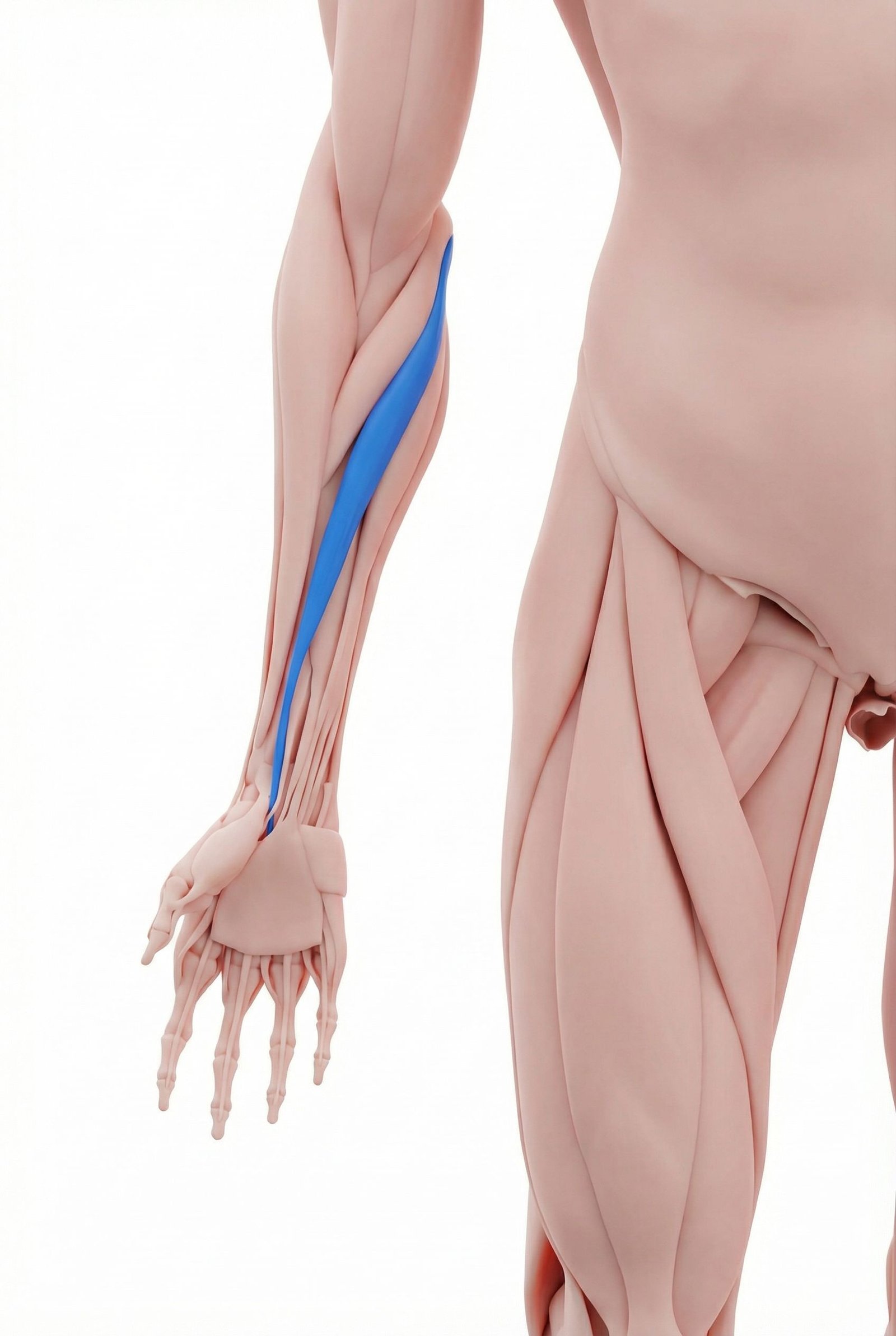
TrP 1
TrP1
Location. Inner forearm, thumb side
Pain referral. Inner wrist, thumb side palm
- Inner wrist
- Thumb side palm
- Forearm
Volar radial wrist aching from flexor carpi radialis trigger point near wrist crease
Location. Inner forearm, thumb side
Pain referral. Inner wrist, thumb side palm
Location. Distal fibers near wrist at FCR tendon
Pain referral. Volar wrist and radial palm
Wrist pain. Volar radial wrist aching from flexor carpi radialis trigger point near wrist crease
Palm discomfort. Thenar palm pain from trigger point referral along flexor carpi radialis tendon pathway
Weakness in flexion. Impaired wrist flexion strength from trigger point inhibition of flexor carpi radialis
Volar wrist pain. Palmar wrist ache at radial side from FCR trigger point near distal tendon at wrist crease
Radial-sided wrist ache. Referred radial palm pain from distal FCR trigger point through palmar wrist structures
Weak wrist flexion. Inhibited FCR contraction from trigger points reduces radial wrist flexion force production
Difficulty with gripping. FCR trigger points impair wrist stabilization needed for effective power grip activities
Thenar area discomfort. Referred ache to thenar eminence from FCR distal trigger point near palmar wrist crease
Typing. Sustained keyboard use with wrist flexion creates cumulative flexor carpi radialis overload
Gripping. Forceful sustained gripping requires flexor carpi radialis co-contraction for wrist stabilization
Wrist flexion. Repetitive or sustained wrist flexion directly overloads flexor carpi radialis muscle fibers
Tool use. Sustained tool manipulation requiring wrist flexion overloads flexor carpi radialis chronically
Excessive typing with wrist flexion. Sustained wrist flexion during typing overloads FCR through prolonged shortened position
Weightlifting (front rack, cleans). Extreme wrist extension in front rack position eccentrically overloads FCR creating trigger points
Racquet sports (forehand). Repetitive wrist flexion during forehand strokes overloads FCR concentrically each impact
Prolonged mouse use with wrist flexion. Sustained wrist flexion posture during mouse use creates chronic FCR shortening and trigger points
Repetitive wrist flexion tasks. High-volume wrist flexion activities overwork FCR beyond its fatigue threshold creating trigger points
Extend your arm in front of you with the palm facing down and elbow straight. Use the opposite hand to gently press your fingers and wrist downward until you feel a stretch along the top of the forearm. This counterbalances the shortened flexor and reduces tension on the radial wrist.
Locate the flexor carpi radialis muscle on the inner forearm, roughly one-third of the way from the elbow to the wrist on the thumb side. Using the thumb of the opposite hand, apply firm pressure and massage across the muscle fibers (perpendicular to the forearm). Move slowly and hold extra pressure on any tender knots for 20-30 seconds.
Sit with your forearm resting on a table, wrist hanging off the edge. Hold a very light weight (1-2 pounds). Slowly flex the wrist upward, hold for 2 seconds, then lower over 4 seconds. Flip your hand over and repeat for wrist extension. Perform 10-12 repetitions in each direction. Focus on smooth, controlled movement.
Wear a supportive wrist brace that holds the wrist in a neutral or slightly extended position during activities that aggravate the pain, such as typing, gardening, or cooking. Choose a brace with a rigid splint that prevents excessive wrist flexion. Remove the brace during rest periods to allow natural movement.
Adjust your keyboard and mouse position so your wrists remain in a neutral position — not flexed or extended. Place the keyboard at elbow height or slightly below. Use a negative-tilt keyboard tray if available. Consider a split or ergonomic keyboard that reduces ulnar deviation. Ensure your forearms are supported by armrests or a wrist rest during pauses.
If radial wrist pain persists beyond 3-4 weeks of self-care or worsens, consult a hand therapist or orthopedic specialist. They can perform specific tests to differentiate flexor carpi radialis trigger points from de Quervain's tenosynovitis, wrist tendinitis, or scaphoid pathology, and may recommend targeted manual therapy or corticosteroid injection if warranted.