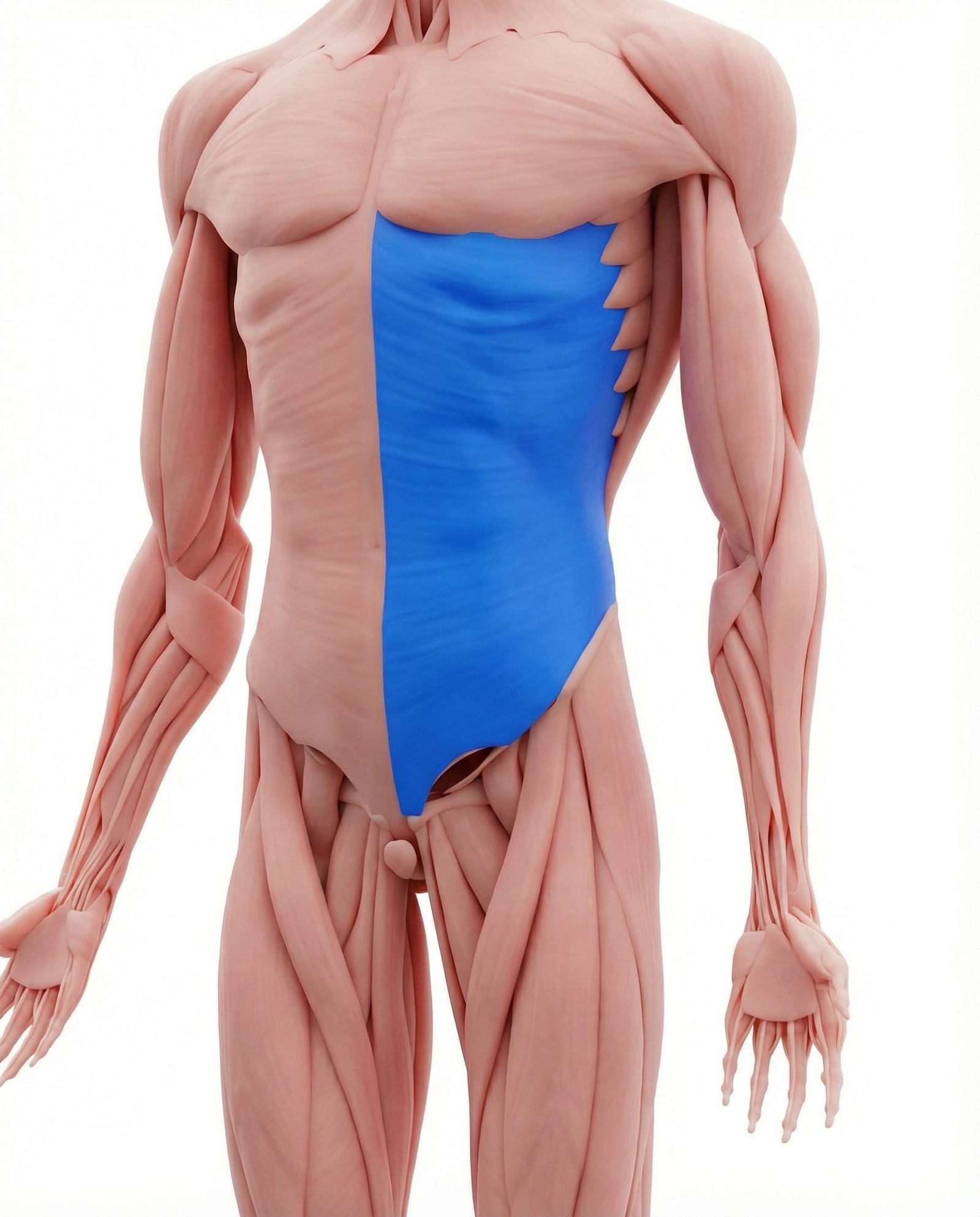
TrP 1
TrP1
Location. Sides of abdomen
Pain referral. Side of abdomen, groin, testicles
- Side of abdomen
- Groin
- Testicles/labia
- Upper hip
- Rib area
Lateral trunk aching along the oblique muscle fibers worsened by rotation movements
Location. Sides of abdomen
Pain referral. Side of abdomen, groin, testicles
Location. Lower lateral fibers near inguinal ligament
Pain referral. Groin and testicles/labia (visceral mimicry)
Location. Upper lateral fibers near lower ribs
Pain referral. Epigastric region, mimics heartburn/GERD
Side abdominal pain. Lateral trunk aching along the oblique muscle fibers worsened by rotation movements
Groin pain. Referred inguinal discomfort from lower oblique trigger points mimicking hernia symptoms
Testicular pain. Referred scrotal aching from lower abdominal trigger points without testicular pathology
Hip pain. Referred discomfort at the iliac crest from oblique muscle attachment trigger points
Pain when twisting. Sharp lateral trunk pain during rotational movements from oblique taut band activation
Testicular or labial aching. Visceral referral from lower oblique trigger points projects to the gonadal region via shared innervation
Lower abdominal discomfort. Taut bands in the lower lateral abdominal wall create diffuse lower abdominal discomfort
Pain mimicking hernia. Inguinal region referral from external oblique trigger points closely mimics inguinal hernia symptoms
Pseudo-visceral pelvic pain. Somatic trigger point referral to the pelvic region mimics visceral pathology via convergent neurons
Epigastric pain mimicking heartburn. Upper external oblique trigger points refer medially to the epigastric region mimicking gastric reflux
Upper abdominal ache. Taut bands near the costal margin create diffuse upper abdominal wall aching
Substernal burning. Referral to the substernal area mimics esophageal burning from gastroesophageal reflux disease
Nausea (referred). Viscerosomatic convergence from upper abdominal trigger points can provoke referred nausea sensation
Pain after meals (positional). Post-meal abdominal distension increases pressure on upper oblique trigger points exacerbating referral
Twisting movements. Forceful trunk rotation overloads external oblique fibers especially during sports activities
Coughing. Repeated forceful expiratory effort strains oblique muscles during prolonged coughing episodes
Sports (golf, tennis). Rotational sports demand repeated forceful trunk twisting overloading oblique muscle fibers
Sit-ups with rotation. Resisted trunk rotation during core exercises places excessive load on oblique fibers
Carrying children. Asymmetric loading while carrying a child overloads obliques on the supporting side
Heavy lifting. Increased intra-abdominal pressure during heavy lifting strains lower external oblique fibers
Chronic coughing. Repeated forceful coughing generates sustained oblique contraction stressing inguinal region fibers
Sit-ups and crunches (excessive). High-volume abdominal exercises overload the external obliques especially near the inguinal region
Straining during bowel movements. Valsalva maneuver during straining generates high lower abdominal wall tension and trigger points
Running (especially sprinting). Trunk rotation during sprinting creates high-velocity eccentric loading on the lower external obliques
Post-surgical abdominal adhesions. Surgical scarring restricts abdominal wall mobility creating compensatory trigger points in adjacent tissue
Prolonged slouching posture. Thoracic kyphosis compresses the upper abdominal wall increasing costal margin oblique trigger points
Excessive oblique exercises. High-volume rotational core exercises overload the upper external oblique fibers near the ribs
Chronic cough. Repeated forceful coughing generates sustained upper oblique contraction creating ischemic trigger points
Tight belts or waistbands. External compression from tight clothing restricts upper abdominal wall mobility provoking trigger points
Thoracolumbar scoliosis. Spinal curvature creates asymmetric oblique loading with concave-side shortening and trigger points
Forceful vomiting. Violent emesis generates extreme upper abdominal wall contraction traumatically activating trigger points
Lie on your non-painful side with a firm pillow under your waist. Extend your top arm overhead to stretch the affected oblique muscles. Breathe deeply into the stretched side, expanding the ribs. This gently lengthens the external obliques and releases lateral abdominal tension.
Sit in a chair with your feet flat on the floor. Slowly rotate your trunk to one side, using the chair arm or backrest for gentle support. Hold for 15-20 seconds, then rotate to the other side. Keep the movement slow and controlled — do not force the rotation.
Sit on the floor with legs extended. Cross your right foot over your left leg. Place your left elbow on the outside of your right knee and gently twist your trunk to the right. Hold at a comfortable stretch. This deeply stretches the obliques through combined rotation and side-bending.
Lie on your side with knees bent. Prop yourself up on your forearm and lift your hips, creating a straight line from shoulder to knees. Hold for 10-15 seconds, then lower. This gently strengthens the obliques without aggressive twisting motions.
Temporarily reduce the intensity of rotational sports (golf, tennis, baseball) or twisting exercises. When returning to these activities, warm up thoroughly with gentle trunk rotations. Avoid sudden forceful twisting, especially when lifting. Support your ribs with a pillow when coughing.
If side abdominal pain or groin pain persists beyond 3 weeks, consult a physician first to rule out hernia, kidney stones, or appendicitis. Once visceral causes are excluded, a physiatrist can assess for oblique trigger points and provide targeted treatment.