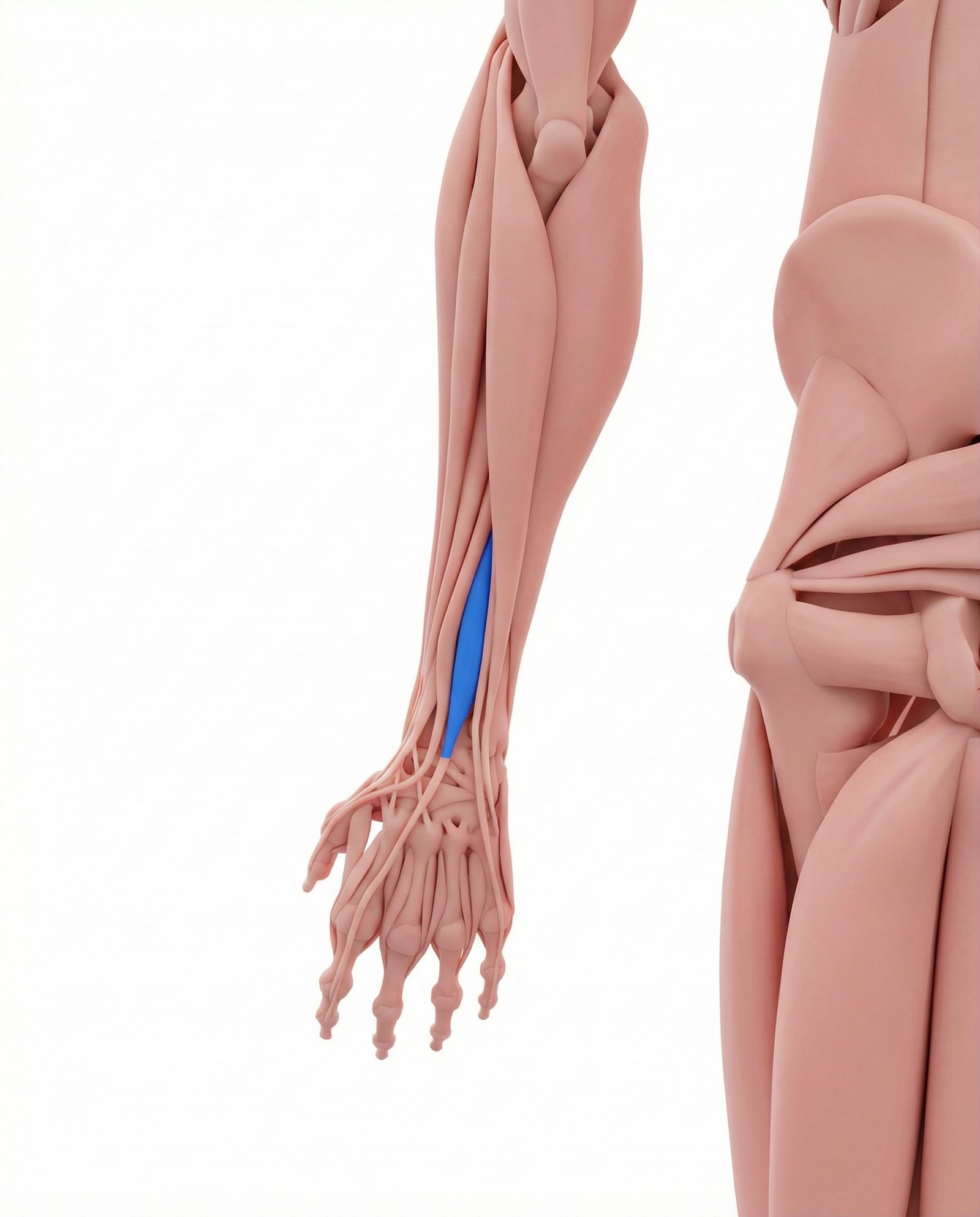
TrP 1
Extensor Indicis
Location. Back of forearm, index finger
Pain referral. Back of hand, index finger
- Back of hand
- Index finger
- Posterior forearm
Dorsal index finger aching from extensor indicis trigger point distal referral pattern
Location. Back of forearm, index finger
Pain referral. Back of hand, index finger
Index finger pain. Dorsal index finger aching from extensor indicis trigger point distal referral pattern
Back of hand pain. Dorsal hand pain from trigger point referral along extensor indicis tendon pathway
Pain with finger extension. Index finger extension directly loads compromised extensor indicis trigger point fibers
Typing. Repetitive index finger keystrokes create cumulative overload on extensor indicis muscle fibers
Writing. Sustained pen grip with index finger control overloads extensor indicis during writing
Musical instruments. Repetitive index finger movements during instrument play overload extensor indicis chronically
Repetitive finger use. Any sustained or repeated index finger activity cumulatively overloads extensor indicis fibers
Rest the affected forearm on a table with the palm facing down. Using the thumb of the opposite hand, locate the muscle belly on the back of the forearm about 5-8 centimeters above the wrist, slightly toward the ulnar (pinky) side. The extensor indicis lies deep to the extensor digitorum. Apply firm, sustained pressure on any tender nodule for 20-30 seconds. You may feel referred pain traveling toward the index finger or the back of the hand.
With the wrist in a neutral position, use the opposite hand to gently flex the index finger into a full fist position, curling it down toward the palm. Then add gentle wrist flexion to increase the stretch along the dorsal forearm. Hold the combined position for 20-30 seconds. The stretch should feel firm but comfortable along the back of the hand and forearm. Release slowly.
Place your hand flat on a table, palm down. Keep all other fingers pressed down while lifting only the index finger upward against gravity. Hold for 3-5 seconds, then lower slowly. To add resistance, loop a small rubber band over the index fingertip and around the thumb to create resistance during the lift. This specifically targets and strengthens the extensor indicis in isolation.
Place a rubber band around the outside of all five fingers. Spread all fingers wide against the band resistance, hold for 5 seconds, then slowly relax. Next, squeeze a soft therapy ball or stress ball for 5 seconds, then release. Alternate between spreading and squeezing for a balanced workout of the finger extensors and flexors. This helps restore proper muscle balance across the dorsal and palmar forearm compartments.
Position your keyboard so that wrists remain in a neutral position without extension or deviation. Use a split or ergonomic keyboard that reduces ulnar deviation. When using a mouse, keep your forearm supported on the desk and use the entire arm to move the mouse rather than isolated finger movements. Consider a vertical mouse that places the hand in a handshake position, reducing extensor loading. Take 30-second micro-breaks every 20 minutes to stretch the fingers.
If index finger or dorsal hand pain persists beyond 3-4 weeks of self-care, or if the finger begins to catch, lock, or swell, consult a hand therapist or orthopedic hand specialist. They can differentiate extensor indicis trigger points from extensor tendinitis, extensor hood dysfunction, or metacarpophalangeal joint pathology. Manual therapy techniques including instrument-assisted soft tissue mobilization and targeted dry needling of the extensor indicis can provide rapid relief for resistant cases.