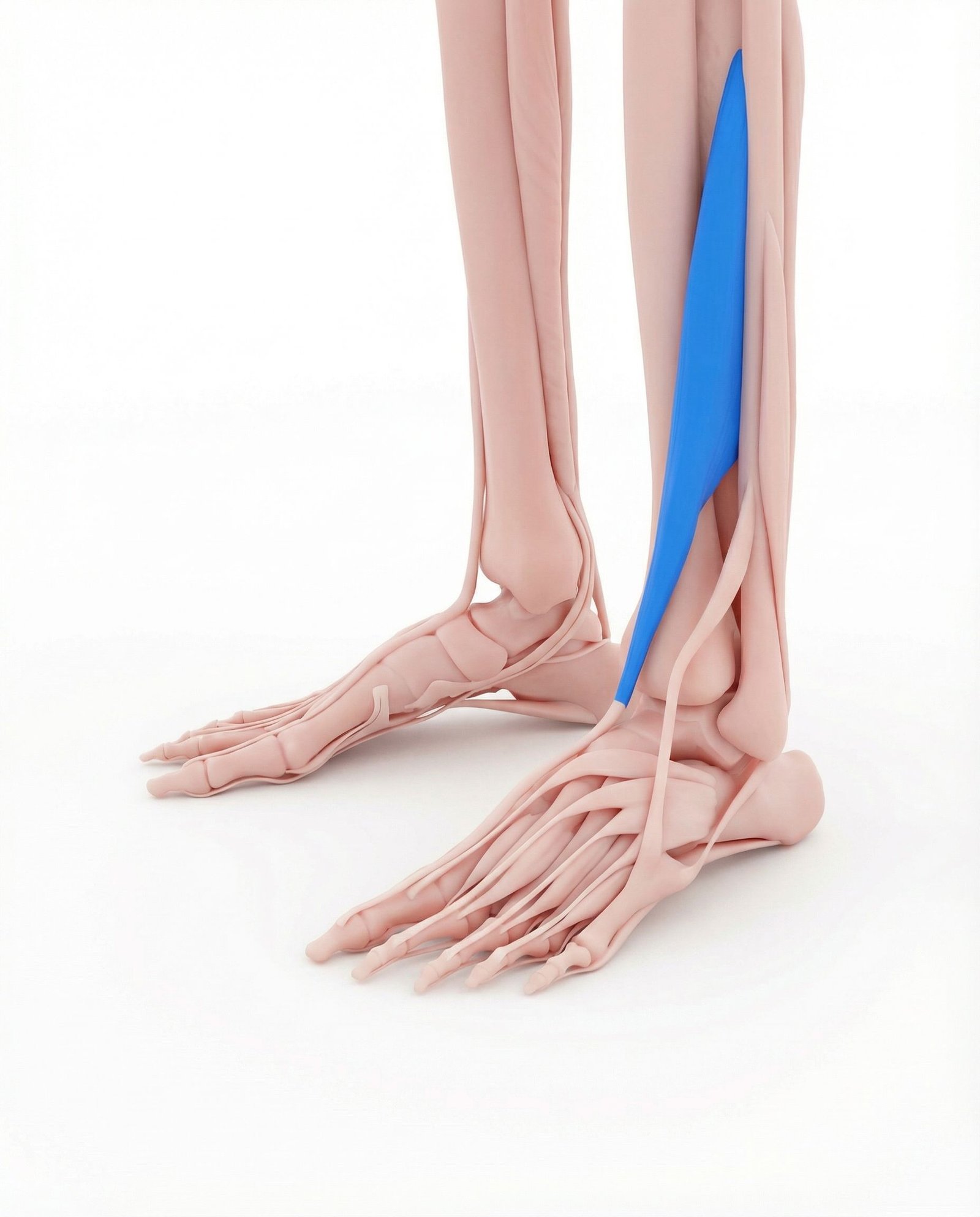
TrP 1
TrP1
Location. Front of lower leg, deep
Pain referral. Front of leg, big toe, ankle
- Front of leg
- Big toe
- Ankle
- Dorsal foot
Anterior leg aching from deep compartment extensor hallucis longus trigger point activation
Location. Front of lower leg, deep
Pain referral. Front of leg, big toe, ankle
Location. Distal fibers near ankle and dorsal foot
Pain referral. Dorsum of great toe and 1st metatarsal area
Shin pain. Anterior leg aching from deep compartment extensor hallucis longus trigger point activation
Big toe pain. Dorsal hallux pain from distal trigger point referral along extensor tendon pathway
Ankle pain. Anterior ankle discomfort from trigger point referral near extensor retinaculum region
Difficulty lifting big toe. Impaired hallux extension from trigger point inhibition of extensor hallucis longus function
Great toe dorsal pain. Dorsal hallux ache from EHL trigger point referral along extensor tendon to great toe
1st MTP joint ache. Pain over first metatarsophalangeal joint from EHL tendon tension at dorsal joint capsule
Difficulty with push-off. EHL trigger points restrict great toe flexion needed for effective gait push-off mechanics
Anterior ankle tightness. Taut EHL fibers crossing anterior ankle create restriction during plantarflexion movements
Dorsal foot tenderness near 1st metatarsal. Palpable EHL tendon tenderness over dorsal first ray from trigger point tension transmission
Running. Repetitive big toe dorsiflexion during swing phase overloads extensor hallucis longus fibers
Hiking. Prolonged walking with sustained toe clearance demands creates cumulative extensor overload
Kicking. Forceful toe and ankle dorsiflexion during kicking overloads deep anterior compartment muscles
Overuse. Exceeding deep anterior compartment recovery capacity causes persistent extensor fiber dysfunction
Poor footwear. Inadequate support forces compensatory big toe dorsiflexion increasing extensor muscle workload
Running (especially uphill). Uphill running increases dorsiflexion demand overloading EHL through repetitive concentric contractions
Tight shoes compressing great toe. Shoe compression forces EHL to work harder maintaining hallux extension against external pressure
Hallux valgus compensation. Bunion deformity alters EHL mechanical advantage increasing muscle work for toe extension
Stubbing great toe repeatedly. Repeated forced flexion injuries to hallux eccentrically overload EHL causing fiber damage
Excessive toe extension exercises. Repetitive active toe extension against resistance overloads EHL concentrically creating trigger points
Sit with your affected leg resting on the opposite thigh. Using your fingertips, locate the tendon running along the front of the shin toward the big toe by lifting your big toe and feeling the cord that stands out. Starting about midway down the shin, apply gentle sustained pressure along both sides of this tendon, moving slowly down toward the ankle and the top of the foot. Pause on any tender spots for 15-20 seconds. Avoid pressing directly on the shin bone.
Sit in a chair and place the top of your big toe on the floor with the toe curled under. Gently press downward to stretch the top of the toe and the extensor hallucis longus tendon. You should feel a stretch along the top of the big toe and the front of the ankle. Hold for 20-30 seconds. Alternatively, kneel with your toes tucked under you and gently sit back on your heels to stretch all the toe extensors simultaneously.
Sit barefoot and loop a light resistance band around your big toe, anchoring the other end under your foot or to a fixed object. Slowly lift your big toe upward against the resistance of the band, hold for 3 seconds, then lower slowly. This isolates and strengthens the extensor hallucis longus in a controlled manner. Start with very light resistance and progress gradually. You can also do this by pressing your big toe up against your hand.
Stand facing a wall with your affected foot about 10 centimeters from the wall. Keeping your heel on the ground, bend your knee forward to try to touch the wall. If you can touch it easily, move your foot further back. This improves ankle dorsiflexion mobility and reduces compensatory overload on the extensor hallucis longus. You can also perform gentle ankle circles and calf stretches to complement this exercise.
Switch to shoes with a wide and deep toe box that allows the big toe to sit without being compressed from above or the sides. Avoid narrow, pointed, or shallow shoes that press on the dorsal surface of the big toe. When shopping for shoes, test by removing the insole and standing on it — your toes should not hang over the edges. Consider shoes with a soft, flexible upper material that conforms to the foot shape without creating pressure points.
Consult a sports medicine physician or physiotherapist if big toe and anterior ankle pain persists beyond 4-6 weeks of self-care. They can differentiate between extensor tendinopathy, hallux rigidus, anterior ankle impingement, and trigger point referral from the extensor hallucis longus. Imaging may be warranted to rule out stress fractures or joint degeneration. Treatment options include dry needling, manual therapy, and biomechanical assessment with gait analysis.