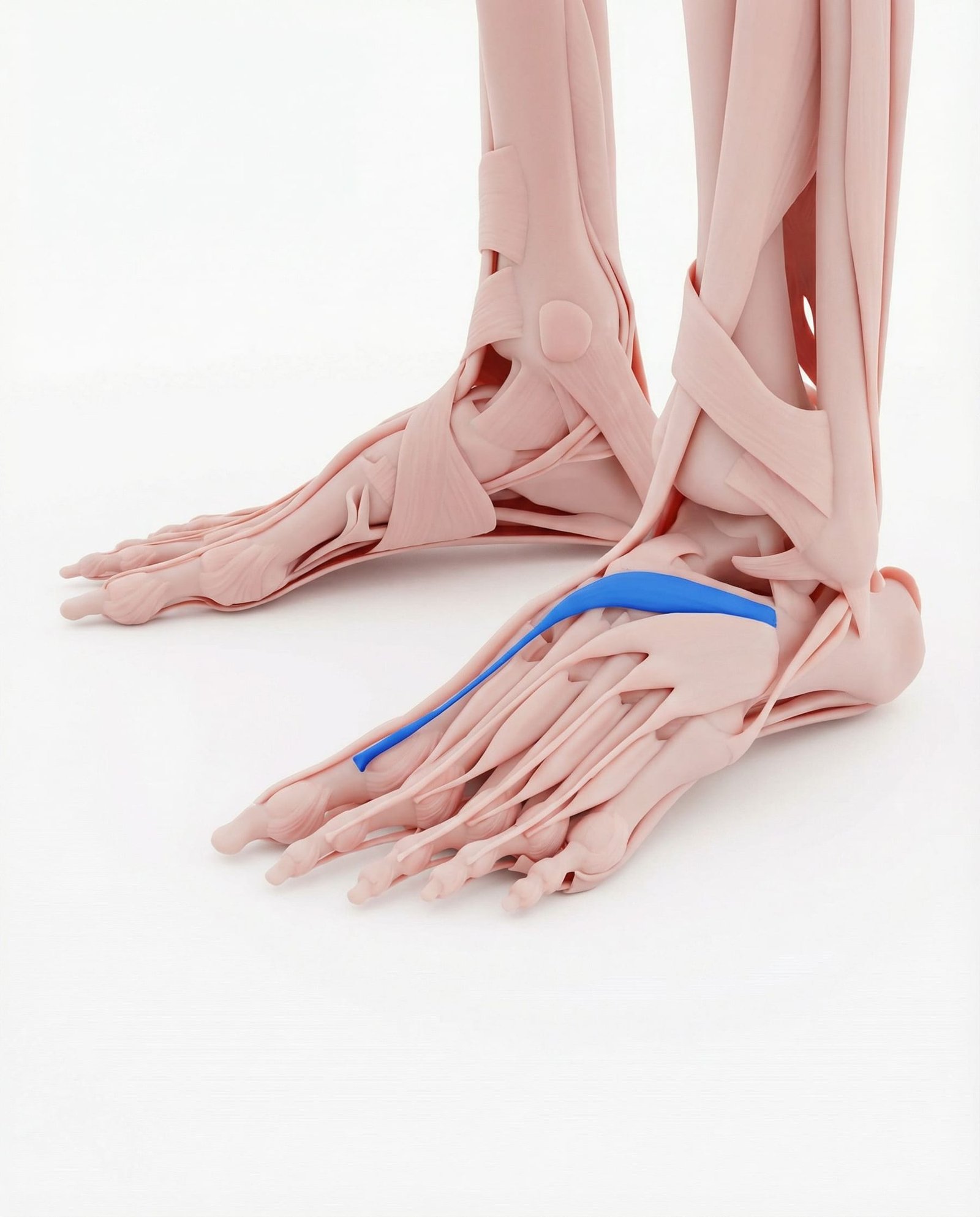
TrP 1
Extensor Hallucis Brevis
Location. Top of foot, big toe
Pain referral. Top of big toe, foot
- Top of big toe
- Dorsal foot
- Big toe
Dorsal hallux pain from extensor hallucis brevis trigger point near first metatarsal head
Location. Top of foot, big toe
Pain referral. Top of big toe, foot
Big toe pain. Dorsal hallux pain from extensor hallucis brevis trigger point near first metatarsal head
Top of foot pain. Medial dorsal foot aching from intrinsic big toe extensor trigger point activation
Pain extending big toe. Active hallux extension directly loads compromised extensor hallucis brevis trigger points
Running. Repetitive hallux extension during swing phase cumulatively overloads intrinsic big toe extensor
Tight shoes. Constrictive footwear compresses first ray dorsum irritating extensor hallucis brevis muscle
Overuse. Exceeding intrinsic hallux extensor recovery capacity creates persistent muscle fiber dysfunction
Ballet. Sustained pointe and releve positions create eccentric overload on hallux extensor mechanism
Sit and place the affected foot on your opposite knee. Using your thumb, locate the tender spot on the top of the foot just in front of the ankle, near the base of the big toe where the extensor hallucis brevis muscle belly sits. Apply firm, sustained pressure for 20-30 seconds, then slowly release. Reposition your thumb slightly and repeat on any adjacent tender areas. Use smooth, circular motions if sustained pressure is too intense.
Prepare two basins, one with warm water (38-40 degrees Celsius) and one with cool water (15-18 degrees Celsius). Submerge the affected foot in warm water for 3 minutes, then switch to cool water for 1 minute. Repeat this cycle 3-4 times, ending with warm water. This alternating temperature promotes local blood flow to the small intrinsic foot muscles and helps flush metabolic waste from trigger points.
Sit with the foot flat on the floor. Using your hand, gently push the big toe downward into full flexion, stretching the extensor on top. Hold the stretched position for 15-20 seconds, then release. For a deeper stretch, simultaneously point the ankle downward while flexing the big toe. Perform 3 sets of 5 repetitions.
Place a small towel flat on the floor and stand with the affected foot on it. Using only your toes, scrunch the towel toward you by curling all toes, with particular emphasis on the big toe gripping and pulling. Perform 3 sets of 10 scrunches. This strengthens the flexor muscles opposing the overactive extensor, restoring muscular balance across the hallux.
Choose shoes with a roomy toe box that does not compress the dorsal surface of the big toe. Avoid shoes with low, rigid uppers that press directly on the first metatarsal head area. If you wear ballet shoes or athletic footwear, ensure the forefoot section allows the big toe to extend naturally without restriction. Consider shoes with a slightly curved rocker sole to reduce the demand on hallux extension during walking.
If dorsal big toe pain persists beyond 3-4 weeks despite self-care, consult a podiatrist or orthopedic foot specialist. They can differentiate extensor hallucis brevis trigger points from hallux rigidus, dorsal bunion, extensor tendinopathy, or first metatarsophalangeal joint arthritis through clinical examination and X-ray. Manual therapy techniques such as dry needling of the small dorsal foot muscles or instrument-assisted soft tissue mobilization may provide relief when self-treatment is insufficient.