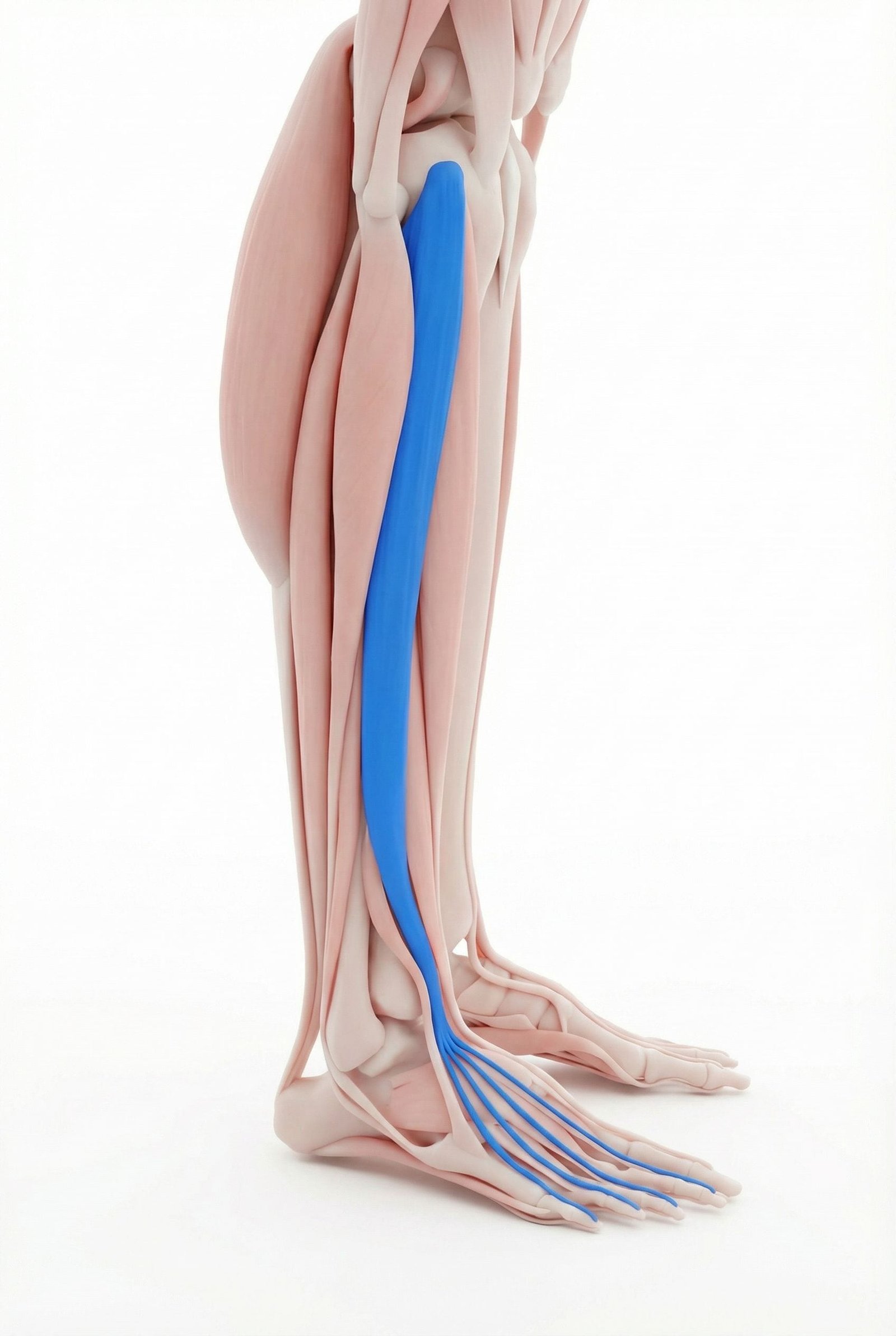
TrP 1
TrP1
Location. Outer front lower leg
Pain referral. Outer ankle, top of foot, toes
- Outer ankle
- Top of foot
- Toes
- Anterior leg
Referred pain to dorsal foot surface from anterior compartment extensor trigger points
Location. Outer front lower leg
Pain referral. Outer ankle, top of foot, toes
Location. Mid-belly of EDL in anterior compartment
Pain referral. Dorsum of foot and lateral toes
Location. Proximal fibers near fibular head and lateral tibial condyle
Pain referral. Anterolateral lower leg and dorsal foot
Top of foot pain. Referred pain to dorsal foot surface from anterior compartment extensor trigger points
Toe pain. Distal referral pattern projecting pain to lesser toes along extensor tendon pathways
Outer ankle pain. Pain at anterolateral ankle from trigger point referral in lateral anterior compartment
Pain when lifting toes. Active toe extension loads compromised extensor digitorum longus muscle fibers directly
Dorsal foot ache. Diffuse aching across dorsum of foot from EDL trigger point referral through extensor tendons
Toe extension weakness. Inhibited EDL contraction from active trigger points reduces lateral toe extension force
Anterior ankle tightness. Taut EDL fibers restrict plantarflexion creating anterior ankle restriction and discomfort
Foot drop sensation (mild). Transient toe-catching during swing phase from inhibited EDL dorsiflexion strength
Dorsal foot tenderness with shoe pressure. Sensitized extensor tendons over dorsal foot become painful under shoe tongue compression
Anterior shin ache (lateral). Anterolateral shin pain from proximal EDL trigger point near fibular head and tibial condyle
Dorsal foot pain after activity. Referred dorsal foot aching after activity from EDL trigger point through extensor tendon pathway
Foot drop sensation. Perceived foot drop from EDL trigger point inhibition reducing active toe dorsiflexion strength
Anterior compartment tightness. Taut EDL fibers contribute to anterior compartment pressure sensation during exercise
Difficulty with toe extension against resistance. Inhibited EDL contraction from proximal trigger points reduces resisted toe extension force
Running. Repetitive toe dorsiflexion during swing phase overloads extensor digitorum longus fibers
Tight shoes. Constrictive footwear compresses extensor tendons causing chronic irritation and muscle guarding
Hiking. Prolonged walking on varied terrain demands sustained extensor activity for toe clearance
Overuse. Exceeding anterior compartment recovery capacity creates persistent extensor fiber dysfunction
Poor footwear. Inadequate support forces compensatory overactivation of toe extensors during ambulation
Running on uneven terrain. Repetitive ankle stabilization demands on uneven ground overwork EDL as a dorsiflexor-evertor
Tight-fitting shoes. External compression of EDL tendons over dorsal foot creates retrograde muscle tension and trigger points
Anterior compartment syndrome (chronic exertional). Elevated compartment pressure during exercise creates EDL ischemia and trigger point activation
Excessive dorsiflexion activities. Repetitive ankle dorsiflexion against resistance overloads EDL muscle fibers concentrically
Hiking with heavy boots. Boot weight increases dorsiflexion demand while rigid uppers compress anterior compartment muscles
Anterior compartment overuse (running). High-volume running creates repetitive dorsiflexion demand overloading proximal EDL at its origin
Shin splints (lateral component). Lateral shin splint variant involves proximal EDL overload at fibular and tibial attachments
Tight shoelaces. Dorsal foot compression from tight laces creates retrograde tension overloading proximal EDL
Excessive dorsiflexion exercises. High-volume ankle dorsiflexion work overloads EDL origin near fibular head concentrically
Trail running with uneven footing. Variable surface demands create constant EDL adjustment overloading proximal fibers
Kneel on the floor and place a foam roller under the front of your shins. Shift your weight forward so the roller presses into the outer front compartment of your lower leg. Slowly roll from just below the knee to above the ankle, pausing on any tender spots for 20-30 seconds. You can adjust the pressure by how much weight you place on the roller. Alternatively, use your thumbs or a massage stick to apply direct pressure along the outer front of the shin.
Sit on your heels with the tops of your feet flat on the floor, toes pointing backward. Gently lean back to increase the stretch along the front of the ankle and shin. If this is too intense, place a rolled towel under your ankles for support. You can also do this standing by placing the top of your foot on the ground behind you and gently pressing down. Hold each stretch for 30 seconds.
Sit with your foot flat on the floor. Slowly lift all five toes off the ground as high as possible, hold for 3 seconds, then press them firmly into the floor. Repeat 15 times. Next, spread your toes as wide as possible, hold 3 seconds, then relax. Finally, practice lifting just the big toe while keeping the lesser toes down, then reverse. These exercises restore balanced tone between the extensors and flexors.
Sit with one leg crossed over the other so the foot hangs freely. Using your ankle joint, slowly trace each letter of the alphabet in the air with your big toe. Move through the full range of motion — up, down, side to side, and in circles. This mobilizes the ankle joint in all planes and promotes balanced activation of all lower leg muscles including the extensors.
If your shoes press on a tender area on the top of your foot, use the skip-lacing technique: unlace the shoe, then skip the eyelet pair directly over the sore spot by threading the lace straight up to the next eyelet instead of crossing over. This creates a window of reduced pressure over the sensitive area. Choose shoes with a padded tongue and avoid tying laces too tightly across the dorsum. Consider shoes with a slightly higher instep if dorsal pressure is a recurring problem.
Consult a sports medicine physician or physiotherapist if dorsal foot and ankle pain persists beyond 4-6 weeks of self-care. They can assess for anterior compartment syndrome, extensor tendinopathy, or stress fractures that may mimic trigger point referral patterns. Diagnostic ultrasound or MRI may be warranted. Treatment options include dry needling of anterior compartment trigger points, manual therapy, and gait analysis to identify biomechanical contributors.