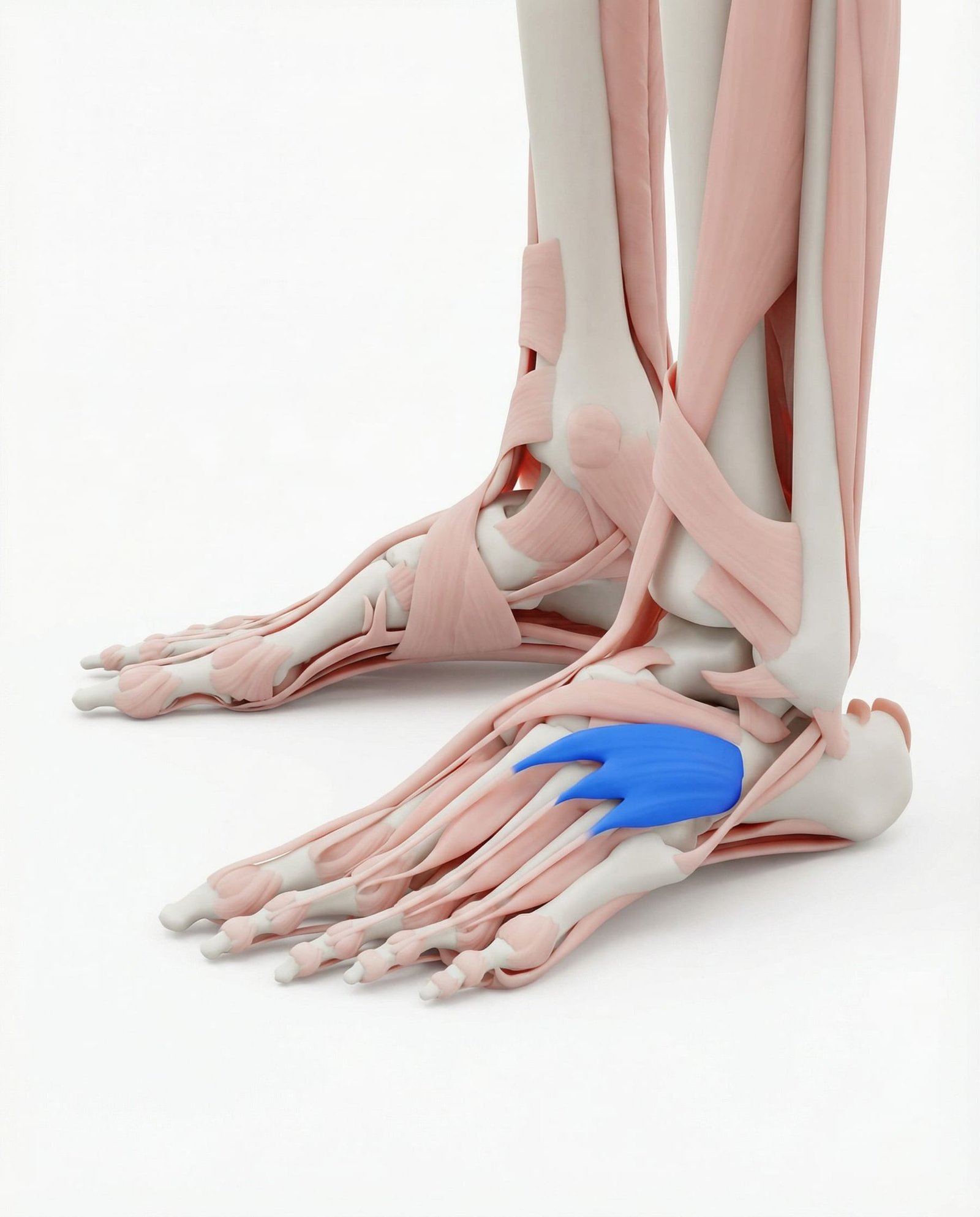
TrP 1
Extensor Digitorum Brevis
Location. Top of foot
Pain referral. Top of foot, toes
- Top of foot
- Toes
- Dorsal foot
Dorsal foot aching from extensor digitorum brevis trigger points on lateral foot dorsum
Location. Top of foot
Pain referral. Top of foot, toes
Top of foot pain. Dorsal foot aching from extensor digitorum brevis trigger points on lateral foot dorsum
Toe pain. Pain at lesser toes from distal extensor digitorum brevis trigger point referral pattern
Pain extending toes. Active toe extension loads compromised intrinsic extensor digitorum brevis trigger points
Running. Repetitive toe extension during swing phase cumulatively overloads intrinsic foot extensor muscles
Tight shoes. Dorsal foot compression from tight footwear creates mechanical stress on extensor muscle belly
Overuse. Exceeding intrinsic extensor recovery capacity creates persistent extensor digitorum brevis dysfunction
Poor footwear. Constrictive shoe dorsum compresses extensor digitorum brevis causing sustained muscle irritation
Sit comfortably and place the affected foot on your opposite knee. Using your thumb and fingers, apply gentle circular pressure across the top of the foot, starting near the outer ankle where the muscle belly is most prominent and working toward the toes. Spend 20-30 seconds on any tender spots. Use light to moderate pressure since the dorsal foot tissues are thinner than the sole. Apply a small amount of lotion or oil to reduce skin friction.
Sit with the foot flat on the floor. Manually curl all four lesser toes downward into full flexion using your hand, gently stretching the extensor muscles on top of the foot. Hold for 15 seconds, then release. Additionally, point the ankle downward (plantar flexion) while curling the toes to maximize the stretch across the entire dorsal foot. Repeat 10 times per session.
Sit on a chair with legs extended in front of you. Point your foot downward (plantar flex the ankle) while simultaneously curling all toes into flexion. Hold this combined position for 5 seconds, then return to neutral. Perform 3 sets of 12 repetitions. This exercise actively stretches the extensor digitorum brevis while strengthening the opposing flexor muscles to restore balance across the dorsal and plantar foot.
Re-lace your shoes using a skip-lacing technique over the tender area on the top of your foot. Identify the eyelet pair that sits directly over the sore spot and skip it entirely, threading the lace from the eyelet below directly to the eyelet above. This creates a window of reduced pressure over the extensor digitorum brevis muscle belly. Alternatively, use elastic laces that provide a snug fit without constant downward pressure.
Evaluate all current footwear for dorsal compression. Avoid shoes with rigid, low-profile uppers that press down on the top of the foot. Choose footwear with a higher toe box or softer upper material that accommodates the natural contour of the dorsal foot. When breaking in new shoes, limit initial wear to 1-2 hours to prevent excessive pressure on the already irritated extensor muscles.
If the lump on the top of your foot is painful, growing, or does not respond to conservative measures within 3-4 weeks, consult a podiatrist or orthopedic specialist. The clinician can perform ultrasound or MRI to confirm the mass is the extensor digitorum brevis muscle belly and rule out ganglion cyst, bone spur, or extensor tendon pathology. They may recommend specific physical therapy or, rarely, further intervention.