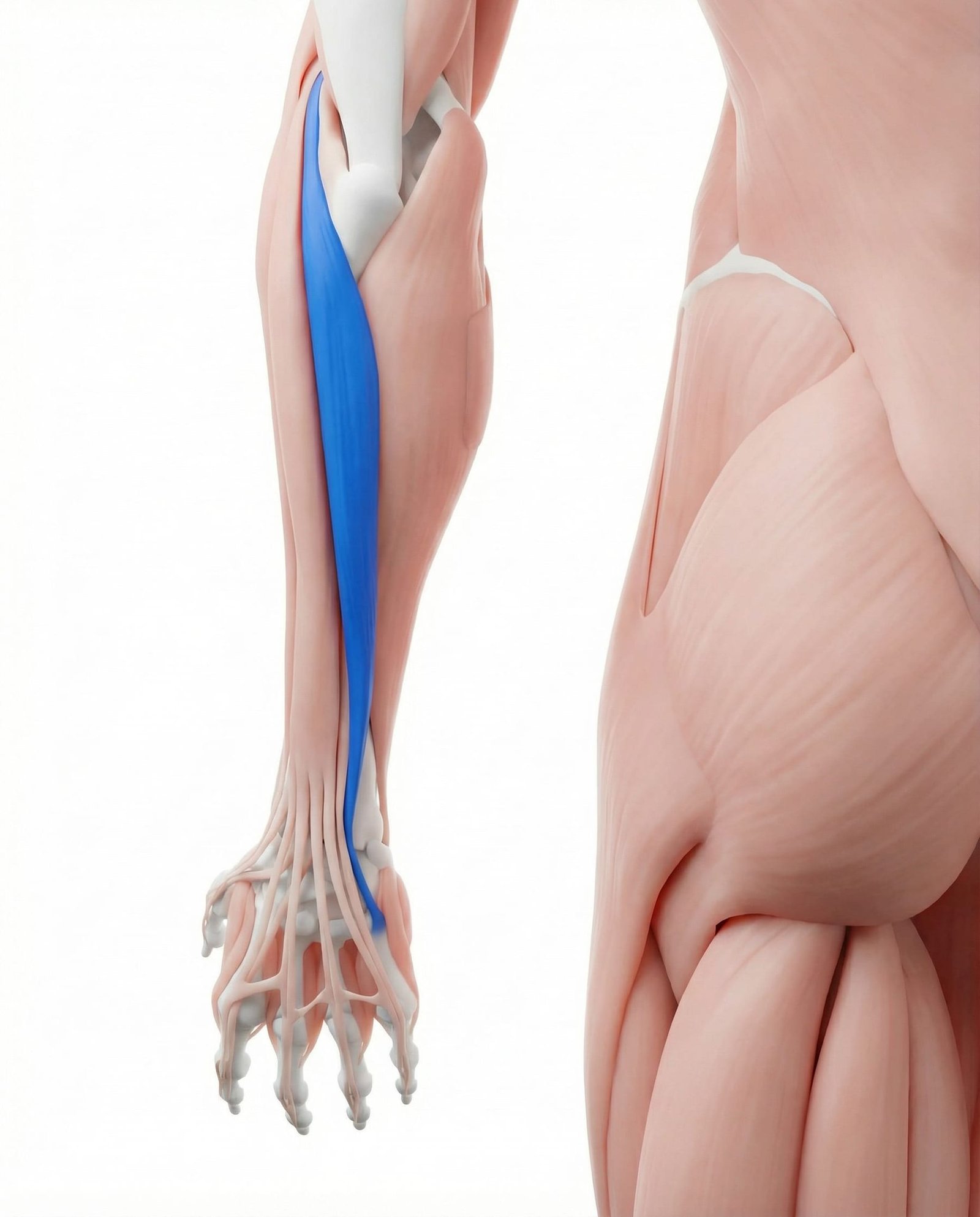
TrP 1
TrP1
Location. Outer forearm, little finger side
Pain referral. Outer wrist, little finger side
- Outer wrist
- Little finger side back of hand
- Forearm
Dorsal ulnar wrist aching from extensor carpi ulnaris trigger point near ulnar styloid
Location. Outer forearm, little finger side
Pain referral. Outer wrist, little finger side
Location. Mid-belly of ECU in dorsal forearm
Pain referral. Dorsal ulnar wrist and lateral forearm
Wrist pain. Dorsal ulnar wrist aching from extensor carpi ulnaris trigger point near ulnar styloid
Ulnar hand discomfort. Little finger side dorsal hand pain from ECU trigger point distal referral pattern
Weakness in extension. Impaired ulnar wrist extension from extensor carpi ulnaris trigger point force inhibition
Dorsal ulnar wrist pain. Dorsal ulnar wrist ache from ECU mid-belly trigger point referral through its extensor tendon
Pain with wrist ulnar deviation and extension. Combined ulnar deviation and extension maximally loads ECU aggravating active trigger points
Ulnar styloid tenderness. Referred tenderness near ulnar styloid from ECU trigger point tension through distal tendon
Weak grip. Inhibited ECU function impairs wrist stabilization in ulnar deviation reducing grip effectiveness
Dorsal forearm tightness. Taut ECU fibers along dorsal forearm restrict wrist flexion creating stiffness and aching
Tennis. Repetitive racket strokes with wrist extension and ulnar deviation overload ECU muscle fibers
Typing. Sustained keyboard use with wrist extension and ulnar deviation overloads ECU chronically
Wrist extension. Repetitive or forceful wrist extension directly overloads extensor carpi ulnaris muscle fibers
Sports. Racket and club sports requiring wrist control overload extensor carpi ulnaris repeatedly
Repetitive wrist deviation (typing). Chronic wrist deviation during typing overloads ECU through sustained ulnar deviation patterns
Racquet sports. Repetitive wrist extension and deviation during racquet sports cyclically overloads ECU fibers
Keyboard use with ulnar deviation. Non-ergonomic keyboard positioning promotes ulnar deviation chronically overloading ECU muscle
Golf swing. Golf swing wrist mechanics create combined extension and deviation forces overloading ECU
Manual twist-grip activities. Twisting motions with grip create rotational ECU loading causing mid-belly trigger points
Extend your arm in front of you with the palm facing down. Use the opposite hand to gently bend the wrist toward the thumb side (radial deviation), creating a stretch along the outer pinky side of the forearm and wrist. Hold without bouncing. You should feel a comfortable pull along the dorsal ulnar forearm.
Rest the affected arm on a table with the palm facing down. Using the thumb of the opposite hand, apply firm pressure along the muscle on the outer forearm between the ulna bone and the wrist extensors, from near the elbow down to the wrist. Hold sustained pressure on any tender knots for 20-30 seconds until the tenderness diminishes.
Hold a hammer or similar weighted object by its handle with the affected hand, elbow bent at 90 degrees and pressed against your side. Slowly rotate the forearm so the hammer tilts toward the thumb side (supination), then slowly rotate it back toward the pinky side (pronation). The off-center weight provides progressive resistance. Perform 10-12 repetitions in each direction.
Use an elastic wrist wrap or athletic tape to provide support to the ulnar wrist during racket sports, golf, or other activities involving repetitive wrist motion. The wrap should be snug enough to limit excessive ulnar deviation without restricting blood flow. Apply before activity and remove afterward.
Identify and modify tasks that require repetitive forearm rotation and wrist twisting. Use power tools instead of manual screwdrivers, open jars with a rubber grip aid or jar opener, and switch hands periodically during repetitive tasks. When twisting is unavoidable, keep the wrist in a neutral position and use the whole arm rather than isolating wrist rotation.
If dorsal ulnar wrist pain is accompanied by clicking, catching, or a sensation of wrist instability, consult a hand or wrist specialist. They can perform specific provocative tests and imaging such as MRI arthrography to evaluate the triangular fibrocartilage complex (TFCC) and extensor carpi ulnaris tendon sheath, and distinguish trigger point referral from structural pathology.