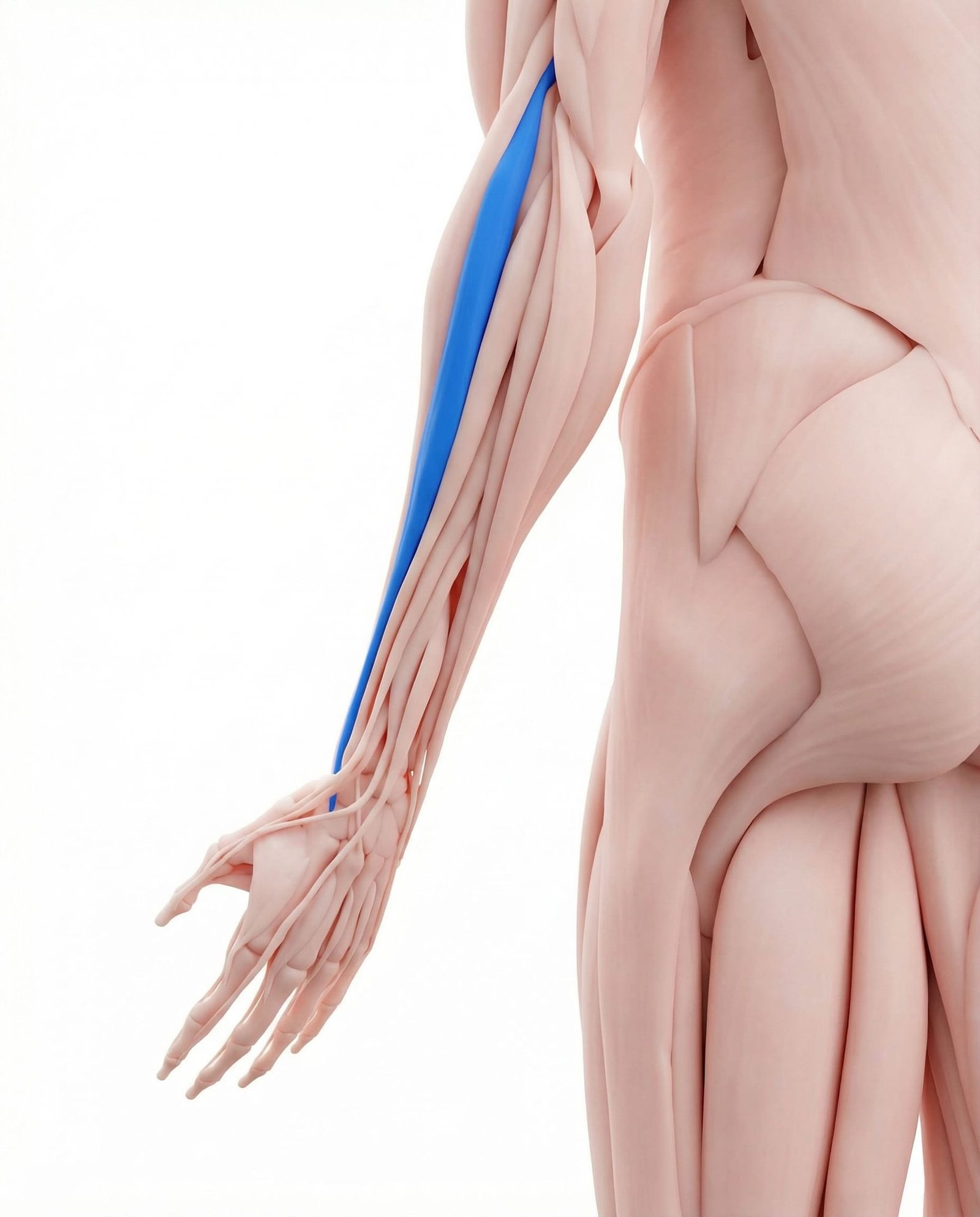
TrP 1
TrP1
Location. Outer forearm, upper
Pain referral. Outer elbow, back of wrist (thumb side)
- Outer elbow
- Back of wrist
- Posterior forearm
Lateral epicondyle aching from extensor carpi radialis longus trigger point at origin site
Location. Outer forearm, upper
Pain referral. Outer elbow, back of wrist (thumb side)
Location. Mid-belly of ECRL in lateral forearm
Pain referral. Lateral elbow and dorsal wrist
Elbow pain. Lateral epicondyle aching from extensor carpi radialis longus trigger point at origin site
Wrist pain. Dorsal radial wrist pain from trigger point referral along extensor carpi radialis pathway
Weakness in extension. Impaired wrist extension strength from trigger point inhibition of radial extensor function
Lateral elbow pain (tennis elbow-like). Lateral epicondyle ache from ECRL trigger point mimicking lateral epicondylitis tennis elbow symptoms
Dorsal wrist ache. Referred dorsal radial wrist pain from ECRL mid-belly trigger point through extensor tendon
Weak wrist extension. Inhibited ECRL contraction from trigger points reduces radial wrist extension force output
Lateral forearm tightness. Taut ECRL fibers along lateral forearm create restriction and aching during wrist movements
Difficulty with gripping and lifting. ECRL trigger points impair wrist extension stabilization required for effective grip and lifting
Tennis. Repetitive backhand strokes create cumulative loading on radial wrist extensor muscle fibers
Typing. Sustained wrist extension during keyboard use overloads extensor carpi radialis longus chronically
Wrist extension. Repetitive or forceful wrist extension directly overloads radial extensor muscle fibers
Tool use. Sustained gripping with wrist extension overloads extensor carpi radialis longus chronically
Tennis (backhand). Repetitive backhand impact creates ECRL overload through wrist extension against force each stroke
Computer mouse overuse. Sustained wrist extension during mouse use chronically overloads ECRL in shortened position
Repetitive wrist extension. High-volume wrist extension tasks overwork ECRL beyond its fatigue threshold creating trigger points
Carrying heavy objects with extended wrist. Carrying loads with wrist extension creates isometric ECRL overload sustaining trigger point formation
Manual labor (gripping tools). Forceful gripping requires sustained ECRL wrist extension stabilization creating chronic overload
Extend your arm straight in front of you, make a fist, and turn it so the knuckles face the floor. Use your opposite hand to gently press the fist further downward and toward your body until you feel a firm but comfortable stretch along the top of the forearm. Keep the elbow straight throughout.
Rest the affected forearm on a table, palm down. Using the thumb of the opposite hand, apply firm pressure along the muscle belly on the outer forearm, starting about two inches below the elbow and working toward the wrist. When you find a particularly tender point, hold sustained pressure for 20-30 seconds. Cover the full length of the muscle.
Sit with your forearm on a table, wrist hanging off the edge, palm facing down. Use the other hand to help lift the wrist into full extension. Then slowly lower the wrist down over a count of 5-6 seconds using only the affected arm. The focus is on the slow lowering phase. Start with no weight and progress to 1-2 pounds when pain-free.
Place a counterforce brace around the upper forearm, approximately one to two inches below the lateral elbow crease. Tighten it so it is snug but does not cut off circulation. The strap disperses forces away from the painful tendon attachment during gripping and lifting. Wear it during aggravating activities, not during rest.
When lifting objects, keep the palm facing upward (supinated grip) rather than palm-down. This shifts the load from the wrist extensors to the stronger biceps and wrist flexors. Use two hands for heavier objects. Avoid carrying heavy bags with a straight arm and consider using ergonomic handles or grip aids for frequently used tools.
If lateral elbow pain persists beyond 6-8 weeks of consistent self-care including eccentric exercises, or if pain is severe enough to affect daily function, consult a sports medicine physician or orthopedic specialist. They can assess for tendon degeneration, consider advanced treatments such as shockwave therapy, PRP injection, or guided physical therapy, and rule out radial nerve entrapment.