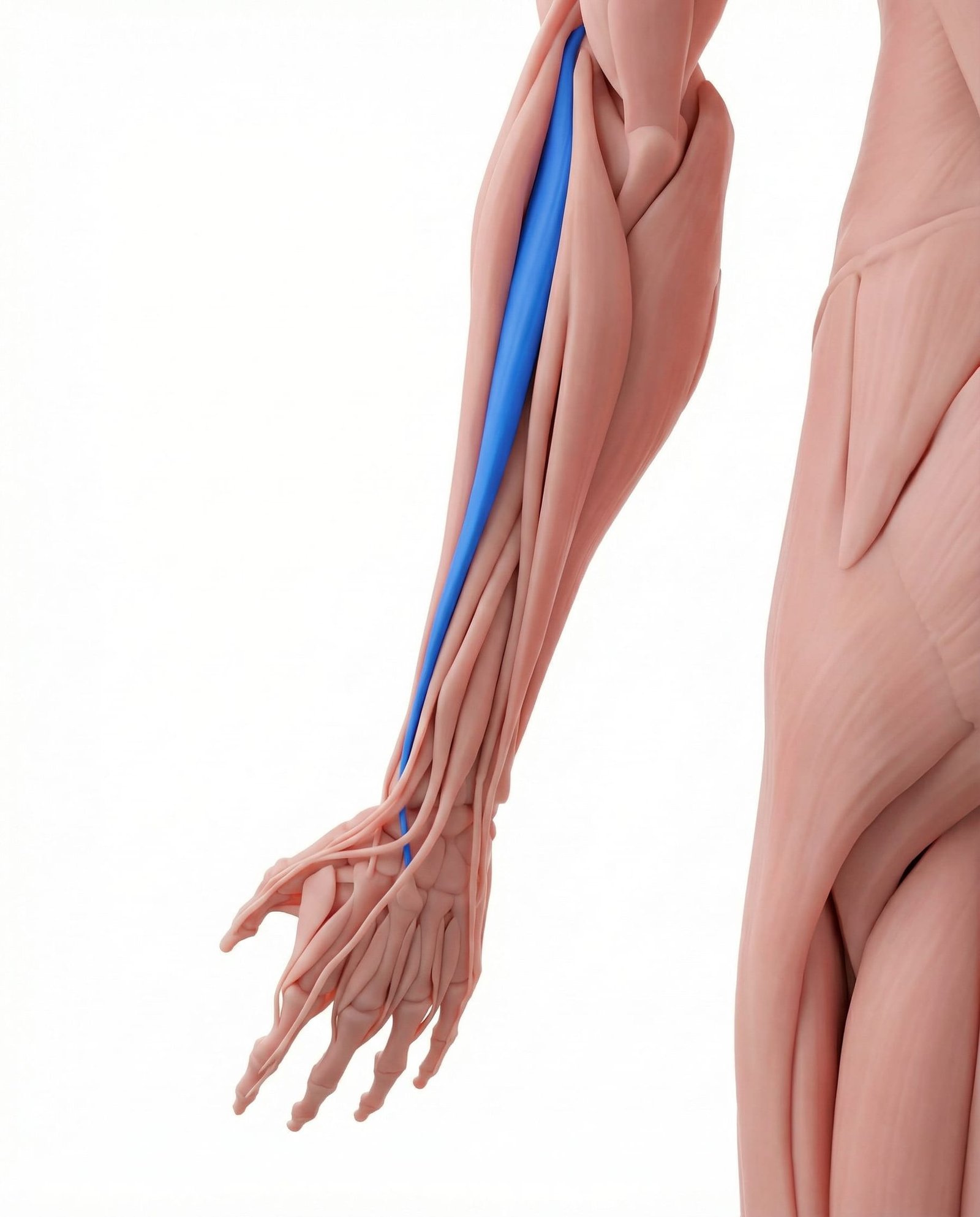
TrP 1
Extensor Carpi Radialis Brevis
Location. Outer forearm, middle
Pain referral. Outer elbow, back of wrist
- Outer elbow
- Back of wrist
- Posterior forearm
Lateral epicondylar aching from ECRB trigger point at common extensor origin attachment
Location. Outer forearm, middle
Pain referral. Outer elbow, back of wrist
Elbow pain. Lateral epicondylar aching from ECRB trigger point at common extensor origin attachment
Wrist pain. Dorsal wrist pain from trigger point referral along extensor carpi radialis brevis tendon
Weakness in extension. Impaired wrist extension from extensor carpi radialis brevis trigger point force inhibition
Tennis. Repetitive racket use overloads ECRB, the most common muscle involved in lateral epicondylalgia
Typing. Sustained keyboard use with wrist extension creates cumulative ECRB muscle fiber overload
Mouse use. Prolonged computer mouse operation with wrist extension chronically overloads ECRB fibers
Tool use. Sustained tool gripping with wrist extension overloads extensor carpi radialis brevis muscle
Extend the affected arm straight in front of you with the palm facing down. Use the opposite hand to gently press the back of the hand downward, flexing the wrist until a stretch is felt along the top of the forearm. Keep the elbow fully extended throughout. Hold at gentle tension without bouncing.
Locate the tender point on the outer forearm about 2-3 cm below the lateral elbow crease, in the fleshy muscle belly between the radius bone and the extensor mass. Using thumb and index finger in a pincer grip, or the thumb alone pressing against the underlying bone, apply sustained firm pressure to the most tender nodule. Hold for 30-60 seconds until the tenderness diminishes, then move to adjacent tender spots.
Sit with the forearm resting on a table or your thigh, wrist hanging over the edge with palm facing down. Hold a light dumbbell (1-2 pounds to start). Use the opposite hand to assist the wrist up into full extension. Then slowly lower the weight down into full wrist flexion over a count of 5 seconds, controlling the descent. The emphasis is on the slow lowering phase. Perform 10-15 repetitions per set.
Hold a hammer or weighted bar by the handle with the affected hand, elbow bent at 90 degrees against your side. Slowly rotate the forearm to turn the hammer inward (pronation) then outward (supination), controlling the movement in both directions. The off-center weight provides progressive resistance to the forearm rotators. Perform 10-12 repetitions in each direction.
Position the keyboard so wrists remain in neutral or slight flexion rather than extension. Use an ergonomic vertical mouse to reduce sustained wrist extension and forearm pronation. Place the mouse close to the keyboard to avoid reaching. Consider a split keyboard to keep wrists straight. Lower the keyboard tray so elbows are at or slightly above keyboard height. Remove or avoid wrist rests during active typing — they should only support the wrists during pauses.
If outer elbow pain persists beyond 6-8 weeks of self-management, consult an orthopedic specialist or sports medicine physician. They can differentiate ECRB trigger point pain from lateral epicondylar tendinopathy, radial tunnel syndrome, or posterolateral plica impingement through clinical examination and imaging. Diagnostic ultrasound can visualize tendon changes, while electromyography can rule out radial nerve entrapment.