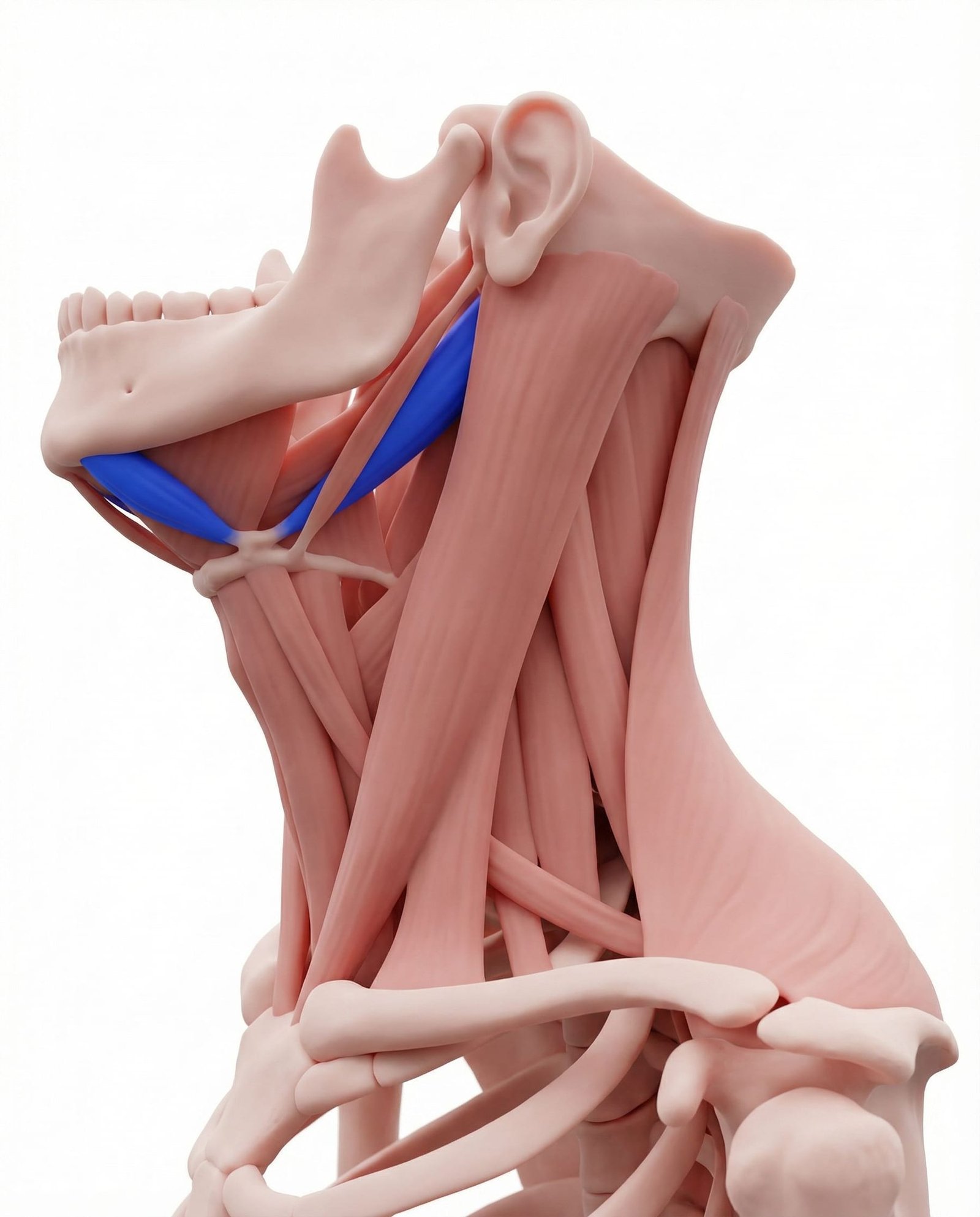
TrP 1
TrP1
Location. Under jaw, neck
Pain referral. Under jaw, neck, throat
- Under jaw
- Neck
- Throat
- Ear
Anterior neck and pharyngeal pain from digastric trigger point referral to throat region
Location. Under jaw, neck
Pain referral. Under jaw, neck, throat
Location. Anterior belly beneath chin
Pain referral. Submental region and lower incisors
Throat pain. Anterior neck and pharyngeal pain from digastric trigger point referral to throat region
Under jaw pain. Submental and submandibular aching from digastric trigger points along jaw underside
Swallowing discomfort. Hyoid elevation dysfunction from digastric trigger points impairing smooth swallowing mechanics
Ear pain. Referred otalgia from posterior belly digastric trigger points near mastoid attachment
Pain under the chin. Anterior digastric trigger points refer to the submental triangle creating under-chin pain
Lower incisor toothache. Referral to the lower anterior teeth mimics dental pathology in the mandibular incisors
Discomfort swallowing. Digastric contraction during swallowing provokes anterior belly trigger points creating dysphagia
Throat pain during swallowing. Floor-of-mouth trigger point referral creates a sensation of throat pain during deglutition
Tongue tip discomfort. Anterior digastric referral extends to the tongue tip via shared mylohyoid nerve territory
Swallowing dysfunction. Abnormal swallowing patterns overload digastric muscle during repetitive hyoid elevation cycles
Stress. Psychological tension causes involuntary jaw and throat muscle guarding and sustained contraction
TMJ issues. Temporomandibular dysfunction alters mandibular depression mechanics overloading digastric muscle fibers
Throat clearing. Habitual throat clearing repetitively contracts digastric and suprahyoid muscles excessively
Mouth breathing. Chronic mouth breathing alters mandibular posture overloading the anterior digastric for jaw positioning
Playing wind instruments. Sustained embouchure control demands chronic anterior digastric activation for mandibular stabilization
Prolonged neck flexion (looking down at phone). Forward head posture with neck flexion compresses and overloads the anterior digastric muscle
Post-tonsillectomy compensation. Guarded swallowing after tonsillectomy overloads suprahyoid muscles including the anterior digastric
Chronic throat clearing. Repetitive throat clearing activates the suprahyoid muscles creating cumulative digastric overload
Tilt your head back slightly to expose the underside of the jaw. Using your index and middle fingers, press gently upward into the soft tissue under the chin, starting at the midline and working outward toward the jaw angle on each side. When you find a tender nodule, hold steady gentle pressure for 15-20 seconds until the tenderness begins to ease. Work slowly along the entire length of the jaw underside from chin to ear on both sides.
Sit or stand with your back straight. Gently draw your chin straight back as if making a double chin — do not tilt your head up or down. Hold the tucked position for 5 seconds, feeling a gentle stretch at the base of the skull and a mild contraction under the chin. Release slowly. Repeat 10-15 times. This exercise strengthens the deep neck flexors and gently stretches the digastric and suprahyoid muscles.
Place the tip of your tongue on the roof of your mouth behind the upper front teeth. Slowly open your mouth as wide as you comfortably can while keeping the tongue on the palate — when the tongue starts to pull away, that is your comfortable limit. Hold the open position for 3 seconds, then slowly close. Repeat 10 times. This exercise gently stretches the digastric while the tongue position prevents excessive opening.
During periods of increased under-chin pain or swallowing discomfort, temporarily switch to soft foods that require minimal chewing and easy swallowing — warm soups, smoothies, mashed foods, soft-cooked vegetables, and yogurt. Avoid foods that require forceful biting or prolonged chewing. Take smaller bites and eat slowly. Avoid chewing gum. This reduces the repetitive loading on the digastric muscle during its active recovery period.
Forward head posture places chronic strain on the digastric and other suprahyoid muscles. Set up your workstation so that your monitor is at eye level and at arm's length distance. Keep your ears aligned over your shoulders when sitting and standing. Use a supportive pillow that maintains neutral cervical alignment during sleep. Set hourly reminders to check your head position throughout the workday and gently correct by drawing the chin back.
If pain under the chin, unexplained tooth pain, or swallowing difficulty persists beyond 3-4 weeks of self-care — or if symptoms are new and worsening — seek evaluation from an ENT specialist or dentist to rule out dental pathology, salivary gland issues, or throat conditions. Once serious causes are excluded, a physical therapist experienced in cervical and orofacial conditions can provide targeted manual therapy to the digastric and suprahyoid muscles.