Skip to main content
Atlas · Chest

Diaphragm

Inspiratory restriction from diaphragmatic taut bands limiting full excursion during inhalation

Body region
Chest
Trigger points
1
documented in this muscle
Common symptoms
5
patterns cataloged
Common causes
6
contributory factors

Trigger points

TrP 1

Diaphragm

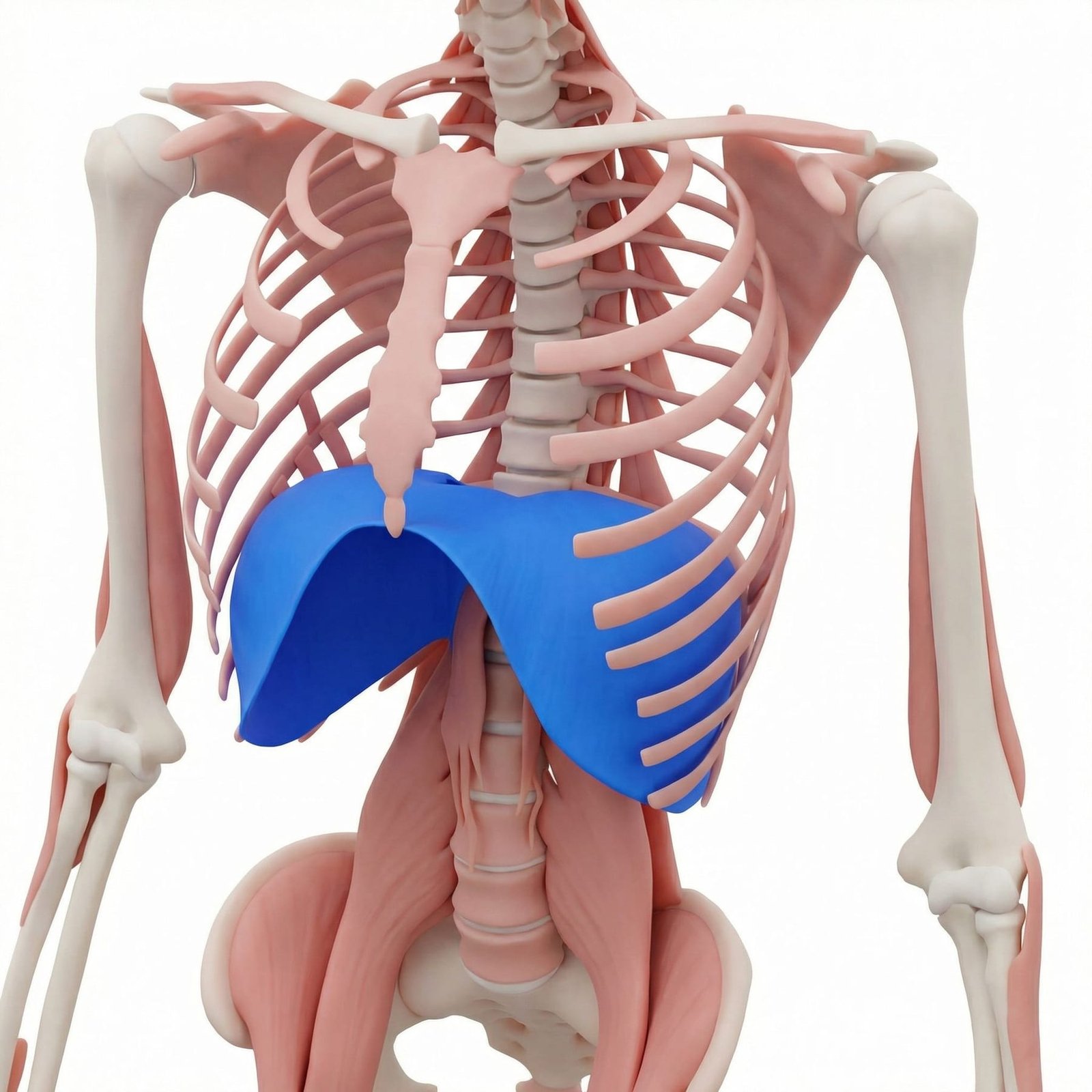
Location. Lower rib cage and xiphoid process area, primary respiratory muscle

Pain referral. Lower chest and upper abdomen near the rib margin

  • Lower rib cage bilaterally
  • Xiphoid region
  • Lower chest
  • Shoulder tip (via phrenic nerve)
  • Upper abdomen

Symptoms patients report

Difficulty taking a deep breath. Inspiratory restriction from diaphragmatic taut bands limiting full excursion during inhalation

Side stitch pain. Acute lateral costal margin pain from diaphragm trigger point activation during exertion

Upper abdominal discomfort. Epigastric aching from diaphragmatic crural trigger points mimicking gastric pathology symptoms

Shortness of breath sensation. Dyspnea sensation from impaired diaphragmatic excursion despite normal pulmonary function testing

Hiccups. Involuntary diaphragmatic spasm from trigger point irritability near the phrenic nerve motor point

Common causes

Chronic anxiety and shallow breathing. Anxiety-driven upper chest breathing inhibits diaphragmatic descent creating chronic muscle dysfunction

Prolonged sitting. Sustained trunk flexion compresses abdominal contents restricting diaphragmatic excursion mechanically

COPD or asthma. Chronic respiratory disease creates sustained diaphragmatic overload from increased work of breathing

Abdominal surgery. Post-surgical splinting and pain inhibit normal diaphragmatic function creating compensatory patterns

High-intensity exercise. Maximal ventilatory demands during intense exercise push diaphragm beyond its fatigue threshold

Chronic coughing. Repetitive forceful expulsive contractions fatigue the diaphragm creating persistent trigger point activation

Treatment & self-care

immediate

Diaphragmatic Breathing Retraining

Lie on your back with knees bent and one hand on your chest, the other on your belly. Breathe in slowly through your nose for 4 seconds, directing the breath so that your belly hand rises while your chest hand stays relatively still. Exhale slowly through pursed lips for 6 seconds, feeling your belly fall. Focus on slow, deep, effortless breathing without forcing.

Duration
5-10 minutes per session
Frequency
3-4 times daily, especially when feeling short of breath or anxious
Expect
Restored diaphragmatic excursion and reduced sensation of breathlessness within 1-2 weeks of consistent practice
immediate

Rib Cage Mobilization Stretch

Sit or stand with one arm raised overhead. Lean gently away from the raised arm side to open the rib cage. Take a deep breath into the stretched side, feeling the ribs expand. Hold 3-5 seconds at the end of inhalation, then exhale slowly and return to center. Alternate sides. You can also lie over a foam roller placed horizontally under your mid-back to open the rib cage.

Duration
30 seconds each side, 3-4 repetitions per side
Frequency
2-3 times daily
Expect
Improved rib cage mobility and easier deep breathing within 1-2 weeks
exercise

Crocodile Breathing Exercise

Lie face down with your forehead resting on your stacked hands. Breathe in deeply through your nose, feeling your belly press into the floor and your lower ribs expand outward against the ground. Exhale slowly and completely. This position forces diaphragmatic breathing by making upper chest breathing mechanically difficult. Progress to 4-count inhale, 2-count hold, 6-count exhale.

Duration
3-5 minutes per session
Frequency
Daily, especially as part of morning routine
Expect
Strengthened diaphragmatic breathing pattern and reduced reliance on upper chest breathing within 3-4 weeks
exercise

90/90 Breathing with Balloon

Lie on your back with your feet on a wall, hips and knees both at 90 degrees. Place a small ball or pillow between your knees. Gently squeeze the ball while exhaling fully through a straw or balloon for 5 seconds. Pause for 3 seconds at the end of exhale, then inhale slowly through your nose for 4 seconds. This position optimizes the diaphragm and helps restore its resting position.

Duration
4-5 breath cycles per set, 3 sets
Frequency
Daily
Expect
Improved diaphragmatic resting position and reduced rib flare within 4-6 weeks
lifestyle

Posture and Stress Management

Avoid prolonged slouching which compresses the diaphragm. Set hourly reminders to sit tall and take 3 deep diaphragmatic breaths. Eat smaller, more frequent meals rather than large ones that distend the stomach and restrict diaphragm movement. Practice progressive muscle relaxation or guided meditation to reduce anxiety-driven shallow breathing patterns. Avoid tight belts or waistbands that restrict abdominal expansion.

Duration
Ongoing daily habits
Frequency
Integrate into daily routine
Expect
Reduced trigger point reactivation and sustained improvement in breathing comfort
professional

Professional Respiratory and Manual Therapy Assessment

Consult a physiotherapist specializing in respiratory or manual therapy if breathing difficulty persists despite 4-6 weeks of self-care. They can perform diaphragm release techniques, visceral manipulation, and assess for rib dysfunction or thoracic restrictions contributing to diaphragm trigger points. A breathing pattern assessment can identify specific dysfunctional patterns to target.

Duration
Initial assessment: 45-60 minutes
Frequency
As directed by clinician, typically weekly for 4-6 sessions
Expect
Professional-guided restoration of normal diaphragmatic function and resolution of breathing-related pain
Key Takeaways
  1. Inspiratory restriction from diaphragmatic taut bands limiting full excursion during inhalation
  2. Acute lateral costal margin pain from diaphragm trigger point activation during exertion
  3. Epigastric aching from diaphragmatic crural trigger points mimicking gastric pathology symptoms
  4. Dyspnea sensation from impaired diaphragmatic excursion despite normal pulmonary function testing
  5. Involuntary diaphragmatic spasm from trigger point irritability near the phrenic nerve motor point