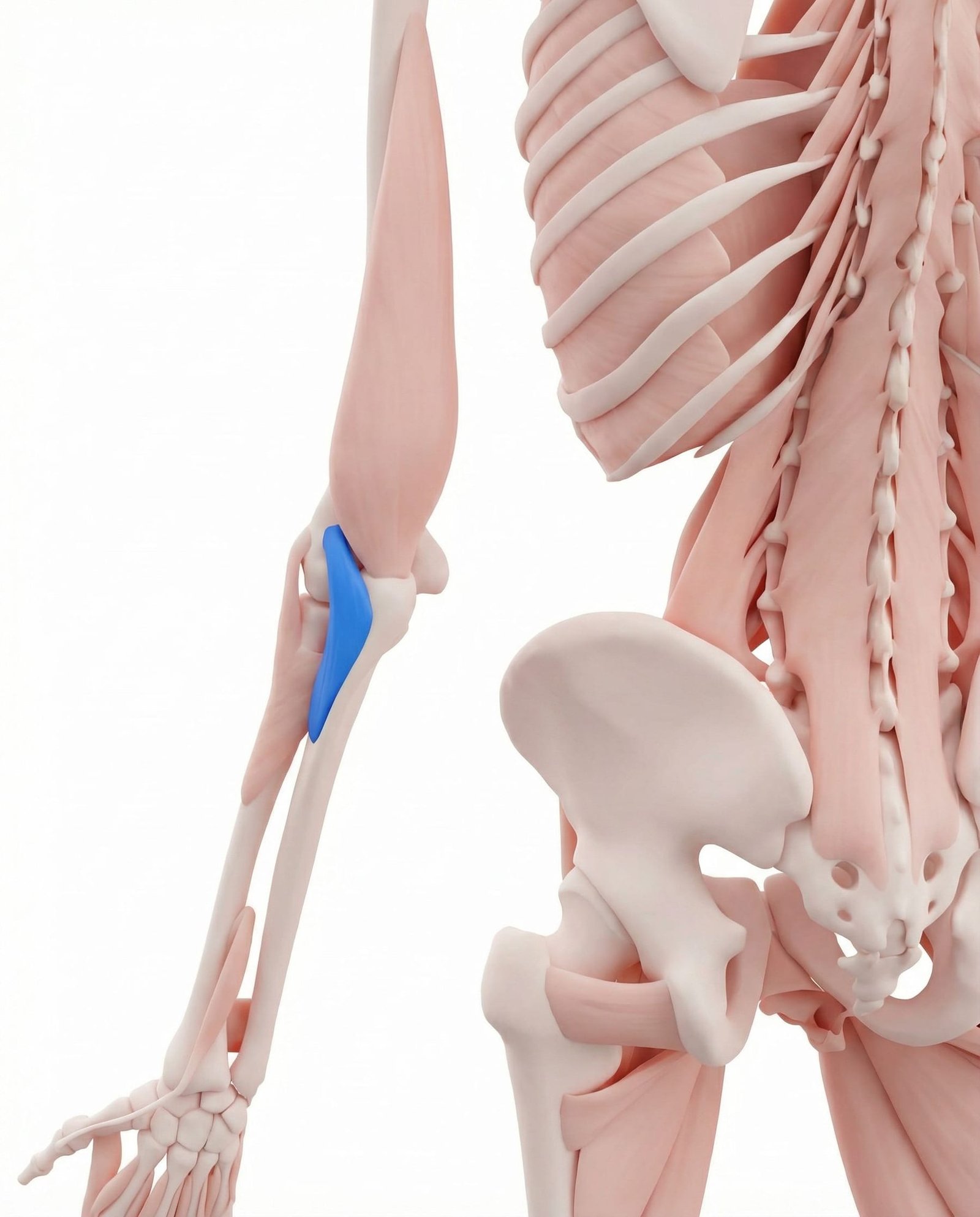
TrP 1
Anconeus
Location. Back of elbow, outer
Pain referral. Back of elbow, outer elbow
- Back of elbow
- Outer elbow
- Posterior forearm
Localized posterior lateral elbow pain from anconeus trigger point near olecranon
Location. Back of elbow, outer
Pain referral. Back of elbow, outer elbow
Elbow pain. Localized posterior lateral elbow pain from anconeus trigger point near olecranon
Difficulty extending elbow. Restricted terminal elbow extension from anconeus trigger point limiting full straightening
Posterior elbow discomfort. Aching behind lateral epicondyle from anconeus trigger point referral pattern activation
Repetitive elbow extension. Sustained or repeated elbow straightening overloads small anconeus stabilizer muscle fibers
Push-ups. Repeated elbow extension against body weight creates cumulative anconeus muscle microtrauma
Throwing. Rapid elbow extension during throwing acceleration phase overloads anconeus deceleration control
Tennis. Repetitive racket swinging with elbow extension overloads posterior compartment stabilizers
With your affected arm relaxed and slightly bent, use the thumb and index finger of the opposite hand to locate the small triangular muscle just below and behind the lateral epicondyle (the bony bump on the outer elbow). Apply a firm pincer grip over the muscle belly and hold sustained pressure on any tender nodule for 20-30 seconds. You may feel referral pain toward the back of the elbow. Release slowly and repeat on additional tender spots.
Freeze water in a paper cup. Peel back the rim to expose the ice surface. With your elbow slightly bent, rub the ice in slow circular motions over the back and outer aspect of the elbow, covering the anconeus area. Keep the ice moving to avoid frostbite. The area will progress through cold, burning, aching, and then numbness.
Hold a very light dumbbell (1-3 pounds) with your arm overhead, elbow bent. Slowly straighten your elbow over a 4-5 second count, fully extending the arm. Use the opposite hand to help return to the starting position rather than loading the concentric phase. Focus on the slow, controlled lowering. Perform this pain-free; reduce weight if any sharp pain occurs.
Hold a hammer or weighted object by its handle with your elbow bent at 90 degrees and resting on a table. Slowly rotate your forearm so the weight tips inward (pronation), then slowly rotate outward (supination). The anconeus assists in stabilizing the elbow during these rotations, and controlled loading helps restore its function. Perform the movements slowly over 3-4 seconds each direction.
Reduce or temporarily eliminate activities that require forceful or repetitive full elbow extension, such as push-ups, bench dips, or overhead pressing. When performing push-ups, stop 10-15 degrees short of full lockout to reduce anconeus strain. Avoid leaning on your elbows at desks or on armrests. When carrying objects, keep elbows slightly bent rather than locked straight.
If posterior elbow pain persists beyond 4 weeks of self-care or is accompanied by clicking, locking, or swelling, consult an orthopedic specialist or sports medicine physician. They can perform specific tests to differentiate anconeus trigger points from olecranon bursitis, triceps tendinopathy, loose bodies, or posterior impingement syndrome. Ultrasound-guided dry needling of the anconeus can be highly effective for resistant trigger points.