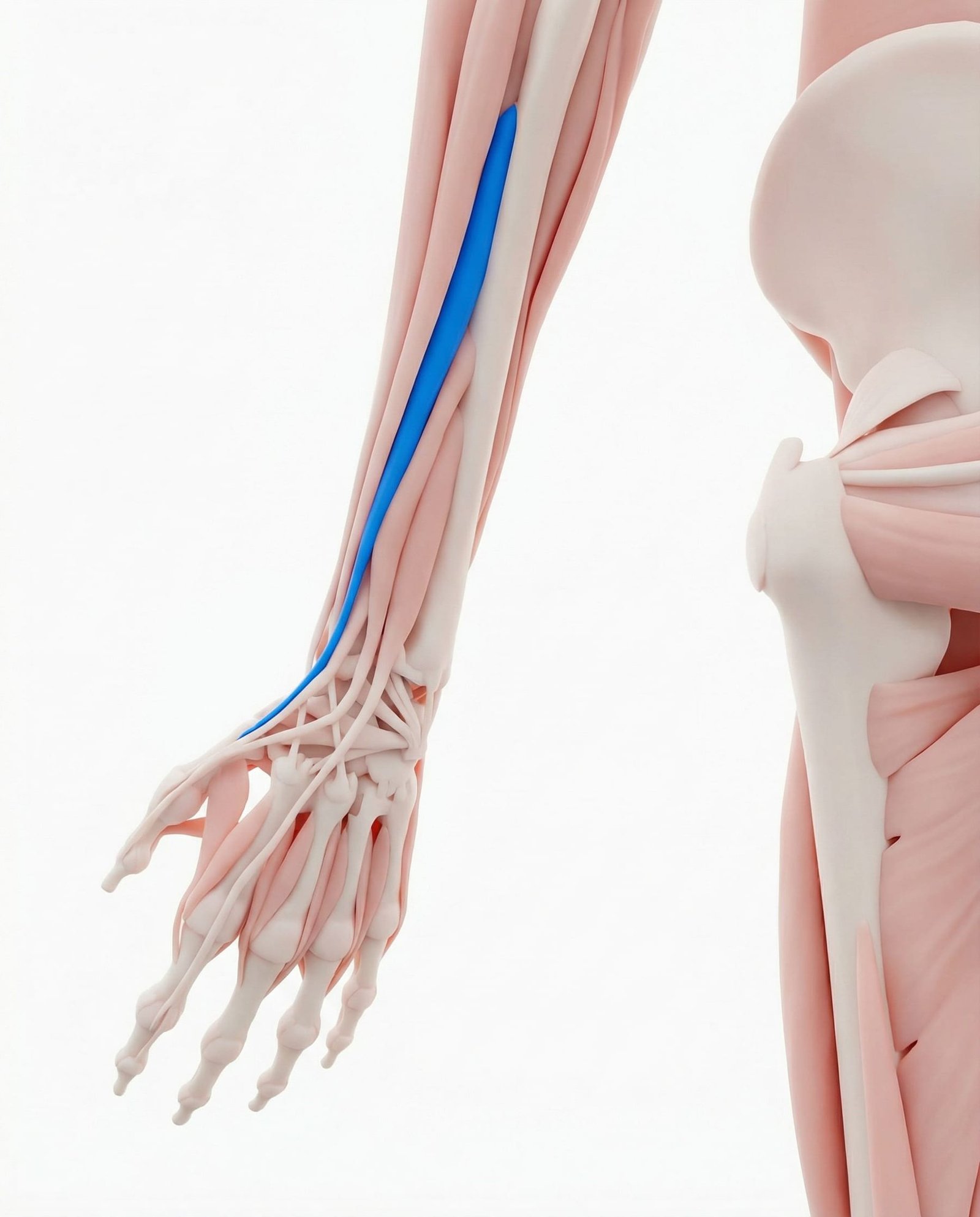
TrP 1
Abductor Pollicis Longus
Location. Back of forearm, thumb side
Pain referral. Back of wrist, base of thumb
- Back of wrist
- Base of thumb
- Posterior forearm
Dorsal radial wrist pain from trigger point referral near anatomical snuffbox region
Location. Back of forearm, thumb side
Pain referral. Back of wrist, base of thumb
Wrist pain. Dorsal radial wrist pain from trigger point referral near anatomical snuffbox region
Thumb base pain. Pain at first carpometacarpal joint from abductor pollicis longus trigger point referral
Pain with thumb movement. Thumb abduction directly loads compromised abductor pollicis longus trigger point fibers
Repetitive thumb use. Sustained or repeated thumb movements create cumulative abductor pollicis longus overload
Typing. Spacebar and thumb key use creates repetitive thumb abduction loading on forearm muscles
Tool use. Sustained tool gripping with thumb stabilization overloads abductor pollicis longus chronically
Sports. Racket sports and grip-intensive activities overload thumb abductor mechanism repeatedly
Hold the affected hand with the palm facing you. Using the opposite hand, gently grasp the thumb and pull it slowly away from the palm (into abduction) and slightly backward. You should feel a comfortable stretch at the base of the thumb and along the outer forearm. Hold without forcing.
Locate the tender area on the thumb side of the wrist, just above the wrist crease in the anatomical snuffbox region. Using the index finger of the opposite hand, apply moderate pressure and rub across the tendon (perpendicular to its length) in short back-and-forth strokes. Work the area for 30-60 seconds, then rest. Repeat 3-4 times. The initial tenderness should decrease during the session.
Touch the tip of your thumb to the tip of each finger on the same hand, one at a time — index, middle, ring, then pinky. Press firmly enough to feel gentle resistance but not pain. Hold each contact for 2-3 seconds. Perform 10 complete cycles. To increase difficulty, wrap a rubber band around all five fingertips and open against the resistance.
Wear a thumb spica splint (available at pharmacies) that immobilizes the thumb and wrist while allowing finger movement. Use it during activities that aggravate the pain — gardening, prolonged typing, or repetitive gripping. Remove the splint periodically to perform gentle stretches and avoid stiffness from prolonged immobilization.
Switch to voice-to-text features on your phone to reduce thumb typing. Use your phone with both hands rather than one-handed thumb scrolling. For computer work, switch to an ergonomic vertical mouse or trackpad that reduces thumb strain. Take a 30-second thumb stretch break every 20 minutes during prolonged device use.
If symptoms do not improve within 3-4 weeks of self-care, consult a hand therapist or orthopedic specialist. They can distinguish between abductor pollicis longus trigger points, De Quervain's tenosynovitis, thumb CMC joint arthritis, and scaphoid pathology. Treatment may include targeted manual therapy, ultrasound-guided corticosteroid injection for tendinitis, or a custom splinting program.