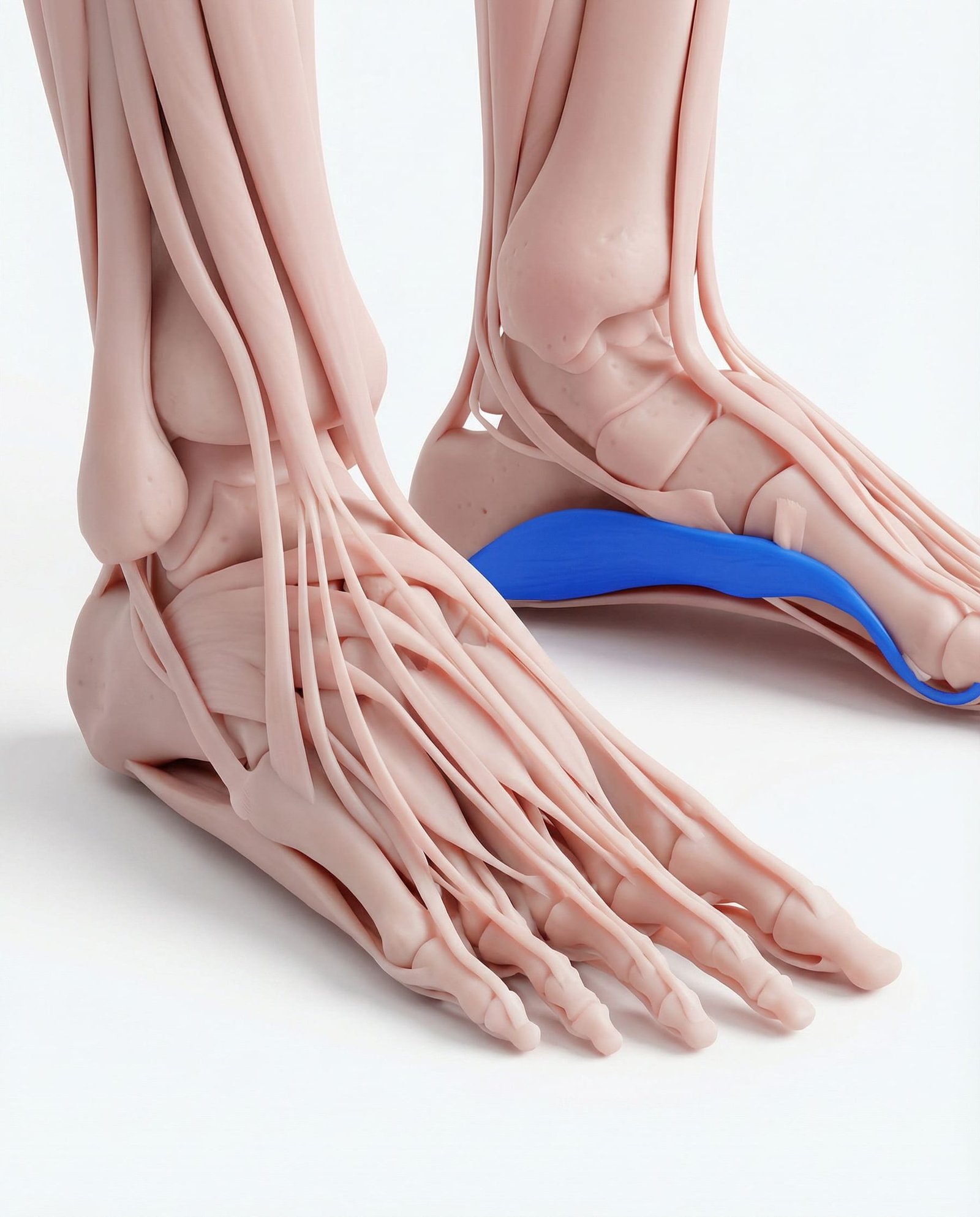
TrP 1
Abductor Hallucis
Location. Inner arch of foot
Pain referral. Inner heel, inner arch, big toe
- Inner heel
- Inner arch
- Big toe
- Medial foot
Medial calcaneal pain from trigger points at the abductor hallucis origin site
Location. Inner arch of foot
Pain referral. Inner heel, inner arch, big toe
Inner heel pain. Medial calcaneal pain from trigger points at the abductor hallucis origin site
Arch pain. Aching along medial arch from taut bands in abductor hallucis muscle belly
Big toe pain. Pain at first metatarsophalangeal joint from distal trigger point referral pattern
Pain when walking. Toe-off phase loads compromised abductor hallucis during medial push-off mechanism
Overpronation. Excessive medial arch collapse overloads abductor hallucis in its arch-supporting role
Flat feet. Chronic arch insufficiency demands sustained compensatory contraction of medial foot intrinsics
Running. Repetitive push-off loading through medial forefoot overloads abductor hallucis muscle fibers
Prolonged standing. Sustained medial arch stabilization causes ischemia in abductor hallucis muscle belly
Poor footwear. Insufficient medial support shifts arch stabilization demands to intrinsic foot muscles
Sit and cross the affected foot over your opposite thigh. Using your thumb, apply firm sustained pressure along the inner border of the foot, starting at the inner heel and working forward toward the ball of the foot. When you find a tender spot, hold steady pressure for 20-30 seconds until the tenderness begins to diminish. Work the entire length of the inner arch in this way. You can also use a tennis ball by placing it under the inner arch while seated and rolling gently.
Sit barefoot with your foot flat on the floor. Without moving your other toes excessively, try to spread your big toe away from your second toe. Hold the spread position for 5 seconds, then relax. If you have difficulty isolating this movement, use your fingers to assist the motion initially, then try independently. You can also place a small towel roll between the big toe and second toe and practice squeezing and releasing.
Sit with your foot flat on the floor. Without curling your toes, try to shorten your foot by drawing the ball of the foot toward the heel, as if you are trying to make the arch higher. The toes should stay flat and relaxed. Hold the contraction for 5 seconds. Progress from seated to standing, and eventually to single-leg stance. This exercise directly activates the abductor hallucis and other intrinsic foot muscles.
Using athletic or kinesiology tape, apply a strip from the inner heel, along the medial arch, to the base of the big toe. Apply a second strip in a figure-eight pattern around the midfoot for added support. The tape should feel supportive but not constrictive. This provides external support to the medial arch, reducing the load on the abductor hallucis during walking. Reapply as needed when the tape loosens.
Choose shoes with a firm midsole and built-in medial arch support to reduce the workload on the abductor hallucis muscle. Avoid flat shoes, ballet flats, and unsupportive sandals. If over-the-counter arch supports are insufficient, consider semi-rigid orthotic insoles that specifically support the medial longitudinal arch. Avoid walking barefoot on hard floors during the recovery period. Replace worn athletic shoes regularly.
Consult a podiatrist if inner heel and arch pain persists beyond 4-6 weeks despite consistent self-care. They can assess foot biomechanics, evaluate for tarsal tunnel syndrome, and determine whether custom orthotics are needed. Diagnostic ultrasound can differentiate between plantar fasciitis, calcaneal spur, and intrinsic foot muscle trigger points. Treatment options include custom-molded orthotics, dry needling of the abductor hallucis, or shockwave therapy for refractory cases.