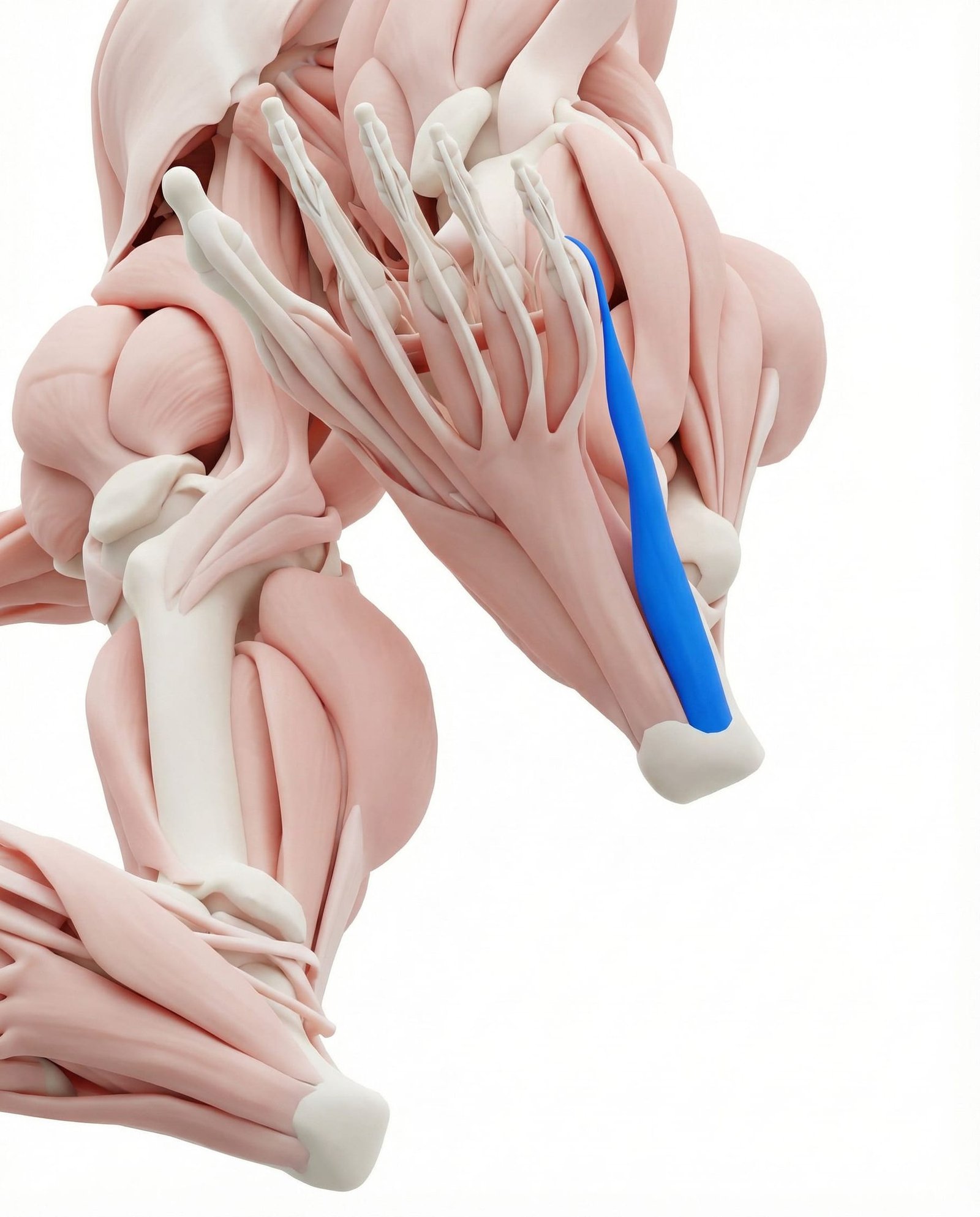
TrP 1
Abductor Digiti Minimi
Location. Outer edge of foot
Pain referral. Outer heel, outer foot, little toe
- Outer heel
- Outer foot
- Little toe
- Lateral foot
Pain along lateral foot border from trigger points in the lateral plantar muscle
Location. Outer edge of foot
Pain referral. Outer heel, outer foot, little toe
Outer foot pain. Pain along lateral foot border from trigger points in the lateral plantar muscle
Little toe pain. Distal referral to fifth toe from abductor digiti minimi trigger point activation
Outer heel discomfort. Lateral calcaneal aching at muscle origin from proximal trigger point referral
High arches. Cavus foot posture concentrates lateral loading overworking lateral foot stabilizers
Supination. Excessive lateral weight-bearing chronically overloads abductor digiti minimi muscle fibers
Running. Repetitive lateral foot loading during propulsion overloads lateral intrinsic foot muscles
Tight shoes. Lateral compression restricts fifth toe mobility causing protective muscle guarding response
Poor footwear. Narrow toe box compresses lateral forefoot increasing mechanical stress on lateral muscles
Sit and rest the affected foot on your opposite knee. Use your thumb to apply firm, gliding pressure along the outer border of the foot, from the heel toward the little toe. Pause on any tender knots for 20-30 seconds with sustained pressure, then release. Work the entire lateral edge of the foot, paying special attention to the area just below the fifth metatarsal head. Repeat the full sweep 3-4 times.
Sit barefoot with feet flat on the floor. Actively spread all five toes apart as wide as possible, hold for 5 seconds, then relax. Focus on driving the little toe outward away from the other toes. If you have difficulty isolating the movement, use your fingers to gently assist the spread initially. Perform 3 sets of 15 repetitions.
Place a small rubber band or hair tie around all five toes. Spread the toes apart against the resistance of the band, focusing on pushing the little toe outward. Hold the spread for 3 seconds, then slowly release. Perform 3 sets of 12 repetitions. Progress by using a thicker band as the exercise becomes easier.
Replace narrow, pointed, or tight-fitting shoes with footwear that has a wide toe box allowing the toes to spread naturally. When trying on shoes, ensure you can wiggle all toes freely and that the little toe is not compressed against the shoe wall. Look for brands specifically designed with anatomical toe boxes. Avoid pointed dress shoes and narrow athletic shoes.
Identify and remove from rotation any shoes that compress the fifth toe or squeeze the lateral forefoot. This includes pointed-toe dress shoes, narrow fashion boots, and any athletic shoes that feel tight across the forefoot. When shoes cannot be replaced immediately, limit wearing time to under 2 hours and switch to wider shoes for the remainder of the day.
If outer foot pain persists beyond 3-4 weeks of self-care or if pain developed after an ankle injury, consult a podiatrist or orthopedic specialist. The clinician can order X-rays to rule out a fifth metatarsal stress fracture or Jones fracture, and may recommend custom orthotics, immobilization, or specific rehabilitation based on the diagnosis.