The Basic Idea Behind “Spreading” Pain
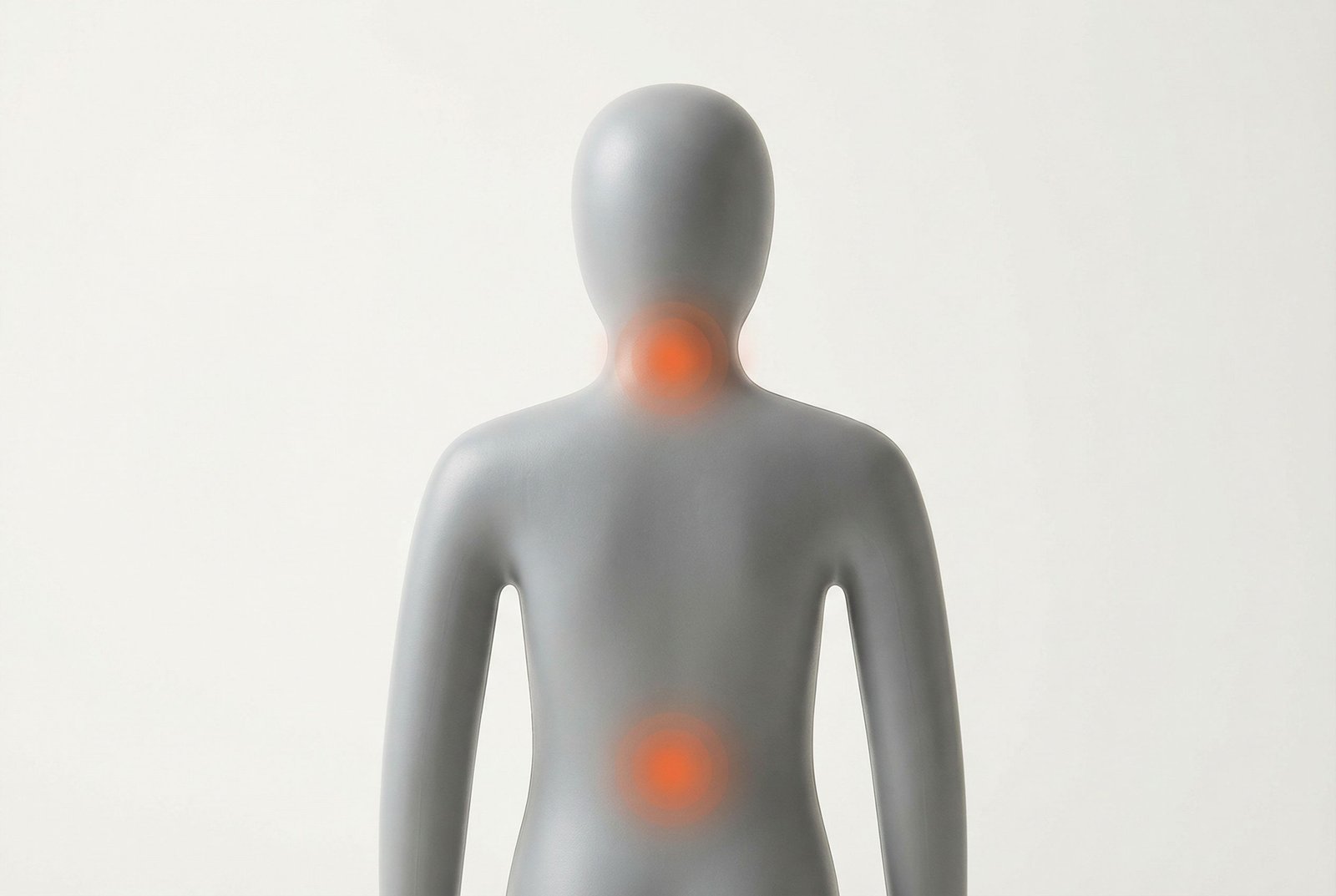
Why Pain Spreads
Anatomy and Pain Pattern OverviewMost people assume that where pain is felt is where the problem must be. Often that is true. But muscle pain does not always follow that rule.
Referred pain is a real clinical phenomenon, but it should be used as a clue — not as automatic proof of one diagnosis.
A trigger point in the neckmay contribute to a headache. A trigger point in the shoulder blade regionmay create pain in the arm. A trigger point in the hipmay send pain down toward the leg. This pattern is commonly called referred pain.
Referred pain means the pain you feel is real, but the structure producing that pain may be somewhere else. That is one reason pain patterns can feel confusing or misleading at first.
A useful analogy
Think of it like a problem in one part of a system creating symptoms in another. The symptom location matters, but it does not always identify the original source by itself.
How Referred Pain Works
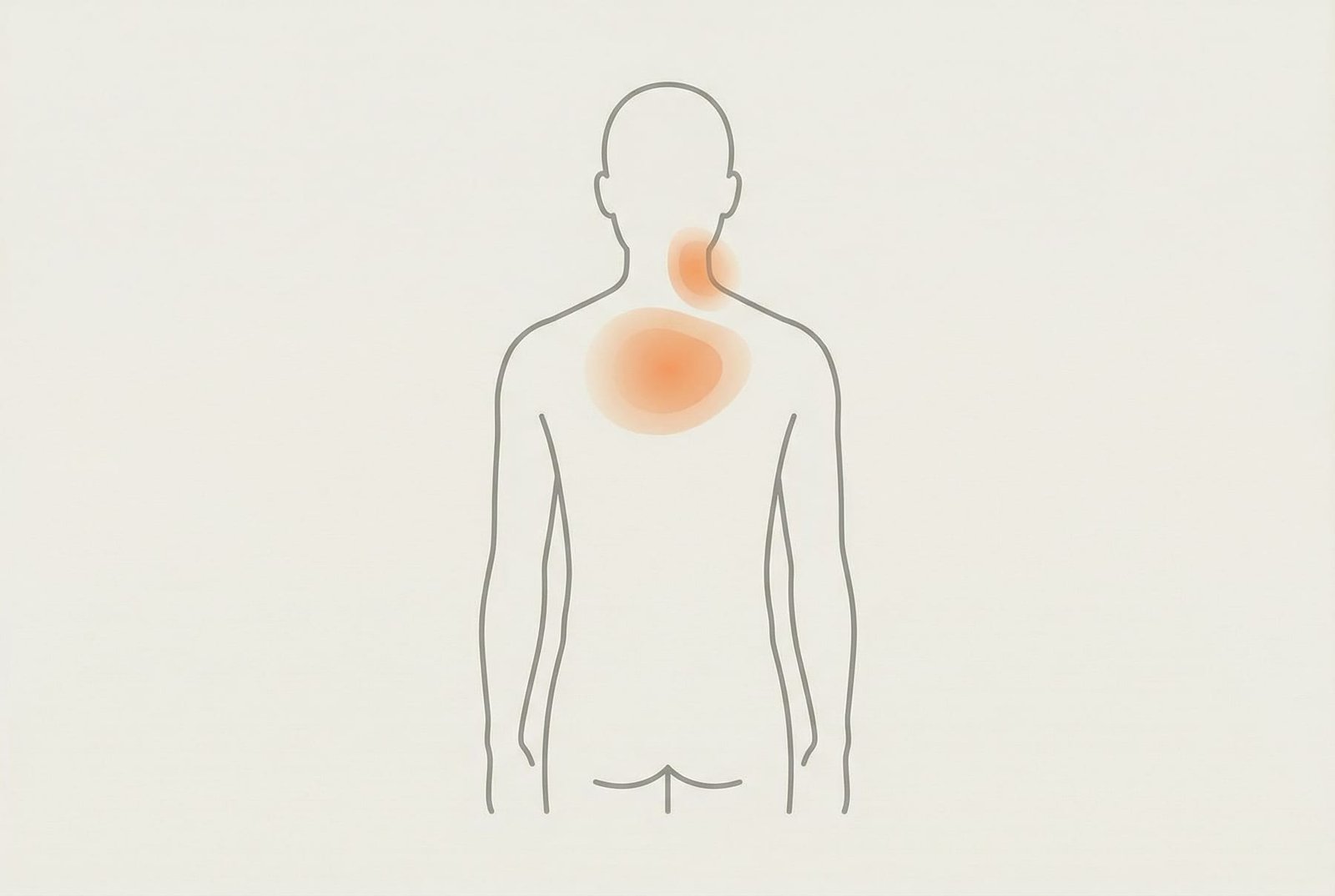
How Referred Pain Works
Mechanism DiagramThe Signal Can Be Mislocalized
One widely used explanation is convergence: sensory input from different tissues may share overlapping spinal pathways. When that happens, the brain may interpret the pain as coming from a location different from the original source. convergence. That does not mean the pain is imagined — it means the nervous system does not always map it perfectly.
Different regions may feed into overlapping pathways, which helps explain why pain can sometimes be felt away from its source.
Common Referred Pain Surprises
These are examples of patterns that can be clinically confusing, especially when the painful area is not the source.
Headache from the neck or shoulder region
A trigger point in the upper shoulder–neck region may reproduce a familiar temple or eye-area ache in some patients.
Tooth pain without clear dental disease
Jaw-muscle trigger points can sometimes create deep toothache-like referral even when the teeth themselves are not the main source.
Arm symptoms from the chest or shoulder girdle
Some chest-wall and shoulder-girdle muscles may contribute to symptoms that seem to travel into the arm, especially in posture-driven or thoracic-outlet-like presentations.
Sciatica-like pain without a disc explanation
Certain hip muscles can create referral down the leg that overlaps with sciatica-like symptoms, though proper neurological and spinal assessment is still important.
Chest pain that feels alarming
Chest-wall muscles can create pain patterns that feel serious and frightening. Chest pain should always be medically assessed first before being assumed to be musculoskeletal.
What Clinicians Mean by the “Jump Sign”
When a clinician presses an active trigger point, patients sometimes flinch or react reflexively. This is often called the jump sign. the jump sign.
By itself, this is not a diagnosis. What makes the exam more useful is when pressure reproduces the patient’s familiar pain pattern in a recognizable way — especially when that pattern matches the history.
In other words, the value is not that pressing a spot hurts. The value is that pressing a specific spot may recreate the pain the patient actually knows well.
Why this matters
If a clinician presses a specific muscle point and it reliably reproduces your familiar pain pattern, that is a useful clue that the muscle may be clinically relevant. It is still one clue among several — not proof by itself.
How Far Can Pain Travel?
The distance of referred pain varies by muscle and by person. Some muscles refer only nearby, while others can send pain surprisingly far from the source region.
Temporalis may refer to the temple or teeth
SCM may refer to the forehead, eye, ear, or face
Infraspinatus may refer into the shoulder and arm
Thoracic muscles may refer around the ribs or chest wall
Gluteal referral may spread well below the hip
Practical point: Long referral patterns are one reason some muscular pain states can look like nerve or spinal problems — but that is also why proper differential diagnosis matters.
Satellite Trigger Points
A commonly used clinical idea is that one active trigger point may increase strain or sensitivity in a nearby region, and over time other painful spots may develop there too. These are often called satellite trigger points.
This concept helps explain why pain sometimes seems to spread or become more complex over time. It should be treated as a useful clinical model rather than a perfectly measurable chain reaction in every patient.
How a pattern can spread
Trigger Point
Pain Zone
Trigger Point
Pain Zone
Pain can become more complicated over time when secondary painful areas develop around an original pattern.
Why this matters: If your pain has gradually spread to other areas, it may reflect a broader chain of compensation or sensitization rather than a completely unrelated new problem each time.
Why the Source Is Sometimes Hard to Find
Muscle-based referred pain can be difficult to identify because routine imaging is usually aimed at structural problems such as fractures, disc pathology, arthritis, or major tendon injury — not at trigger points themselves.
That does not mean the pain is invisible in a philosophical sense. It means that the most useful diagnostic tools are often history, palpation, movement testing, and pattern recognition rather than routine scans alone.
Diagnosis is often clinical
With better-known diagnoses
Trigger points are not a scan finding
What to do if this sounds familiar
If your pain pattern is confusing, changes location, or does not match what imaging seems to show, it may be worth asking whether referred muscular pain is part of the picture — while still keeping the broader differential open.
What To Do About It
Understanding referred pain is useful because it changes how you think about the source of symptoms. It should lead to better assessment — not to jumping to conclusions.
Map the pain
Notice where the pain is felt, when it spreads, and whether certain movements or pressures seem to reproduce it.
Think beyond the painful spot
Use our Pain Locator tool to explore which muscles or regions are commonly associated with the area where you feel pain.
Get a proper assessment
A skilled clinician can look for whether pressing a specific structure reproduces your familiar pattern. Learn more about the diagnostic process.
Use the pattern to guide treatment
Once the likely source becomes clearer, treatment can focus more accurately on the muscle, movement pattern, or system involved. Explore our resources and body map.
Keep Learning
Pain Locator
Click where it hurts and explore which muscles may be relevant to that region.
Trigger Points 101
A beginner guide to what trigger points are and how they are thought to work.
Diagnostic Challenge
Why myofascial pain can be difficult to identify and what a better evaluation looks like.
Self-Assessment
A guided tool to help organize whether trigger points may be contributing to your pain.
At-Home Management
Evidence-aware self-care ideas you can discuss or try as part of a broader plan.
Convergent Pathways
Different body regions may share overlapping sensory pathways, which can blur localization.
Central Sensitization
Long-standing pain may amplify the way the nervous system processes input, making the pattern feel broader or more intense.
Satellite Trigger Points
Secondary painful spots may develop over time in regions stressed by the original pattern.
Fascial and Movement Links
Mechanical connections and compensation patterns may help explain why pain spreads beyond one small area.