Understanding Myofascial Tennis Elbow
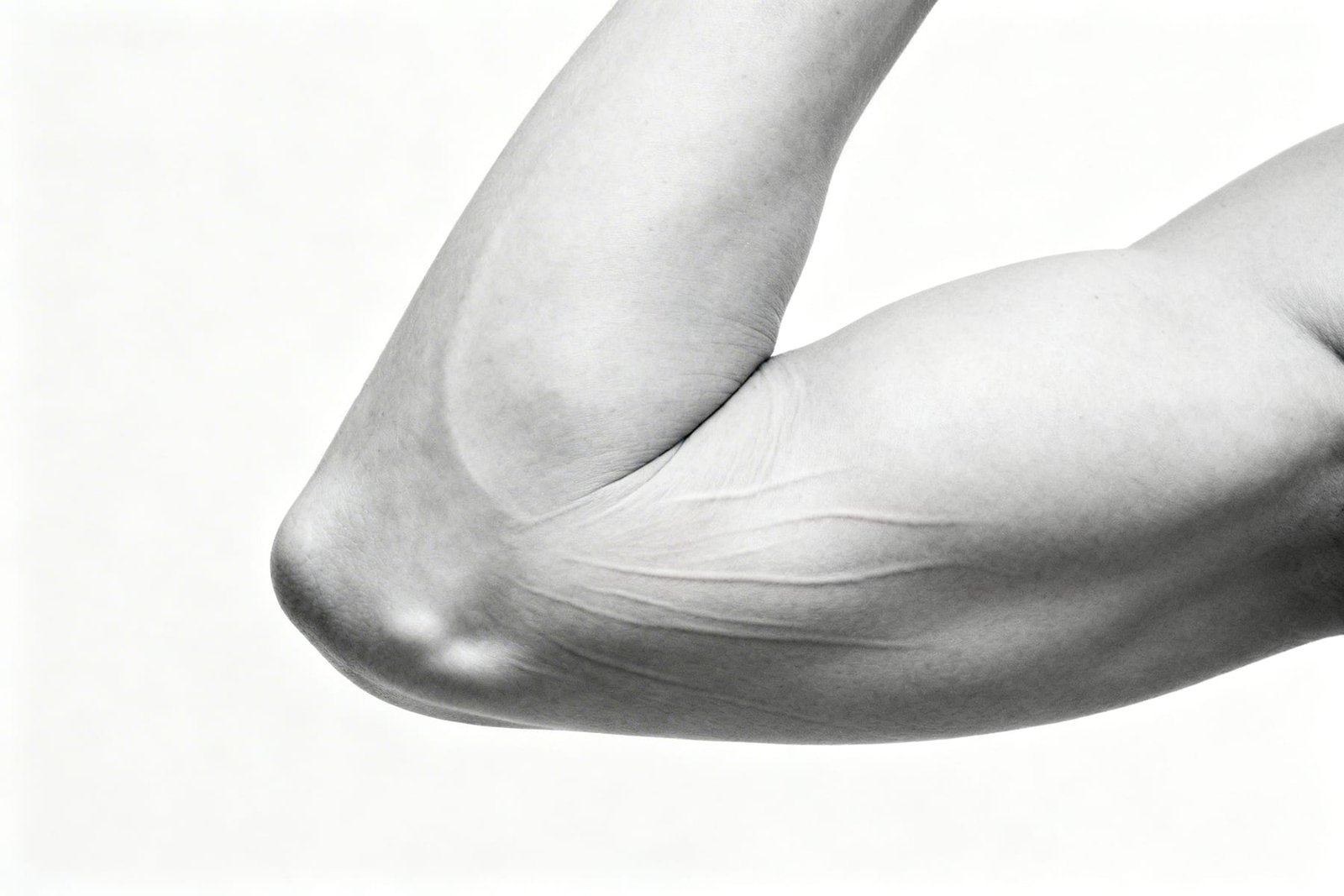
Tennis Elbow Forearm Pain
Anatomy and Pain Pattern OverviewLateral epicondylalgia, commonly called tennis elbow, is a very common upper-extremity pain presentation. Despite the name, most cases are not caused by tennis specifically and many involve work, gripping, lifting, or repetitive hand use.
The traditional explanation focused heavily on tendon pathology at the common extensor origin. That still matters. But in practice many patients also have a clear muscular component, especially in the extensor mass, supinator, and brachioradialis.
Lateral elbow pain is often not “just a tendon” and not “just a trigger point” — it is frequently a layered problem.
This is one reason some patients do not respond well to a purely tendon-focused approach. If the tendon is treated but the forearm remains full of active trigger points and poor load distribution, the symptoms often continue.
Anatomy & Key Trigger Points
Several forearm and elbow muscles can refer pain directly to the lateral epicondyle or the surrounding forearm. That is why apparently “simple” tennis elbow often behaves more diffusely than a single-point tendon lesion would suggest.
Extensor Carpi Radialis Longus
Extensor Carpi Radialis Brevis
Supinator
Brachioradialis
Extensor Digitorum
Anconeus
Triceps Brachii (Medial Head)
Extensor Carpi Ulnaris
Common Extensor Origin
The tendon itself may be reactive, degenerated, or load-intolerant.
Extensor Muscle Trigger Points
Forearm muscles may refer pain directly to the lateral epicondyle.
Supinator / Radial Tunnel
Deeper lateral forearm structures may add pain or weakness patterns.
Kinetic-Chain Contributors
Scapular, shoulder, and cervical mechanics often influence recurrence.
Referral Patterns
Referral patterns matter because different muscles can create very similar lateral elbow pain while also adding their own distinctive distal or posterior components.
Extensor Carpi Radialis Longus & Brevis
Supinator
Brachioradialis
Triceps (Medial Head)
Extensor Digitorum
Self-Assessment
These tests help identify likely contributors to lateral elbow pain. None of them should be treated as perfectly specific in isolation.
Cozen Test (Resisted Wrist Extension)
Mill Test (Passive Wrist Flexion with Pronation)
Supinator Compression Test
Middle Finger Extension Test
Grip Strength Testing
Treatment Pathways
Good treatment usually combines local symptom reduction with progressive loading and modification of the activity that caused the overload in the first place.
Self-Care
- Use wrist-extensor stretching gently and consistently rather than aggressively
- Try self-release along the extensor muscle bellies when those tissues are clearly involved
- Use a counterforce strap only if it clearly improves function and does not create new irritation
- Apply ice or brief cooling after aggravating activity if the patient finds it helpful
- Modify repetitive gripping, palm-down lifting, and poorly sized tools when they clearly provoke symptoms
Manual Therapy
- Trigger point treatment for extensor mass, supinator, brachioradialis, and selected co-contributors
- Soft-tissue treatment along the extensor muscle bellies and musculotendinous junction
- Selected elbow, wrist, or radial-nerve mobility work when indicated
- Movement-based reassessment after treatment rather than relying on local tenderness alone
- Integration with exercise and load modification rather than passive care only
Interventional
- Dry needling when clear myofascial contributors are present
- Trigger point injection in selected refractory muscular cases
- PRP or tendon-focused interventions only when tendon pathology clearly belongs in the picture
- Diagnostic or targeted imaging-guided approaches when the diagnosis remains unclear
Rehabilitation
- Progressive extensor loading, often with eccentric emphasis where tolerated
- Grip-strength rebuilding over time rather than immediate maximal gripping
- Forearm pronation–supination strengthening when rotational weakness is relevant
- Scapular and shoulder-chain strengthening when upper-limb mechanics are clearly contributing
- Ergonomic or sport-specific correction when repetitive load is the main perpetuating factor
Red Flags — When to See a Doctor
Before assuming a myofascial or tendon-overload explanation, screen for trauma, progressive neurological loss, inflammatory change, instability, and mechanical elbow pathology.
Lateral elbow pain often reflects a mixed picture: tendon irritation, extensor-muscle trigger points, forearm overload, and sometimes radial tunnel irritation can coexist.
The extensor carpi radialis longus and brevis, the supinator, and the brachioradialis are some of the most important myofascial contributors to the tennis-elbow pattern.
The supinator deserves special attention in deeper or more stubborn cases, especially when radial-tunnel-type symptoms are present.
Grip weakness is common and is often a useful functional outcome measure, but it does not by itself tell you whether the problem is tendon, muscle, nerve, or all three.
The best long-term outcomes usually come from combining load modification, symptom control, and progressive rehabilitation rather than relying on one passive treatment alone.
A full upper-limb assessment matters because scapular control, shoulder mechanics, cervical referral, and workstation or sport technique can all perpetuate the forearm overload pattern.