§ 01

What Is TECAR Therapy?
TECAR Therapy

TECAR Therapy

Overview Diagram

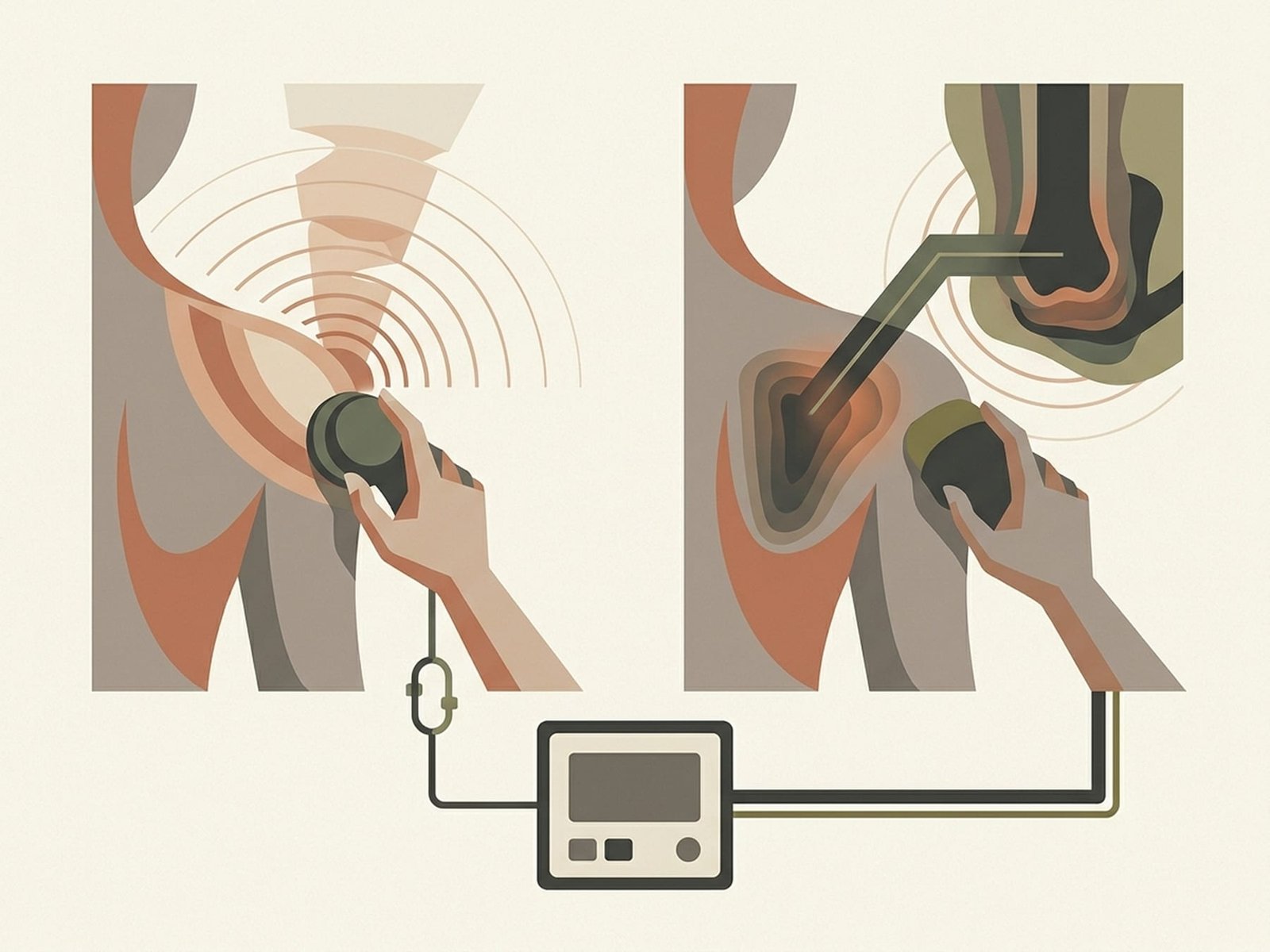
TECAR (Transfer of Capacitive and Resistive Energy) therapy is a radiofrequency-based modality used to generate therapeutic heating within tissue. In practice, clinicians most often use it to reduce stiffness, improve comfort, and prepare tissue for other treatment.

It is often marketed in highly technical or highly promotional terms, but the clearest patient-facing explanation is simpler: TECAR is a clinic-based deep-heating tool.

The best question with TECAR is not “does it heat tissue?” but “does that heating make the next step of treatment more effective?”

For myofascial pain, its value is usually not that it “solves” the trigger point directly, but that it may make movement, manual work, and rehabilitation more tolerable or more effective in selected patients.

§ 02

Capacitive vs Resistive Modes

TECAR Therapy

TECAR Therapy

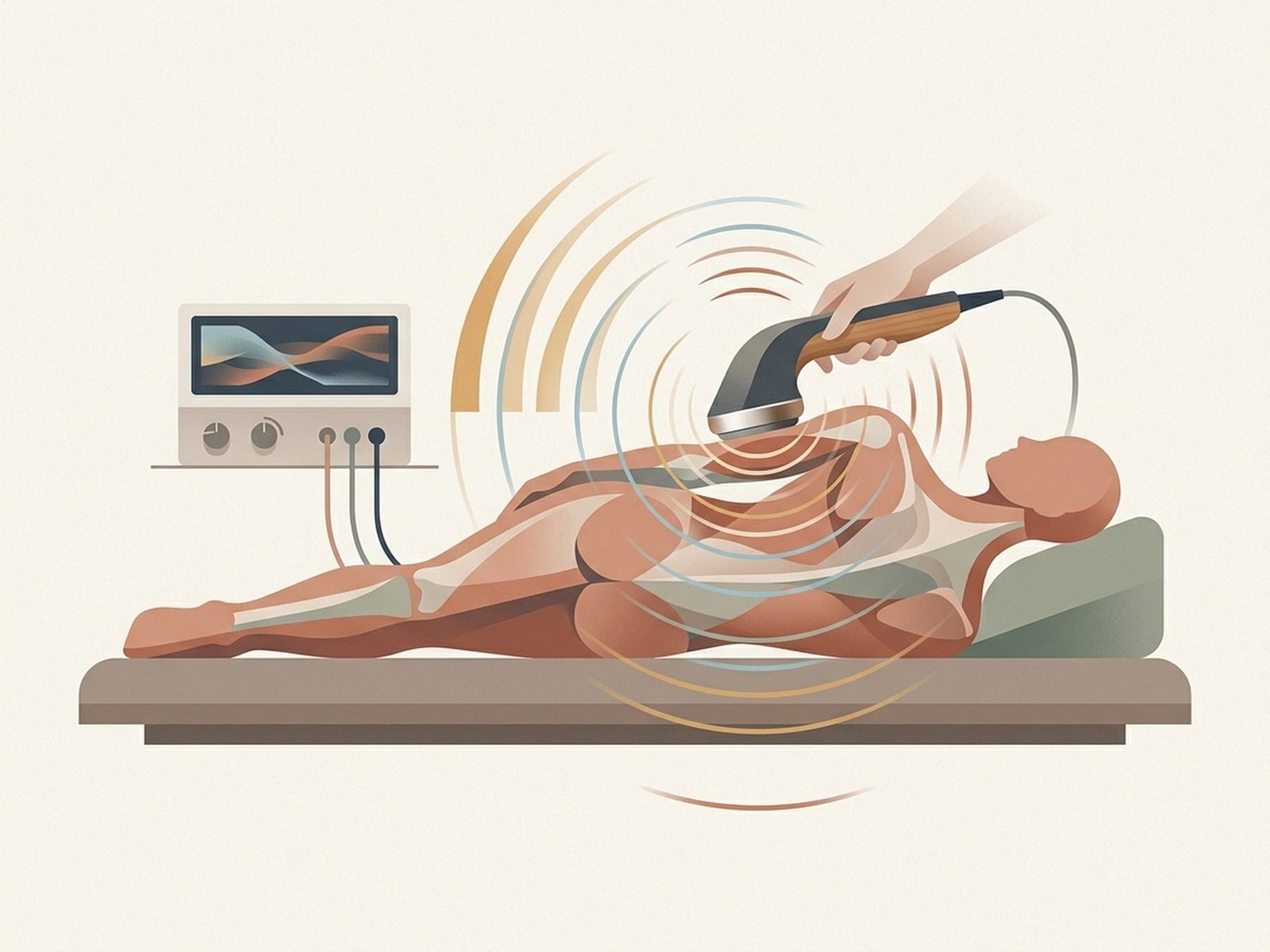
Capacitive vs Resistive Modes

Capacitive Mode (CET)

Insulated electrode — energy is focused more toward water-rich, relatively superficial tissues
Depth:Typically more superficial than resistive mode
Target:Muscle bellies, vascular / soft superficial tissues
  • — Often used to warm superficial soft tissue and improve treatment tolerance
  • — Usually feels like a more diffuse warmth than a highly focal deep treatment
  • — Can be useful in muscular pain patterns where gentle heating is desired
  • — Often used at the beginning of a session before deeper or more focal work
  • — Best understood as one part of the TECAR session rather than a stand-alone cure

Best for: Broader superficial soft-tissue heating and preparation before deeper work

Resistive Mode (RET)

Uninsulated electrode — energy is directed differently and may be used for deeper or denser tissues
Depth:Generally deeper than capacitive mode
Target:Fascia, tendon-adjacent tissues, denser structures, deeper pain regions
  • — Often chosen when the clinician wants a deeper-feeling treatment effect
  • — May be used after CET to follow a superficial-to-deeper progression
  • — Can feel more focal or stronger depending on settings and tissue region
  • — Useful conceptually for deeper myofascial or peri-tendinous complaints, though not all “deep pain” requires it
  • — Its value depends heavily on patient selection and the broader rehab plan

Best for: Selected deeper tissue targets or chronic stiff / fibrotic-feeling areas

§ 03

Mechanism of Action

TECAR is a heating-based modality. Its practical aims are usually improved comfort, softer tissue behavior, better movement tolerance, and a more useful rehabilitation window. Claims beyond that should be presented cautiously.
TECAR Therapy

TECAR Therapy

Mechanism of Action

Deep Tissue Heating

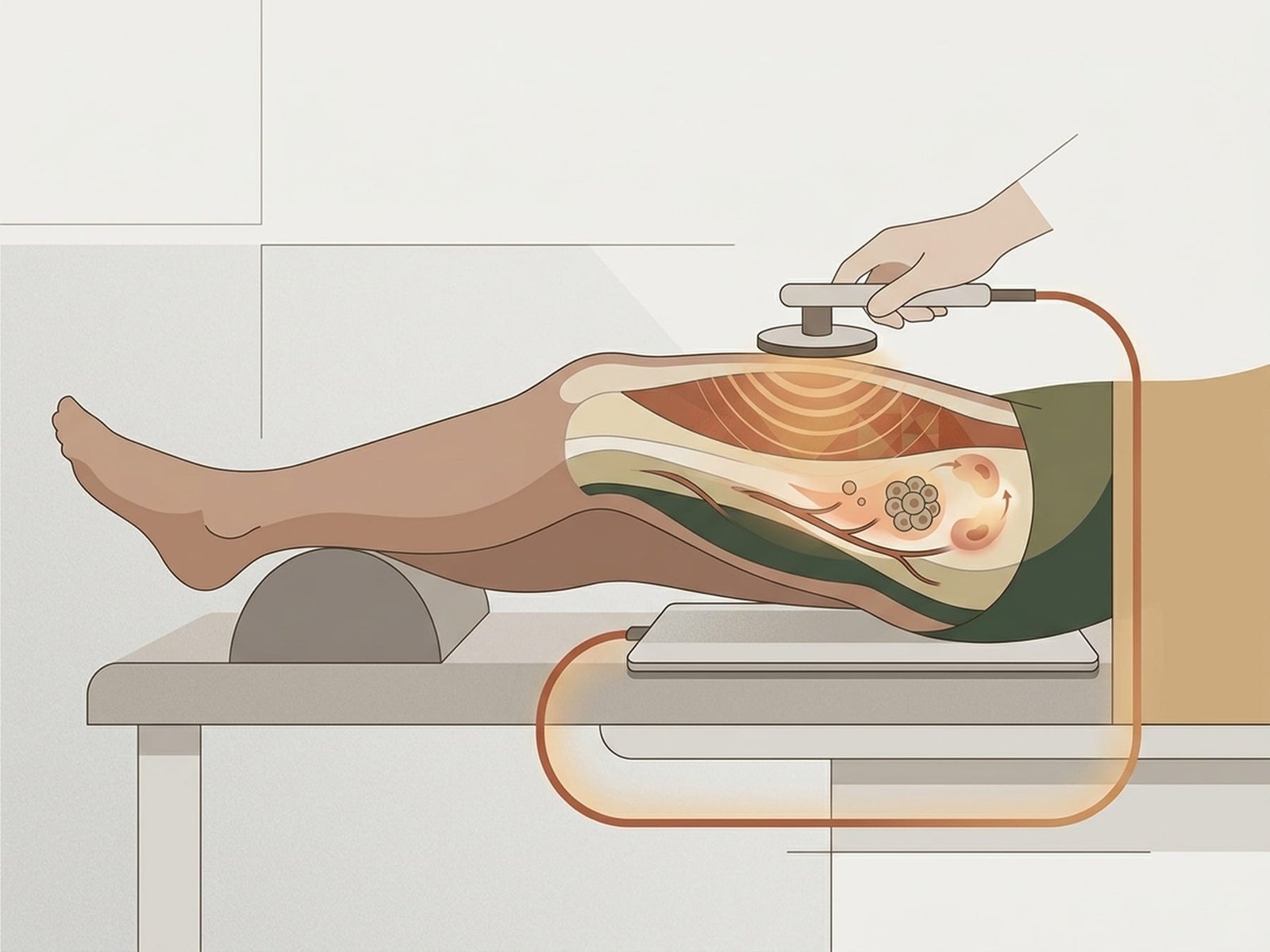
TECAR uses radiofrequency energy to generate heat within tissue rather than applying warmth only from the surface. In practice, the main therapeutic aim is comfortable deep heating, not mechanical disruption.

Circulatory Change

As with other thermal modalities, local blood flow may increase in the treated area. This may help tissue pliability, reduce the feeling of stiffness, and improve treatment tolerance during the session or shortly afterward.

Soft-Tissue Relaxation

Many clinicians use TECAR to reduce guarding and make painful tissue easier to move or treat manually. Its strongest practical role is usually symptom modulation and tissue preparation rather than direct structural correction.

Adjunctive Support for Rehabilitation

TECAR may be most useful when it creates a short-term treatment window that allows more effective exercise, stretching, or manual therapy immediately afterward.
How TECAR May Help
Deep Heating

Creates a thermal effect deeper than superficial heat alone.

Comfort Window

May reduce guarding enough to make movement or manual therapy easier.

Circulation Shift

Local blood flow may increase, which can change how tissue feels and moves.

Adjunctive Support

Usually most useful when paired with a broader treatment strategy.

§ 04

Treatment Parameters

Operating Frequency

Device-dependent radiofrequency rangeDifferent TECAR systems may use slightly different technical specifications, but the patient-facing clinical relevance is usually that the device produces deep comfortable heating rather than electrical stimulation or mechanical shock.

Power Output

Clinician-adjustedPower is typically adjusted based on the treatment region, the treatment goal, and the patient’s heat tolerance. The target is usually a comfortable therapeutic warmth rather than maximal intensity.

Treatment Duration

Often 15–30 minutes in totalA session may combine superficial and deeper work, depending on the region and the treatment plan. The goal is not a fixed minute count but a useful clinical response without excessive irritation.

Number of Sessions

VariableSome patients use TECAR as a short trial over several visits; others receive it only occasionally as an adjunct. The right number depends on the condition, the response, and whether it is helping the broader rehabilitation plan.

Session Frequency

Protocol-dependentBecause TECAR is a heating modality rather than a mechanically disruptive one, it can sometimes be used more frequently than shockwave. Even so, frequency should still be matched to irritability, treatment goals, and the overall program.

Electrode Size

Region-dependentSmaller applicators can feel more focused, while larger ones are often used for broader regions. The choice depends more on anatomy and treatment intent than on a one-size-fits-all rule.

Thermal Feedback

Patient-guided comfortThe patient’s feedback is central. The treatment should generally feel warm and tolerable, not hot, sharp, or alarming.
§ 05

Clinical Evidence

Promising but Mixed EvidenceMusculoskeletal pain and rehab contexts

Thermal Physiology Studies

Experimental studies suggest TECAR can increase tissue temperature and local blood flow, though the exact depth and magnitude of effect vary by device, protocol, and tissue region.

Systematic Reviews in Musculoskeletal Care

Review-level evidence is still mixed. TECAR appears promising in some musculoskeletal settings, but the quality of studies and consistency of protocols remain variable.

Sports Medicine Applications

TECAR is widely used in sports medicine and private rehabilitation settings, especially as a comfort-focused adjunct before manual therapy or exercise.

Myofascial Pain-Specific Evidence

Direct evidence for TECAR specifically in myofascial pain syndrome is still developing. It is best described as a potentially useful adjunct rather than a definitively established stand-alone therapy for trigger points.

Combination Therapy Studies

The strongest practical case for TECAR is usually when it is paired with manual therapy or exercise, where the heating effect may improve comfort and tissue responsiveness.

Overall Interpretation

TECAR is best framed as a low- to moderate-evidence adjunctive modality: useful in selected patients, but not superior by default to good rehabilitation and hands-on reasoning.

Deep Heating

Thermal effect is one of the main proposed therapeutic mechanisms

Circulation

Local blood flow may increase after treatment

Pain Reduction

Some studies suggest short-term symptom improvement in selected patients
§ 06

The Treatment Session

Assessment & Planning

The clinician reviews the pain region, irritability, movement restriction, and treatment goals. TECAR should be selected because it makes sense for the case, not simply because it is available.

Skin Preparation & Coupling

A conductive medium is applied so energy transfer is comfortable and consistent. The patient should know what the expected sensation feels like before the session begins.

Initial Application

Many sessions begin with broader, more comfortable superficial heating to prepare the area and gauge tolerance before moving into more focused work.

Focused Application

The clinician then targets the region of greatest stiffness, pain, or functional restriction, adjusting intensity and movement speed based on patient response.

Integration With Manual Therapy

One of the main reasons clinicians use TECAR is that warmed tissue may tolerate manual work better immediately afterward.

Post-Treatment Movement or Exercise

A session is often most useful when followed by movement, stretching, motor-control work, or exercise rather than ending with passive treatment alone.
§ 07

Ideal Candidates

Chronic Myofascial Pain With Significant Stiffness

Patients who feel very stiff, guarded, or difficult to mobilize sometimes respond well to deep warming before other treatment.

Needle-Averse Patients

Because TECAR is non-invasive, it may appeal to patients who want a comfortable treatment option before considering more targeted invasive work.

Sports Injuries With Secondary Myofascial Pain

In sport settings, TECAR is often used when muscle pain, stiffness, and return-to-training tolerance are all part of the problem.

Neck and Low Back Myofascial Presentations

Broader cervical and lumbar pain regions are common use cases, especially when both superficial and deeper tissue layers seem involved.

Post-Surgical or Scar-Adjacent Soft-Tissue Restriction

Some clinicians use TECAR around scar-related stiffness or post-operative tissue tightness, although the timing and appropriateness depend heavily on the surgical context.

Patients Already in a Structured Rehab Plan

TECAR usually makes the most sense when it supports an active plan rather than replacing one.
§ 08

Contraindications & Side Effects

Absolute Contraindications

Relative Contraindications

Side Effects

Usually Well Tolerated

When performed appropriately, TECAR is generally well tolerated. The most common effects are warmth, temporary redness, and short-lived soreness or fatigue.

Temporary Skin Warmth and Redness

A short-lived feeling of warmth and mild redness in the region is common and usually expected.

Mild Post-Treatment Soreness

Some patients feel temporarily sore or heavy in the region afterward, similar to a strong manual-treatment session.

Transient Fatigue or Relaxation

Some patients feel relaxed or mildly tired after treatment, especially if a larger region was treated.

Overheating or Irritation if Poorly Tolerated

If settings are too strong or the patient is sensitive, the treatment may feel unpleasantly hot or irritating. This is why constant patient feedback matters.
§ 09

TECAR vs Other Treatments

Comparison
Potential TECAR AdvantageMain Limitation

vs TENS

TECAR may feel deeper and more tissue-relaxing, while TENS is usually more about pain modulation through stimulation rather than heating.
TENS is cheaper, more accessible, and often available for home use; TECAR generally requires clinic equipment.

vs Therapeutic Ultrasound

TECAR is often experienced as a broader, more comfortable heating modality in practice.
Ultrasound is more familiar in many rehab settings and may be easier to access.

vs Hot Packs / Superficial Heat

TECAR can produce deeper tissue warming than surface heat alone.
Superficial heat is simple, cheap, and appropriate for many patients who do not need a clinic-based modality.

vs Shockwave Therapy (ESWT)

TECAR is usually gentler and often more comfortable than shockwave.
Shockwave may be more suitable when the clinical target is a focal tendon or calcific lesion rather than general deep heating.
§ 10

Expected Timeline

Variable

Treatment SessionsSome patients feel a short-term difference quickly, but the real question is whether it improves the broader rehab process over repeated sessions.

Protocol-dependent

Session FrequencyFrequency depends on irritability, goals, and what the clinician is pairing it with.

Short- to Medium-Term

Timeline of BenefitImmediate warmth and comfort may occur the same day, while any more durable value depends on repetition and integration with active treatment.
Key Takeaways
  1. TECAR is a non-invasive radiofrequency-based heating modality used in some myofascial and rehabilitation settings.

  2. Its strongest practical role is usually symptom modulation, deep warming, and tissue preparation.

  3. Capacitive and resistive modes are best thought of as different ways of biasing more superficial versus deeper tissue effects.

  4. The evidence is promising in some musculoskeletal settings but still mixed and evolving, especially for myofascial pain specifically.

  5. TECAR usually works best when combined with manual therapy, mobility work, or exercise rather than used alone.

  6. It is not a replacement for diagnosis, load management, or rehabilitation planning.

  7. Patient selection and treatment context matter more than brand-level technical marketing.