Clinical Respiratory Physiotherapy vs. Generic Breathing Exercises
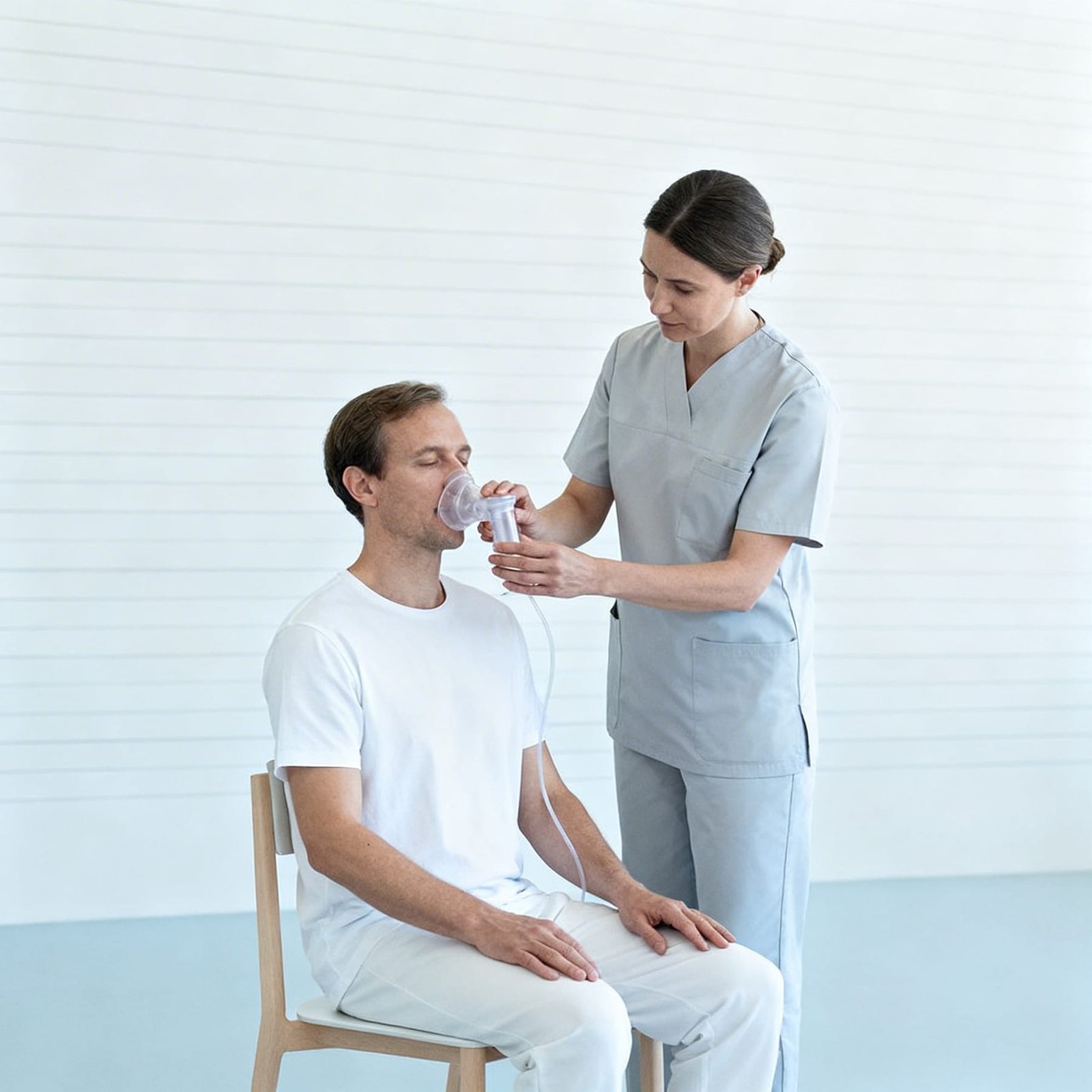
Respiratory Physiotherapy
Clinical Tools Overview (Capnometer, IMT Device, HRV Monitor)Respiratory physiotherapy differs from generic breathing advice because it can include objective measurement, motor retraining, inspiratory strength testing, and clinician-guided progression.
That distinction matters in MPS because many patients do not simply “breathe badly” in a vague sense — they overuse accessory muscles, brace through the abdomen and ribcage, or chronically overbreathe in a way that keeps the neck and thorax under load.
When those patterns persist, scalene, SCM, pectoral, intercostal, and upper-trapezius trigger points may keep recurring no matter how often they are treated locally.
Respiratory physiotherapy is most useful when the breathing dysfunction has been identified clearly and when the clinician can link the pattern directly to the patient’s pain behavior.
Capnometry-Guided Retraining
Objective feedback to support calmer, more efficient breathing.
Inspiratory Muscle Training
Resistive breathing work for selected patients with inspiratory weakness.
Breathing / HRV Coherence Work
Useful when autonomic stress and breathing rhythm are part of the pain picture.
Thoracic Mobilisation
Helps create the mobility needed for more efficient breathing mechanics.
Core Physiotherapy Techniques
A complete respiratory physiotherapy plan often combines structural mobility work, breathing-pattern retraining, and inspiratory conditioning rather than relying on only one of them.
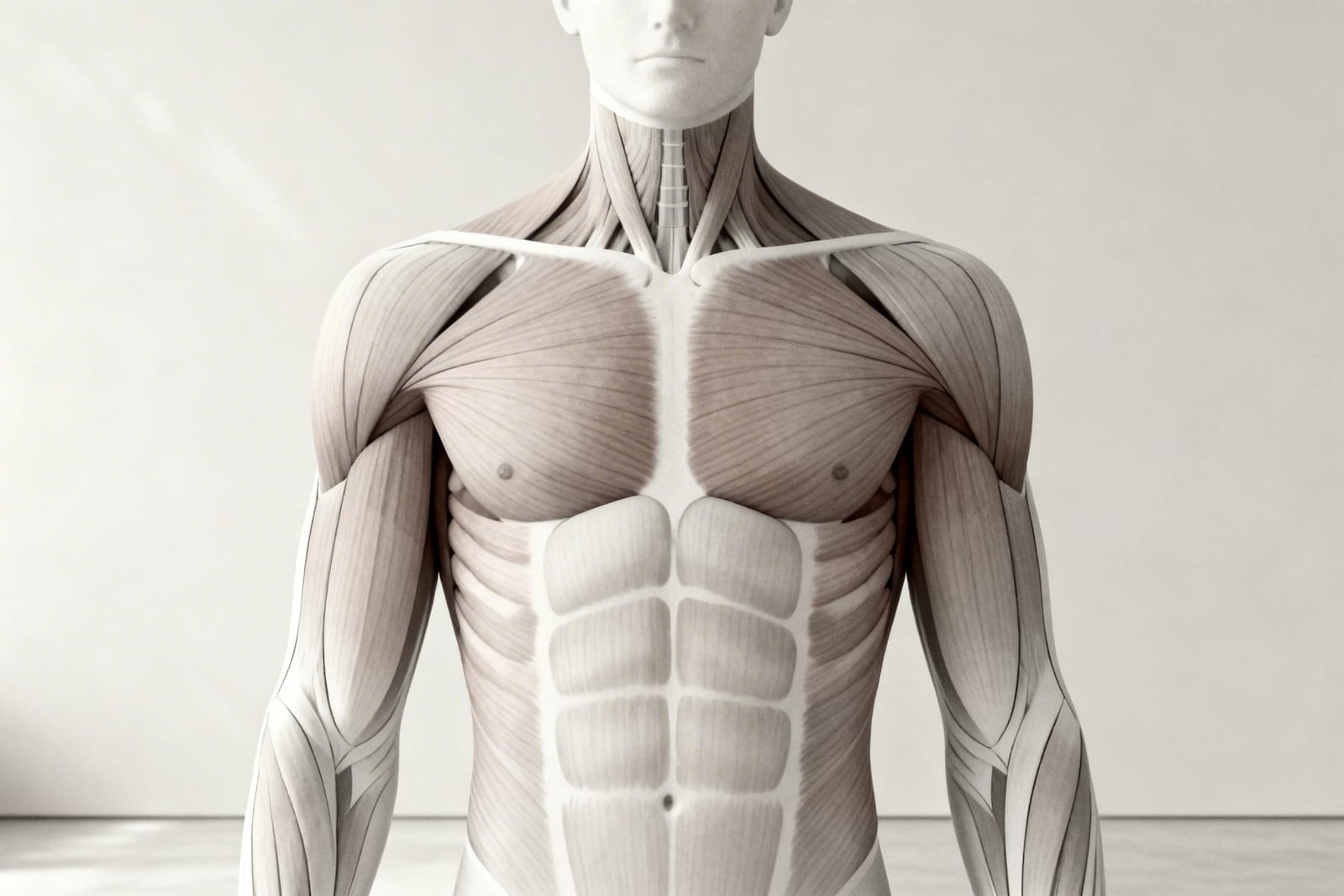
Physiotherapy Techniques
Diaphragm Facilitation and IMT Protocol DiagramDiaphragmatic Re-education
Capnometry Biofeedback
Inspiratory Muscle Training
Thoracic Mobility Restoration
Vocal / Phonation Exercises
Clinical Outcomes & Evidence
The evidence base supports breathing retraining and inspiratory training in selected chronic pain, dysfunctional breathing, and post-viral populations, though the exact effect size varies by diagnosis and programme quality.
The practical lesson is that objective respiratory assessment and symptom-guided retraining often outperform vague advice to “take deeper breaths,” especially in patients with persistent upper-quarter tension.
Correct breathing is not just about technique — it is also about whether the body can sustain that breathing pattern under everyday load.
Capnometry
Useful when available for objective feedback
IMT
Useful when inspiratory weakness is part of the problem
Thoracic Mobility
Often the structural prerequisite
Assessment Battery
A useful respiratory assessment combines symptoms, observation, breathing metrics, and inspiratory strength where relevant, rather than relying on one isolated test.
Resting ETCO2 Measurement
Nijmegen Questionnaire
Respiratory Rate / Breathing Coherence Review
Maximum Inspiratory Pressure
Treatment Protocols
The treatment sequence usually works best when breathing pattern, respiratory strength, and thoracic mobility are addressed together and progressed conservatively.

Treatment Protocol Progression
Capnometry-Guided Retraining PathwayCapnometry-Guided Retraining
When capnometry is available, it can provide useful real-time feedback during breathing retraining. This is especially relevant in patients with clear dysfunctional-breathing patterns and persistent upper-quarter MPS.
- Use capnometry to guide slower, more efficient breathing rather than teaching by guesswork alone
- Track trends across sessions instead of obsessing over one number
- Focus on comfort, regularity, and reduced overbreathing
- Use the data to help the patient recognize when breathing is improving
- Combine breathing retraining with musculoskeletal treatment rather than replacing it
Inspiratory Muscle Training Protocol
Inspiratory muscle training may be useful when inspiratory weakness, deconditioning, or chronic accessory-muscle overuse is clearly part of the presentation.
- Start conservatively and progress based on tolerance and repeat testing
- Use short regular sessions rather than excessive loading
- Track symptoms, breathing ease, and fatigue rather than device use alone
- Progress only when the current dose is well tolerated
- Use IMT as one part of the plan, not as a complete solution
Neuromuscular Respiratory Re-education
Hands-on respiratory physiotherapy can help selected patients learn more efficient ribcage and diaphragm mechanics, especially when simpler self-directed breathing exercises have not been enough.
- Use manual cueing to improve rib and diaphragm awareness
- Pair breathing work with trunk position and movement
- Use simple graded tasks before complex integration
- Adjust the intensity for irritability, dizziness, or fatigue
- Treat this as motor relearning rather than as a one-time correction
Home Programme Integration
Long-term benefit depends on integrating clinic gains into a realistic home routine. The home plan should be short, repeatable, and sustainable.
- Use brief daily breathing practice rather than occasional long sessions
- Continue inspiratory training only if it is clearly helping and well tolerated
- Track breathing rate, ease, and symptom behavior over time
- Reduce complexity if the programme becomes hard to maintain
- Reassess periodically rather than assuming progress continues automatically
Red Flags — When to See a Doctor
Most breathing retraining is low-risk, but some patterns need medical referral or diagnostic reassessment before routine respiratory physiotherapy continues.
Respiratory physiotherapy is more than generic “deep breathing” advice — it can include objective measurement, breathing-pattern retraining, inspiratory strengthening, and thoracic mobility work.
The most useful patients are often those with persistent neck, chest, or upper-thoracic trigger points plus clear signs of dysfunctional breathing or accessory-muscle overuse.
Breathing retraining works best when paired with thoracic mobility, MPS treatment, and movement rehabilitation rather than used by itself.
Capnometry and inspiratory strength testing can help make treatment more objective when those tools are available.
A successful programme usually becomes a simple daily habit, not an endlessly escalating protocol.