§ 01

What Is Platelet-Rich Plasma?
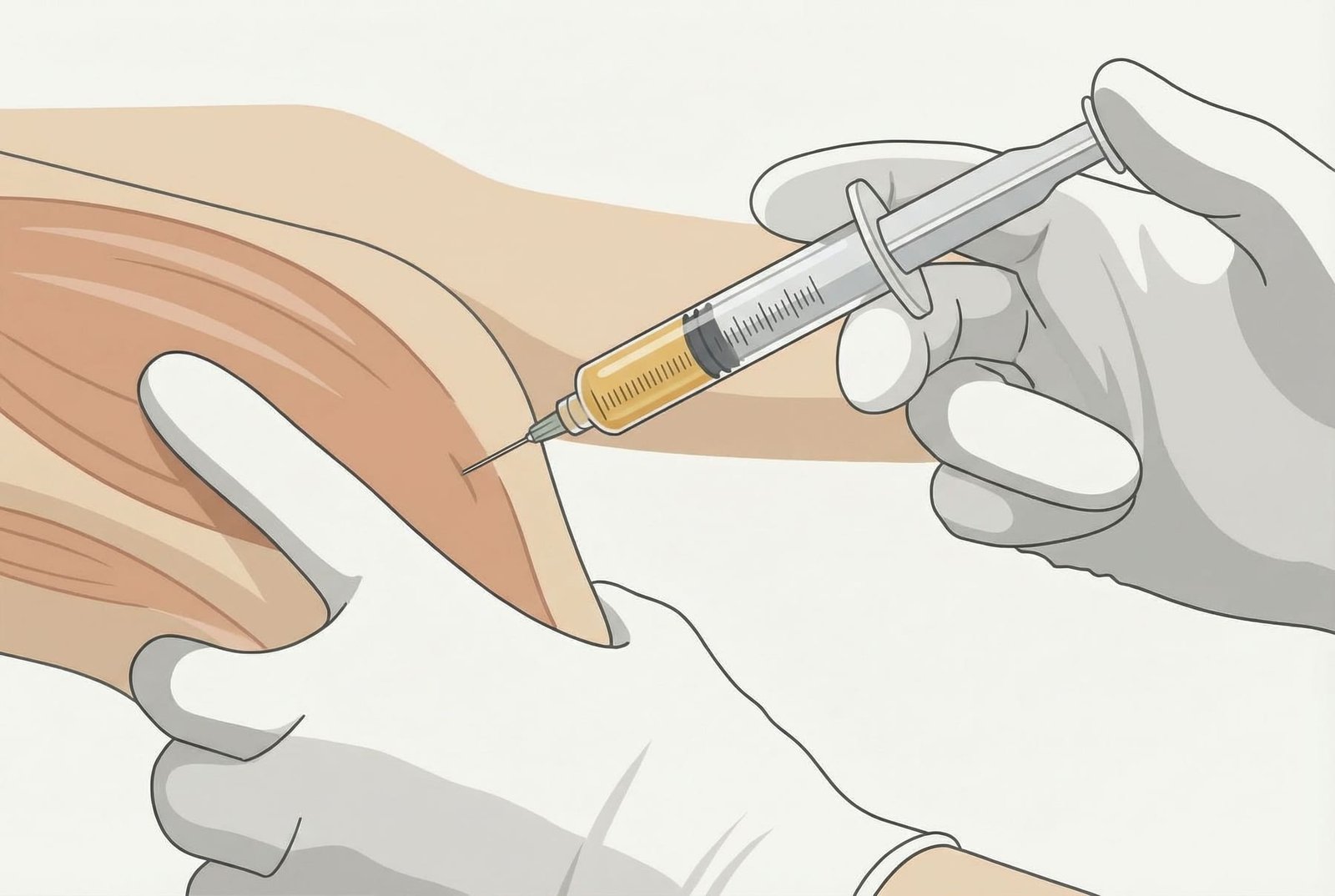
P R P Treatment

P R P Treatment

Overview Diagram

Platelet-rich plasma (PRP) is prepared from the patient’s own blood and processed so that the platelet fraction becomes more concentrated than it is in ordinary circulating blood.

The interest in PRP comes from the fact that platelets release numerous signaling molecules relevant to healing, inflammation, and tissue remodeling. That is why PRP is usually discussed as a regenerative or biologic treatment rather than a standard anesthetic injection.

PRP is best understood as a regenerative injection strategy — not as a quick numbing procedure.

In myofascial pain, PRP is sometimes proposed for chronic or refractory trigger point regions when simpler options have failed. This remains a more selective and emerging use than its better-established orthopedic applications.

Why PRP Is Discussed in Chronic Pain
Growth-Factor Signaling

Platelets release multiple repair-related signaling molecules rather than one isolated drug.

Repair-Oriented Concept

PRP is used with the idea of supporting tissue recovery, not just briefly masking pain.

Inflammation Modulation

Some clinicians use PRP in hopes of shifting persistently irritated tissues toward a more repair-supportive state.

Selective Use Case

PRP is usually considered when chronicity and treatment failure suggest that a more biologic approach may be justified.

§ 02

Key Growth Factors in PRP

The appeal of PRP is that it delivers a broad group of platelet-derived signaling molecules rather than one isolated drug or one isolated growth factor.

PDGF

Platelet-Derived Growth FactorOften discussed as an early signaling factor in tissue repair, helping attract and activate cells involved in healing.

TGF-β

Transforming Growth Factor BetaFrequently described as important in extracellular matrix signaling, collagen-related repair, and immune modulation.

VEGF

Vascular Endothelial Growth FactorBest known for its role in angiogenesis and blood-vessel signaling, which is one reason PRP is discussed in tissue-repair models.

IGF-1

Insulin-Like Growth Factor 1Commonly associated with cell growth, recovery, and broader tissue-support processes.

HGF

Hepatocyte Growth FactorOften discussed in regenerative medicine because of its potential anti-fibrotic and tissue-repair relevance.

EGF

Epidermal Growth FactorPart of the broader group of growth-related signaling molecules involved in tissue renewal and repair.
§ 03

Mechanism of Action

PRP is usually discussed as acting through overlapping regenerative and signaling pathways rather than through one simple mechanism. That should be presented as a plausible biologic rationale, not as absolute certainty.
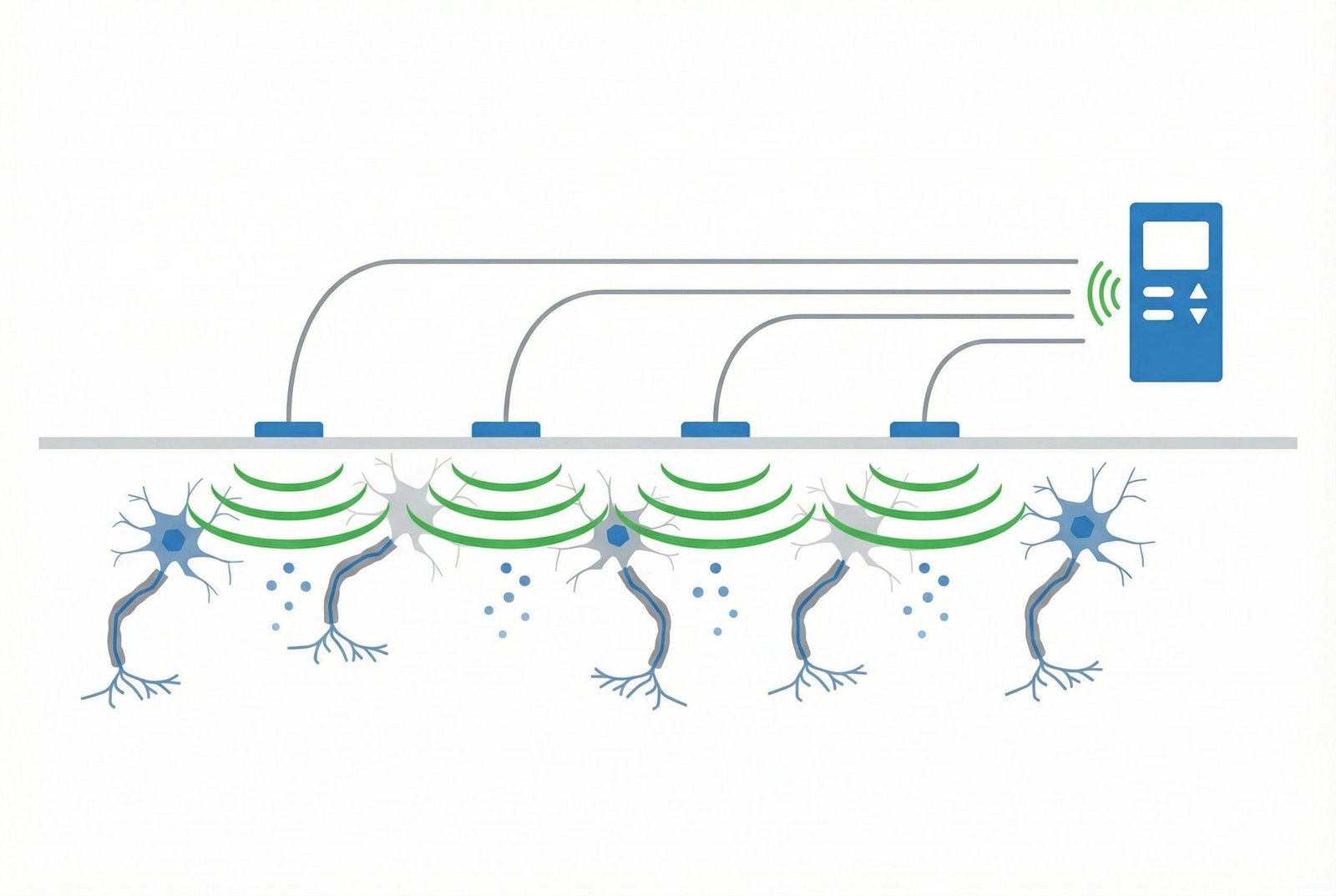
Mechanism of Action

Mechanism of Action

Mechanism Diagram

Concentrated Growth-Factor Signaling

PRP is discussed as a way to concentrate platelet-derived signaling molecules into one targeted injectate. The practical idea is to create a local environment that may be more supportive of healing than baseline tissue conditions alone.

Support for Local Angiogenic Signaling

One theoretical rationale for PRP in chronic pain is that some long-standing painful tissues may exist in a relatively under-recovered or poorly perfused state. Growth-factor signaling related to angiogenesis is one reason PRP is thought to help in selected chronic soft-tissue conditions.

Support for Repair-Oriented Cell Activity

PRP is often described as encouraging fibroblast activity, matrix remodeling, and broader repair signaling. In patient education, this is best framed as a regenerative concept rather than a guaranteed tissue-restoration claim.

Immune and Inflammatory Modulation

Another common rationale is that PRP may help shift a persistently irritated tissue environment toward a more repair-oriented one. This should be presented cautiously, since inflammatory biology is complex and varies by tissue and preparation method.

Possible Relevance to Neuromuscular Dysfunction

Some PRP discussions in myofascial pain extend to the dysfunctional motor endplate and chronic trigger-point irritability. This is still a theoretical extension rather than a fully settled clinical mechanism.

Multi-Pathway Regenerative Logic

The main appeal of PRP is that it is not a single-drug approach. It is discussed as a multi-factor regenerative strategy, which is why it continues to attract interest in chronic tendon, joint, and some soft-tissue pain settings.
§ 04

PRP Preparation Overview

PRP preparation varies by system and clinician. Patients need the broad concept and safety frame more than exact lab-style preparation settings.
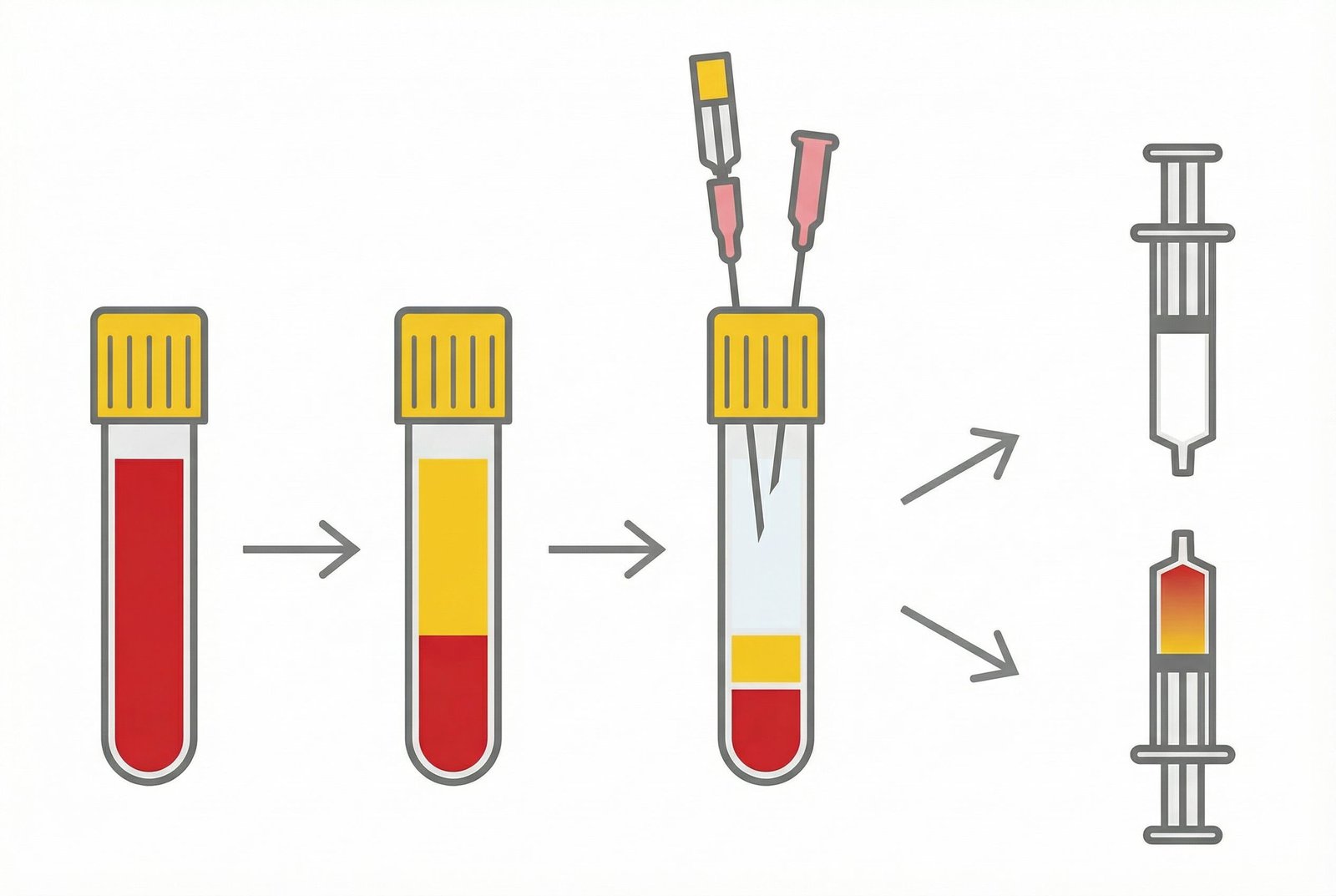
PRP Preparation Protocol

PRP Preparation Protocol

Step-by-Step Illustration

Blood Collection

PRP starts with a standard blood draw from the patient. The exact amount collected varies by the preparation system, the body region being treated, and the clinician’s protocol.

Anticoagulated Processing

The blood is collected into a preparation system that prevents clotting during processing. This allows the platelet-rich fraction to be separated before injection.

Centrifugation

The sample is spun to separate red blood cells, plasma, platelets, and sometimes leukocytes. Different systems and protocols produce meaningfully different final PRP products, which is one of the major limitations of the literature.

Leukocyte Decision

Some PRP systems concentrate leukocytes while others reduce them. This matters because leukocyte-rich and leukocyte-poor preparations may behave differently in terms of post-injection soreness, inflammatory response, and theoretical tissue effects.

Activation Strategy

Some clinicians activate PRP before injection while others rely on in vivo activation after placement. This is another area where protocols vary and where the evidence is not standardized enough to present one universal best method.

Final Injectate

The final PRP product is a concentrated platelet-containing preparation derived from the patient’s own blood. The exact concentration, composition, and volume depend heavily on the kit and protocol used.
Leukocyte-Rich (LR-PRP)

Leukocyte-Rich (LR-PRP)

  • More white blood cell content
  • Potentially more inflammatory signaling
  • Potentially more immune-related signaling
  • May produce more post-procedure soreness
  • May produce more post-injection soreness
Leukocyte-Poor (LP-PRP)

Leukocyte-Poor (LP-PRP)

  • Lower white cell content
  • Sometimes chosen to reduce flare risk
  • Often discussed as more tolerable in sensitive tissue
  • Sometimes preferred when reducing inflammatory flare is the goal
  • Different biologic profile rather than a universally better one
§ 05

Clinical Procedure Overview

Clinical Target Selection

The clinician first decides whether PRP is actually appropriate for the pain generator in question. In myofascial pain, this step is especially important because PRP is not a routine first-line treatment for ordinary trigger points.

Imaging or Anatomical Guidance

Many clinicians prefer image guidance or careful anatomical targeting when placing PRP, especially when the target tissue is small, deep, or close to sensitive structures.

Injection Procedure

The injectate is placed by a qualified clinician into the selected target tissue. This is a medical procedure and should not be described or taught as a self-care technique.

Immediate Recovery Monitoring

After the procedure, the patient is monitored briefly and given clinician-specific guidance on soreness, activity, and follow-up.

Short-Term Activity Modification

Most PRP care includes a short recovery period and a gradual return to loading. The exact restrictions and timeline vary by tissue, clinician, and protocol.

Reassessment Over Time

PRP is usually judged over weeks to months rather than immediately. Follow-up focuses on pain, function, tolerance, and whether the treatment fits into a larger rehabilitation plan.
Needle / Procedure
Clinician-directed
Injectate Volume
Protocol-dependent
Targets per Session
Case-dependent
Sessions
Often a short series
§ 06

Clinical Evidence for myofascial pain

Emerging EvidenceSupportive early studies, but not enough standardization for strong universal claims

The myofascial PRP literature is promising but still limited. Studies are small, protocols vary, and the stronger PRP evidence remains in other musculoskeletal conditions.

This does not mean PRP has no role in myofascial pain. It means the role should be selective and framed with more caution than marketing language often uses.

Small early-stage trials

Pilot / Randomized TrialsA handful of small studies have explored PRP for chronic myofascial trigger point presentations with cautiously supportive results. Sample sizes are modest, protocols vary widely, and the overall evidence base remains preliminary — not yet sufficient to recommend PRP as a routine option for myofascial pain.

Tendinopathy literature

Systematic ReviewsReview-level evidence is stronger for PRP in tendinopathy and certain orthopedic soft-tissue conditions (e.g., lateral epicondylopathy, plantar fasciopathy) than for myofascial pain specifically. Because of this asymmetry, trigger-point PRP remains an emerging rather than established indication.

Comparative literature

Comparative StudiesSome comparative studies suggest PRP may have a longer-lasting effect than simpler injection approaches in selected chronic soft-tissue pain states. Findings are heterogeneous, and broader claims about PRP for myofascial pain should be avoided until larger, better-controlled trials are available.
§ 07

PRP vs Other Injection Therapies

PRP differs from standard trigger point injections because it is framed as a biologic or regenerative strategy rather than a simple local anesthetic or anti-inflammatory intervention.

PRP vs Lidocaine Trigger Point Injection
Lidocaine Trigger Point Injection MechanismTherapeutic ApproachDuration

Lidocaine Trigger Point Injection

Immediate local anesthetic effect plus mechanical needle effect
Primarily symptomatic relief
Usually shorter-term

PRP Advantage

PRP is framed as a regenerative strategy rather than a purely numbing one
PRP Disadvantage
Lidocaine is cheaper, faster-acting, and far more established in routine trigger point care
PRP vs BOTOX
BOTOX MechanismTherapeutic ApproachDuration

BOTOX

Chemical denervation of the neuromuscular junction
Reduces muscle overactivity rather than promoting tissue repair
Longer-lasting but highly indication-dependent

PRP Advantage

PRP aims at repair rather than temporary paralysis
PRP Disadvantage
BOTOX often has a clearer role in certain refractory muscle-overactivity syndromes than PRP does in ordinary MPS
PRP vs Corticosteroid
Corticosteroid MechanismTherapeutic ApproachDuration

Corticosteroid

Anti-inflammatory suppression
Inflammation control rather than regeneration
Often shorter-term, depending on indication

PRP Advantage

PRP is often marketed as more tissue-supportive and less suppressive
PRP Disadvantage
Steroids are cheaper, more widely available, and more familiar to many clinicians
PRP vs Dry Needling
Dry Needling MechanismTherapeutic ApproachDuration

Dry Needling

Mechanical needle effect and neuromodulation without injectate
Needle-based symptom modulation
Usually shorter-term and dependent on broader rehab

PRP Advantage

PRP adds a biologic injectate to the mechanical needling effect
PRP Disadvantage
Dry needling is far less expensive, simpler, and much more accessible
§ 08

Cost, Insurance & Practical Considerations

Cost

PRP is usually one of the more expensive musculoskeletal injection options, and total cost depends on the preparation system, the number of sessions, and the practice setting.

Insurance Coverage

Coverage is often limited because many insurers still classify PRP as investigational for several pain indications, especially outside better-established orthopedic uses.

Medication Review

Medication review matters before PRP, especially when anti-inflammatory drugs, anticoagulants, or recent steroid exposure are involved. Exact medication instructions should come from the treating clinician.

Recovery Timeline

PRP usually requires patience. It is typically evaluated over weeks to months rather than judged by whether the patient feels dramatically better the same day.
§ 09

Contraindications & Precautions

Key Takeaways
  1. PRP is an autologous regenerative injection approach built around concentrated platelets and their growth-factor signaling.

  2. Its strongest evidence base is outside routine myofascial trigger points, especially in selected tendinopathies and some orthopedic conditions.

  3. For myofascial pain, PRP should be framed as an emerging or selective option rather than a standard first-line trigger point treatment.

  4. Preparation methods vary substantially, which is one of the biggest reasons the literature remains hard to standardize.

  5. PRP makes the most sense when the target tissue, chronicity, prior treatment failure, and overall clinical picture justify a regenerative injection strategy.

  6. Cost, coverage, and the slower timeline to judge success are major practical considerations.

Bottom line:PRP is a biologically interesting and potentially useful option in selected refractory cases, but it is not yet a mainstream first-line treatment for ordinary myofascial trigger points.